

Urban Indian Health Providers Facilities Improvement Act This bill expands the authority of the Indian Health Service (IHS) to make funds available for urban Indian organizations to renovate, construct, or expand urban Indian health facilities. Specifically, the bill authorizes the IHS to (1) make funds available for renovations even if the renovations are not minor, and (2) make funds available for purposes other than assisting the organizations in meeting certain accreditation standards.
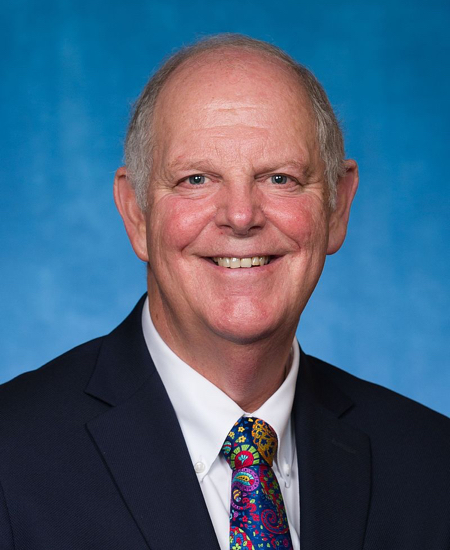
Rep. Tom O’Halleran
Sponsored bills
Home for the Brave Act of 2021 This bill excludes from income veterans' service-connected disability or death benefits for purposes of determinations made in connection with the Department of Housing and Urban Development's housing assistance programs.
Social Determinants Accelerator Act of 2021 This bill establishes the Social Determinants Accelerator Interagency Council to increase coordination among health and social service programs and provide technical assistance to increase the impact of such programs. The council must also assist the Centers for Medicare & Medicaid Services to award up to 25 grants to state, local, or tribal health or human services agencies for social determinants accelerator plans. These plans must address at least one health and one social outcome for a specified target population.
Protecting Seniors Through Immunization Act of 2021 This bill specifies that certain deductible, coinsurance, initial coverage limit, and cost-sharing requirements that apply under the Medicare prescription drug benefit shall not apply with respect to vaccines that are recommended by the Advisory Committee on Immunization Practices of the Centers for Disease Control and Prevention. The Centers for Medicare & Medicaid Services must provide to Medicare beneficiaries specified information regarding (1) coverage of vaccines for seniors, and (2) access to recommended vaccines without cost-sharing.
Veterans Agent Orange Exposure Equity Act This bill expands the presumption of service-connection for diseases associated with exposure to certain herbicide agents for veterans who served in Vietnam between January 9, 1962, and May 7, 1975. Under a presumption of service-connection, specific conditions diagnosed in certain veterans are presumed to have been caused by the circumstances of their military service. Health care benefits and disability compensation may then be awarded. Specifically, the bill expands the presumption to cover veterans who served in Thailand at a U.S. Army base or Royal Thai Air Force base between January 9, 1962, and May 7, 1975; at the Royal Thai Army Replacement Training Center, Pranburi Military Reservation between January 1, 1964, and April 30, 1964; in Laos between December 1, 1965, and September 30, 1969; or in Cambodia at Mimot or Krek, Kompon Cham Province between April 16, 1969, and April 30, 1969.
This resolution expresses support for the designation of Journeyman Lineworkers Recognition Day. (A journeyman lineworker is a person who builds and maintains electrical power systems.)
Preserving Rules Ordered for The Entities Covered Through 340B Act of 2021 or the PROTECT 340B Act of 2021 This bill prohibits pharmacy benefit managers (PBMs) and health insurance plans from discriminating against health providers participating in the 340B drug pricing program, including pharmacies contracted with such providers to dispense 340B drugs. The 340B program allows certain providers to receive covered outpatient drugs at reduced prices from manufacturers. Specifically, PBMs and insurance plans may not reimburse 340B participants at a lower rate than other entities not participating in the program; impose differing terms (such as fees, charge-backs, or audits) on 340B participants; interfere with an individual's choice to receive drugs from a 340B participant; require 340B participants to identify which drugs fall within the program; or refuse to contract with a 340B participant on the basis that they utilize the program. Violations of this bill are subject to a civil penalty of not more than $5,000 per violation per day. These prohibitions also apply to prescription drug (Part D) sponsors under Medicare. The bill also provides for a process to prevent duplicate 340B drug discounts to states under Medicaid.
Safe Schools Improvement Act of 2021 This bill requires states to direct their local educational agencies (LEAs) to establish policies that prevent and prohibit bullying and harassment of elementary and secondary school students. In particular, these policies must prohibit bullying and harassment based on race, color, national origin, sex, sexual orientation, gender identity, disability, or religion. Further, LEAs must provide (1) students, parents, and educational professionals with annual notice of the conduct prohibited in their disciplinary policies; (2) students and parents with grievance procedures that target such conduct; and (3) the public with annual data on the incidence and frequency of that conduct at the school and LEA level. The Department of Education must conduct and report on an independent biennial evaluation of programs and policies to combat bullying and harassment in elementary and secondary schools. The National Center for Education Statistics must collect state data to determine the incidence and frequency of the conduct prohibited by LEA disciplinary policies.
This bill directs the Forest Service to, no less than once every 5 years, complete a wildfire assessment that includes analysis of, among other things, with respect to the previous five years the direct costs of wildfire response, preparation, and recovery, including wildfire mitigation and wildlife suppression activities and human health; the indirect costs of wildfire response, preparation, and recovery, including diminished tax revenue and lost business revenue, including supply chain impacts; and whether the direct and indirect costs have been or will be paid by the federal government, state or territory governments, or county or local governments.
Providing Resources and Occupational Training for Emotional Crisis and Trauma in 911 Act or the PROTECT 911 Act This bill requires reporting on, and authorizes a grant program to address, suicide and other behavioral health issues among 9-1-1 operators and other public safety personnel who receive and communicate requests for emergency assistance. Specifically, the Centers for Disease Control and Prevention must develop a reporting system to collect data on the suicide rate among and identify best practices to reduce suicides within that profession. In addition, the bill establishes within the Department of Homeland Security grants for emergency communications centers and relevant nonprofits to raise awareness of, prevent, and mitigate job-related mental health issues.