Fiscal State of the Nation Resolution This concurrent resolution requires the congressional budget committees to conduct an annual joint hearing to receive a presentation from the Comptroller General regarding (1) the Government Accountability Office's audit of the financial statement of the executive branch, and (2) the financial position and condition of the federal government.
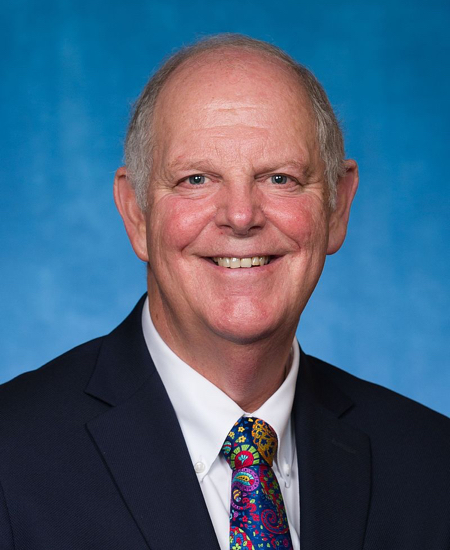
Rep. Tom O’Halleran
Sponsored bills
Justice for ALS Veterans Act of 2021 This bill extends increased dependency and indemnity compensation to the surviving spouse of a veteran who dies from amyotrophic lateral sclerosis (ALS or Lou Gehrig's disease) regardless of how long the veteran had such disease prior to death. Under current law, such compensation is paid for a service-connected disability that was rated totally disabling for a continuous period of at least eight years immediately preceding death. For purposes of this bill, a surviving spouse is a person who was married to the veteran for a continuous period of eight years or longer prior to the veteran's death.
This bill expands eligibility for Department of Veterans Affairs hospital care, medical services, and nursing home care to include veterans of World War II who are not already covered.
Outpatient Surgery Quality and Access Act of 2021 This bill establishes and modifies certain requirements relating to Medicare payments for ambulatory surgical center (ASC) services. Specifically, the bill (1) requires the payment system for ASC services to feature certain positive annual adjustments equivalent to those made with respect to hospital outpatient department (OPD) services; (2) revises quality reporting requirements to permit publicly available, side-by-side comparisons of quality measures for ASCs and OPDs in the same geographic area; and (3) requires the Centers for Medicare & Medicaid Services (CMS), when excluding requested procedures from the list of those approved to be performed in ASCs, to cite specified reasons for doing so. With respect to excluding procedures from the approved list for ASCs, the CMS may not cite as a basis for exclusion that a procedure can only be reported using an unlisted surgical procedure code. (Physicians sometimes use unlisted codes when performing new procedures or services if no existing code is adequately descriptive.) The bill also limits the copayment amount for ASC services under Medicare to that of the inpatient hospital deductible.
Tim Hart Wildland Firefighter Classification and Pay Parity Act or Tim's Act This bill addresses the pay and benefits of federal wildland firefighters and related issues. Federal wildland firefighter is defined as any temporary, seasonal, or permanent position at the Department of Agriculture (USDA) or the Department of the Interior that maintains certain group, emergency incident management, or fire qualifications and primarily engages in or supports wildland fire management activities. Specifically, (1) the Office of Personnel Management (OPM) must establish one or more classification series for federal wildland firefighter positions, and (2) USDA and the Department of the Interior shall determine each position within USDA and Interior that qualifies as a federal wildland firefighter position. The bill, among other requirements (1) establishes a pay scale for such positions, with annual adjustments; and (2) provides for hazardous duty pay. The OPM must establish guidelines for work schedules. The bill addresses issues regarding wages, unpaid leave to care for a family member, recruitment and retention bonuses, and housing allowances. USDA and Interior shall (1) establish, maintain, coordinate, and operate a voluntary tuition assistance program; (2) establish and maintain a publicly accessible, searchable Federal Wildland Firefighter Cancer and Cardiovascular Disease Database; and (3) establish and carry out a program for mental health awareness and support. Additionally, the bill provides for continuation of firefighters pension coverage in case of disability and pay parity for federal structural firefighters.

Help Ensure Lower Patient Copays Act or the HELP Copays Act This bill requires health insurance plans to apply certain payments made by, or on behalf of, a plan enrollee toward a plan's cost-sharing requirements. Specifically, plans must apply third-party payments, financial assistance, discounts, product vouchers, and other reductions in out-of-pocket expenses toward the requirements.
This resolution expresses that the House of Representatives applauds the Biden administration for reaffirming the U.S. commitment to the Paris Agreement on climate change and to our collective responsibility to globally combat climate change; encourages the Biden administration to implement measures to ensure global climate change remains a top priority for this and future administrations and to cement the United States as a global leader in the fight to mitigate its most severe consequences; voices strong commitment as legislators toward achieving the climate goals of the Paris Agreement, fulfilling the forthcoming pledges from the COP26 in Glasgow, Scotland, and advancing other international efforts to keep global warming to no more than 1.5 degrees Celsius and realize global net-zero carbon emissions by 2050 using a whole-of-government approach; and recognizes the critical responsibility of the United States and other developed nations to ensure all societies have the capabilities to transition to a clean energy economy, the resources to protect against climate-induced disasters, and the necessary assistance to endure climate-related challenges to food security, regional migration, and public health.
Help End Abusive Living Situations Act or the HEALS Act This bill modifies factors the Department of Housing and Urban Development (HUD) must consider when awarding grants under the Continuum of Care Program, which provides funding for nonprofit providers and state and local governments to quickly rehouse homeless individuals and families. Specifically, when awarding Continuum of Care grants, HUD must (1) consider the needs of survivors of domestic violence, dating violence, sexual assault, and stalking; (2) consider transitional housing projects on an even basis with any other project; and (3) score applicants for grants without prioritizing or deprioritizing rapid-rehousing, permanent supportive housing, transitional housing, or short-term emergency shelter projects based solely on those project categories.
Original National Domestic Violence Awareness Month Resolution of 2021 This resolution supports the goals and ideals of National Domestic Violence Awareness Month. Further, it expresses the sense of the House of Representatives that Congress should continue to raise awareness of and support programs to end domestic violence.
State, Local, Tribal, and Territorial Fiscal Recovery, Infrastructure, and Disaster Relief Flexibility Act This bill allows states, tribes, territories, and localities to use certain COVID-19 relief funds for new categories of spending, including for natural disasters and infrastructure projects. It also makes changes to expenditure deadlines and other aspects of this funding. Specifically, recipients may use funds for emergency relief from natural disasters and associated negative economic impacts of natural disasters. In addition, recipients may use a portion of their COVID-19 relief funds for designated infrastructure projects, such as nationally significant freight and highway projects. Furthermore, the bill allows recipients to expend COVID-19 relief funds on these types of infrastructure projects until September 30, 2026. Under current law, recipients must expend the funds by December 31, 2024. Other changes in the bill include (1) modifying eligibility and allocation requirements for funding set aside for counties and Indian tribes that are near public lands, (2) allowing Indian tribes an additional year to expend their COVID-19 relief funds, and (3) establishing a process for government entities to decline COVID-19 relief funds and requiring any declined funds to be used to reduce the federal deficit.