

Identifying and Eliminating Wasteful Programs Act This bill requires each federal agency to compile a list of unnecessary programs. Specifically, each agency must compile a list of such programs, based on guidance provided by the Office of Management and Budget, that are unnecessary, defunct, or duplicative federal programs; another agency could administer more effectively; or could operate more effectively if the program or activity were consolidated with other programs or activities. Additionally, the President must include the list of identified programs or program activities in the annual budget submitted to Congress. An agency may submit to Congress recommendations for statutory changes to eliminate or consolidate programs or program activities identified in the list.
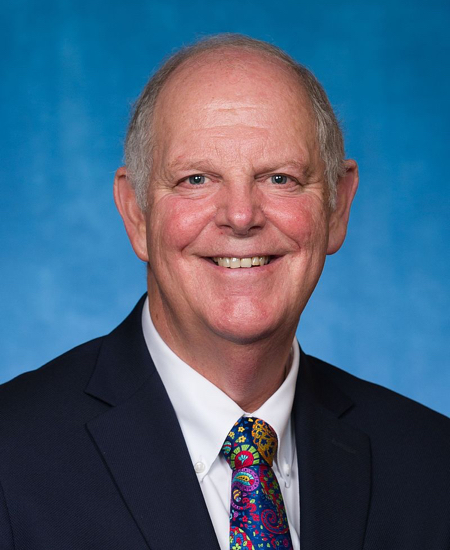
Rep. Tom O’Halleran
Sponsored bills
This resolution supports the designation of Career and Technical Education Month to celebrate career and technical education across the United States.
Fleet Reserve Association 100th Anniversary Act This bill directs the Department of the Treasury to mint and issue 50,000 $5 gold coins, 400,000 $1 silver coins, and 750,000 half-dollar clad coins in recognition and celebration of the 100th anniversary of the Fleet Reserve Association. All sales of coins issued under this bill shall include a surcharge which shall be paid to the Fleet Reserve Association.
Keeping School Meals Flexible Act This bill extends authority through June 30, 2023, for the Department of Agriculture (USDA) to waive certain requirements for the school meal programs to address COVID-19. The bill extends the authority for USDA to issue a single waiver of child nutrition program requirements to all states under the National School Lunch Program for purposes of providing meals and snacks with appropriate safety measures with respect to COVID-19; grant waivers of requirements to allow non-congregate feeding in the Child and Adult Care Food Program for purposes of providing meals and snacks with appropriate safety measures with respect to COVID-19; and grant waivers related to the nutritional content of meals served in child nutrition programs if it determines the waiver is necessary to provide meals and snacks, and there is a food supply chain disruption due to COVID-19.
Diné College Act of 2022 This bill authorizes Diné College in Tsaile, Arizona, to receive all federal funding and resources for its operation, improvement, and growth. Diné College serves the higher education needs of the Navajo people.
Native American Child Protection Act This bill reauthorizes through FY2027 and otherwise revises certain programs related to the prevention, investigation, treatment, and prosecution of family violence, child abuse, and child neglect involving Indian children and families. Specifically, the bill revises the Indian Child Abuse Treatment Grant Program to encourage the use of grants for culturally appropriate treatment services and programs. The bill renames the Indian Child Resource and Family Services Centers as the National Indian Child Resource and Family Services Center. It also requires the center to (1) provide advice, technical assistance, and training to urban Indian organizations; (2) develop certain technical assistance materials for Indian tribes, tribal organizations, and urban Indian organizations; and (3) develop model intergovernmental agreements between tribes and states to prevent, investigate, treat, and prosecute incidents of family violence, child abuse, and child neglect involving Indian children and families. Additionally, the bill revises the Indian Child Protection and Family Violence Prevention Program to allow Indian tribes, tribal organizations, and intertribal consortia to use program funds for additional activities, such as operational costs for child protective services.
Medical and Health Stockpile Accountability Act of 2022 This bill requires the Department of Health and Human Services (HHS) to develop an automated application to track the amount of supplies in the Strategic National Stockpile and in similar inventories maintained by states, tribes, territories, and private entities (e.g., hospitals). Additionally, HHS must (1) provide for an annual exercise to test the effectiveness of the application, and (2) establish a program to assist health care entities in obtaining automated vendor management systems.
Stronger Engagement for Indian Health Needs Act of 2022 This bill elevates the current position of the Director of the Indian Health Service within the Department of Health and Human Services (HHS) to Assistant Secretary for Indian Health within HHS.
Leading Infrastructure For Tomorrow’s America Act or the LIFT America Act This bill establishes several programs and incentives to modernize the nation's communications, drinking water, energy, transportation, health care, and other related infrastructure. For example, the bill provides incentives to make broadband internet more accessible and affordable. It also establishes grants to implement next generation 9-1-1 services. In addition, it supports drinking water programs, including the drinking water state revolving fund program. Further, it provides grants to treat perfluoroalkyl or polyfluoroalkyl substances (commonly referred to as PFAS) in drinking water and to replace lead service lines. The bill establishes a variety of programs to support clean energy infrastructure and address climate change, including efforts to (1) modernize the electric grid and make it more resilient, efficient, and secure; (2) increase energy efficiency in buildings; and (3) support renewable energy infrastructure. Further, it provides incentives for vehicle infrastructure, such as incentives to develop infrastructure for electric vehicles and grants to reduce air pollution at ports by electrifying port infrastructure. Additionally, the bill establishes grants and programs for health care infrastructure, including by providing support for the Centers for Disease Control and Prevention, laboratories, and state, local, tribal, and territorial health departments. Finally, the bill reauthorizes grant programs to remediate brownfield sites (i.e., sites contaminated with hazardous substances) through FY2026.
PrEP Access and Coverage Act This bill requires private health insurance plans to cover prescription drugs that prevent HIV, including related screenings, diagnostic procedures, administrative fees, and clinical follow-ups, without any cost-sharing obligation for the plan holder. Further, insurance plans must not impose any preauthorization requirement for this coverage. These coverage requirements also apply to public health insurance programs, including Medicare, Medicaid, and the Children's Health Insurance Program. Additionally, the bill prohibits denying, limiting, or qualifying coverage or increasing premiums for disability insurance, long-term care insurance, or life insurance policies based on an individual taking medication for HIV prevention. The bill further requires the Department of Health and Human Services to award grants to states, or directly to eligible local organizations, to provide uninsured individuals and underinsured individuals access to prescription drugs and related services that prevent HIV. The Centers for Disease Control and Prevention also must develop a public awareness campaign that focuses efforts in communities with a high need for HIV prevention treatment.