This act directs the Speaker of the House of Representatives and the President pro tempore of the Senate to arrange for the posthumous award of a Congressional Gold Medal to commemorate Glen Doherty, Tyrone Woods, J. Christopher Stevens, and Sean Smith, four Americans killed in the September 11, 2012, attack on the U.S. consulate in Benghazi, Libya. (Stevens was the U.S. Ambassador to Libya at the time, Smith was an officer in the Foreign Service, and Doherty and Woods were both government contractors and former Navy SEALs.) After the medal has been awarded, it shall be given to the Central Intelligence Agency Museum.
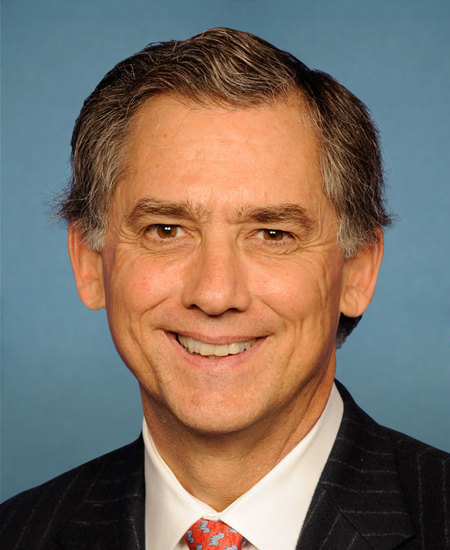
Rep. J. French Hill
Sponsored bills
Cardiovascular Advances in Research and Opportunities Legacy Act This act addresses research, education, and awareness concerning valvular heart disease and its treatment. This disease is caused by damage to or disease affecting any valve that controls blood flow in the heart. The National Institutes of Health may conduct or support research on the disease in consultation with the National Heart, Lung, and Blood Institute (NHLBI). The NHLBI must also conduct a workshop on mitral valve prolapse, which occurs when the valve between the chambers of the left side of the heart seals improperly. The Department of Health and Human Services (HHS) must develop best practices to treat valvular heart disease. HHS may also carry out other projects to increase education and awareness of the disease.
Big Cat Public Safety Act This act revises requirements governing the trade of big cats (i.e., species of lion, tiger, leopard, cheetah, jaguar, or cougar or any hybrid of such species) under the Lacey Act to limit the possession, breeding, and exhibition of big cats. The Lacey Act prohibits any person from importing, exporting, buying, selling, transporting, receiving, or acquiring big cats across state lines or the U.S. border. However, some exemptions are provided for certain entities, such as universities and wildlife sanctuaries. (Sec. 3) The act expands the Lacey Act prohibitions to include a prohibition on possessing or breeding big cats. Breeding means facilitating propagation or reproduction (whether intentionally or negligently), or failing to prevent propagation or reproduction. Owners of big cats that were born before this act's enactment may keep their big cats, but the owners must register them with the U.S. Fish and Wildlife Service. The act modifies the list of entities that are exempt from prohibitions to export, buy, sell, transport, receive, acquire, possess, or breed big cats. The modified list includes exemptions for entities or facilities exhibiting animals to the public if they (1) hold a Class C license in good standing under the Animal Welfare Act, and (2) do not allow individuals to come into direct physical contact with big cats. However, direct contact is allowed if the individual is a trained professional, a veterinarian, or directly supporting conservation programs that do not involve commercial activities and meet other specified restrictions. (Sec. 4) A person who knowingly violates the act must be fined not more than $20,000, or imprisoned for no more than five years, or both. The act considers each violation to be a separate offense. The offense must be deemed to have been committed not only in the district where the violation first occurred, but also in any district in which the defendant may have taken or been in possession of the prohibited wildlife species. (Sec. 5) The act extends forfeiture provisions to fish, wildlife, or plants that are bred or possessed; thus, big cats bred or possessed in violation of the act are subject to forfeiture. (Sec. 6) The Department of the Interior must issue regulations to implement this act.

This joint resolution nullifies a Department of Labor rule concerning the fiduciary duties with respect to employee benefit plans. Under the rule issued on December 1, 2022, plan fiduciaries may consider climate change and other environmental, social, and governance factors when they make investment decisions and when they exercise shareholder rights, including voting on shareholder resolutions and board nominations.
Consumer Information Notification Requirement Act This bill requires federal financial regulators to set forth rules regarding data breaches. Specifically, these rules must require financial institutions, banks, and other specified entities to notify customers of breaches likely to result in identity theft, fraud, or economic loss.
This bill expands the information allowed when calculating whether an acquisition or disposition of a subsidiary is significant for purposes of required financial disclosures by publicly traded companies. Currently, an acquisition or disposition is considered significant when the company's investment in the subsidiary is calculated to exceed 10% of the aggregate worldwide market value of the company's voting and non-voting common equity. Under the bill, this market value may additionally include applicable trading value, conversion value, or exchange value of all of the company's outstanding classes of stock, including preferred stock and non-traded common shares that are convertible into or exchangeable for traded common shares.
Review the Expansion of Government Act or as the REG Act This bill requires the Securities and Exchange Commission to periodically review final rules to determine if a revision, including a repeal, of a rule is (1) necessary to ensure the rule is authorized under law; (2) necessary to comply with the law; or (3) necessary or appropriate to facilitate capital formation, to maintain fair and orderly markets, or to protect investors.
Putting Investors First Act of 2022 This bill requires a proxy advisory firm to register with the Securities and Exchange Commission and prohibits an unregistered proxy advisory firm from using interstate commerce to provide proxy-voting advice, research, analysis, or recommendations to any client. With respect to these firms, the bill (1) establishes procedures for both registration and termination of registration; (2) requires each firm to employ an ombudsman, designate a compliance officer, and publicly disclose conflicts of interest; (3) allows issuers to assess and comment on proxy voting recommendations; and (4) prohibits unfair, coercive, or abusive practices. The bill establishes a private right of action against a proxy advisory firm that endorses an approved proposal that is not supported by the issuer and is found to be illegal.
Hostage and Wrongful Detainee Day Act of 2022 This bill requests the President to issue an annual proclamation designating Hostage and Wrongful Detainee Day. The bill also designates the Hostage and Wrongful Detainee Flag as a symbol of the commitment of the United States to recognizing citizens held as hostages or wrongfully detained abroad.
The Jackie Walorski Maternal and Child Home Visiting Reauthorization Act of 2022 This bill reauthorizes through FY2027, increases funding for, and modifies the Maternal, Infant, and Early Childhood Home Visiting Program. This program supports home visits for expectant and new parents who live in communities that are at-risk for poor maternal and child health outcomes. Changes to the program include setting out requirements for allocating program funds; increasing the percentage of funds reserved for tribal entities; establishing a publicly available dashboard that reports program outcomes; requiring activities to reduce unnecessary data collection, reporting, and other administrative requirements of the program; and allowing for virtual home visits (provided certain conditions are met). The bill also reduces funding for the Medicare Improvement Fund.