

Maddy summaryHR 277 would require Congress to approve major federal regulations before they take effect. Major rules are defined as those with significant economic impact ($100 million+ annually), major cost increases for consumers or industries, or significant adverse effects on competition, employment, or innovation. Agencies must submit detailed information about these rules to Congress, including cost-benefit analyses, before they can take effect. Congress would have 70 session days to approve the rule with a joint resolution; if they don't act within that timeframe, the rule would not take effect. This would increase congressional oversight of federal regulations and require more detailed information about proposed rules before they become law.
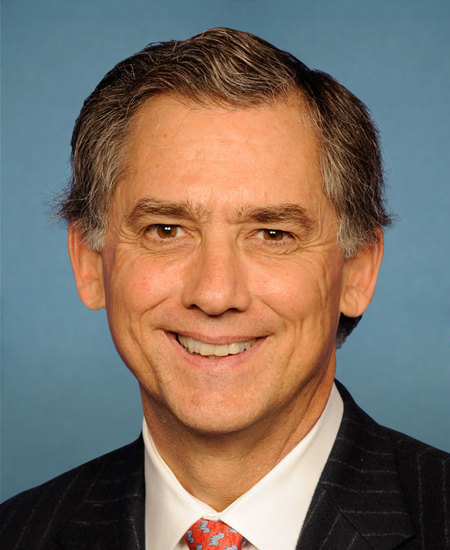
Rep. J. French Hill
Sponsored bills
Protecting Consumers from Abusive Mortgage Leads Act This bill prohibits a credit reporting agency from providing a consumer's credit report to a third party in connection with a mortgage transaction unless (1) the third party provides documentation certifying that it has the consumer's consent, or (2) the third party has a current financial service relationship with the consumer.
Maddy summaryThe Fly Together Act requires airlines to seat children under 14 adjacent to an accompanying adult, if seats are available after ticket purchase but before boarding. It prohibits airlines from charging extra fees for this adjacent seating arrangement within the same class of service. The rule would take effect within 180 days of the bill’s enactment through a new Transportation Department policy. This directly affects families traveling with young children on commercial flights. The policy does not force airlines with existing flexible seating systems to change their current practices.
Maddy summaryThis non-binding resolution expresses the House's support for 10 specific rights of youth in foster care, directly affecting young people aged 18-21 navigating the system. It affirms their right to remain in original schools, access health services (including mental health), live free from abuse, maintain sibling contact, and receive adequate food and housing. The resolution does not create new legal obligations but calls for child welfare agencies to uphold these standards, based on documented challenges like high school graduation gaps and trauma exposure.
Maddy summaryHRES 272 is a non-binding resolution passed by the U.S. House of Representatives calling on Russia to immediately release Paul Whelan, a U.S. citizen and Michigan resident imprisoned since 2018 on espionage charges without evidence. It demands Russia provide Whelan with consular access, ensure due process rights, and release him from his 16-year labor camp sentence. The resolution also thanks Canada, Ireland, and the U.K. for their efforts to secure his freedom and expresses sympathy to his family. As a formal statement of congressional position, it does not compel action but underscores the House's stance on Whelan's case.
Maddy summaryThis House resolution (HRES 377) calls for the immediate release of Evan Gershkovich, a U.S. citizen and Wall Street Journal reporter wrongfully detained by Russia since March 2023. It urges the U.S. government to press Russia for his release, demands consular access for him, and condemns Russia's detention of journalists. The resolution specifically references Gershkovich’s arrest on espionage charges without public evidence, aligning with Secretary Blinken’s designation of his detention as wrongful. It also extends similar calls for the release of other detained Americans, including Paul Whelan.
Maddy summaryHR 4035, the Protecting Small Business Information Act of 2023, requires the Treasury Secretary to coordinate the effective dates of all rules under the Corporate Transparency Act. It mandates that all final rules related to beneficial ownership reporting must take effect on the same date, delaying implementation until the Secretary certifies to Congress that all rules are issued and will align on a single effective date. This directly affects small businesses required to report beneficial ownership information under the Corporate Transparency Act. The bill’s key mechanism is creating a unified implementation timeline, preventing staggered rule deadlines that could complicate compliance for small entities. It does not change reporting requirements but ensures a synchronized rollout of the regulations.
Maddy summaryHR 4036, the Accountability through Confirmation Act, changes the appointment process for the Director of the Financial Crimes Enforcement Network (FinCEN). It requires the President to appoint the Director with Senate confirmation (instead of the Treasury Secretary), sets the Director's pay at Executive Schedule Level IV, and provides a transition period for the current Director until the new appointee is confirmed. This bill directly affects FinCEN leadership by shifting appointment authority to the President and Senate. The key change is the requirement for Senate confirmation of the FinCEN Director, altering the current process.
Maddy summaryThis bill amends the definition of "accredited investor" under securities law to expand who qualifies. It adds four new categories: individuals with net worth over $1 million (excluding primary residence value), those with high income ($200,000 individually or $300,000 jointly), licensed financial professionals, and individuals with verified investment expertise. The bill requires the SEC to update Regulation D to reflect these changes, with the $1 million net worth threshold adjusted for inflation every five years. This directly affects investors seeking to participate in certain private securities offerings by lowering the accreditation barriers for qualified professionals and high-net-worth individuals.
Maddy summaryHR 3639, the After Hours Child Care Act, creates a new Child Care and Development Innovation Fund to improve access to child care for parents working nontraditional hours (such as evenings, nights, or weekends). The bill directly affects working parents with young children and eligible child care providers who serve these families. It authorizes competitive grants (ranging from $25,000 to $500,000) to providers or partnerships with businesses/community organizations to expand after-hours care programs, establish workplace child care, or improve existing facilities. Grantees must cover 25% of costs, and the Secretary of Health and Human Services must report biennially on program impact to Congress.