

Maddy summaryThis bill reauthorizes existing mental health support programs for healthcare professionals under the Dr. Lorna Breen Act. It extends funding and reporting periods for two key initiatives: (1) an education campaign encouraging healthcare workers to access mental health services, and (2) programs promoting mental wellness within healthcare workplaces. The bill updates the timeline from 2022-2024 to 2025-2029 for both programs and requires grantees to focus on reducing administrative burdens for healthcare workers. It directly affects healthcare professionals by maintaining access to mental health resources and supports eligible entities like hospitals and health systems administering these programs.
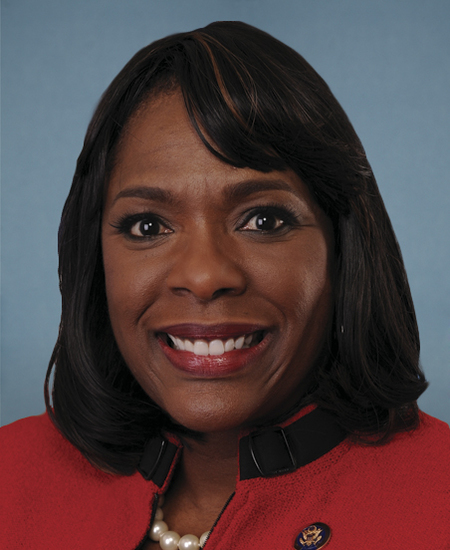
Rep. Terri A. Sewell
Sponsored bills
Maddy summaryThis bill ensures Medicaid funding continuity for four U.S. territories - American Samoa, Guam, the Northern Mariana Islands, and the U.S. Virgin Islands - by redistributing unused Medicaid funds. It requires the Secretary to redirect unused Medicaid funds from territories that didn’t use their full allocation to territories facing shortfalls (where Medicaid needs exceeded their allocated funds). The redistribution uses specific formulas based on aggregate unused funds and territory-specific shortfalls, with adjustments possible for prior fiscal years. Funds redistributed under this provision do not affect future-year allocations for those territories.
Maddy summaryThe Public Service Freedom to Negotiate Act of 2024 establishes federal minimum standards for collective bargaining rights for public employees and supervisory employees. The Federal Labor Relations Authority will determine if each state's laws "substantially provide" for these rights, and if not, federal standards will apply to that state. These standards include the right to self-organization, collective bargaining, recognition of labor organizations, and procedures for resolving disputes. The bill preserves existing collective bargaining agreements and excludes certain employee categories like emergency services workers from some provisions.
Maddy summaryThis bill requires Medicare to pay separately for certain high-cost diagnostic drugs used in nuclear imaging (like those for cancer detection) starting in 2024. It applies to drugs with a daily cost of $500 or more (adjusted annually), ensuring they are not bundled with other services. Payments will be based on either the drug's average sales price or wholesale cost, with adjustments to keep overall Medicare spending unchanged. This directly affects Medicare Part B providers (hospitals, clinics) and beneficiaries receiving these specific diagnostic treatments.
Maddy summaryThe LIFT Act creates a tax credit for issuers of "American infrastructure bonds" used for infrastructure projects like roads, bridges, and utilities. Issuers of qualifying bonds will receive a credit equal to 30-42% of the interest paid on those bonds, depending on the year the bond was issued (42% for 2024-2028, decreasing to 30% after 2031). To qualify, bonds must be used for infrastructure capital expenditures or operations/maintenance, not be private activity bonds, and meet specific tax-exempt criteria under Section 103. The bill also modifies rules for advance refunding bonds and increases the small issuer exception for tax-exempt interest allocation rules from $10 million to $30 million. This policy makes it more affordable for local governments and public entities to finance infrastructure projects through tax-exempt bonds.
Maddy summaryHRES 1206 is a symbolic House resolution supporting the designation of May 2024 as "Mental Health Awareness Month." It does not create new laws or funding but aims to raise public awareness about mental health challenges, emphasizing the need to reduce stigma and treat mental well-being as equally important as physical health. The resolution cites statistics on rising mental health crises - including increased anxiety, depression, and suicide rates among youth, LGBTQ+ individuals, veterans, and communities of color - to underscore the urgency of the issue. It encourages nationwide efforts to promote mental health awareness and access to care during this designated month.
Maddy summaryThis bill directs the Health and Human Services Secretary to fund research on early detection and treatment of uterine fibroids, with a focus on reducing health disparities. It authorizes grants to states for screening programs (including advanced imaging), patient navigation services, and public education campaigns - prioritizing areas with socially vulnerable populations at higher risk. States receiving funds must implement evidence-based strategies to improve access to early intervention. The bill also requires regular reports to Congress on grant outcomes and research findings related to fibroid treatment disparities and related conditions like Asherman’s Syndrome.
Maddy summaryHRES 1180 is a non-binding resolution recognizing the importance of diversity, equity, and inclusion (DEI) efforts in medical education. It affirms that a diverse medical workforce better serves the nation's diverse patient populations and supports medical schools in fostering inclusive environments to improve health equity. The resolution highlights existing disparities in health outcomes and representation, such as Black and Hispanic patients experiencing higher rates of chronic conditions compared to White patients, and notes that current medical school demographics (e.g., 10.8% Black or African American matriculants in 2023) do not reflect U.S. population diversity. It does not create new laws or funding but symbolically endorses DEI initiatives as essential for enhancing patient trust, clinical learning, and equitable care delivery.
Maddy summaryThe CROWN Act of 2024 prohibits discrimination based on hair texture or style commonly associated with race or national origin, such as braids, locs, cornrows, twists, or afros. It directly affects individuals - particularly people of African descent - who face workplace, school, housing, or public accommodation discrimination due to natural or protective hairstyles. The bill expands existing federal civil rights laws (like Title VI, the Fair Housing Act, and Title VII) to explicitly include hair-based discrimination, requiring compliance in federally funded programs, housing, employment, and public spaces. It clarifies that grooming policies targeting these hairstyles violate anti-discrimination protections without creating new legal standards.
Maddy summaryHR 8192, the High School Voter Empowerment Act of 2024, requires all public high schools (as defined by federal education law) to serve as official voter registration agencies under the National Voter Registration Act. It mandates that each high school conduct at least one annual voter registration drive targeting students enrolled in American Government or Economics courses, aged 17+ by April 10, and eligible to vote for federal office. The bill also establishes a federal grant program to reimburse schools for reasonable costs incurred during these registration drives, including documentation of activities and student registrations. This law directly affects public high schools and state election officials, creating a new requirement for schools to facilitate voter registration for eligible students.