

World Language Education Assistance Program Act or the World LEAP Act This bill requires the Department of Education to award competitive grants to local educational agencies to establish and carry out new, or improve existing, world language or dual language programs.
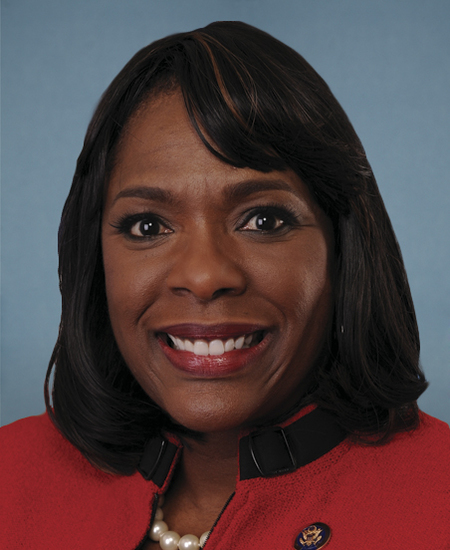
Rep. Terri A. Sewell
Sponsored bills
Maddy summaryEthan's Law requires gun owners to store firearms securely in homes where minors live or where residents are legally prohibited from owning guns. It makes it unlawful to leave firearms unsecured if a minor or ineligible person could access them, with fines of $500 per violation and harsher penalties if injury or death occurs. The bill creates a federal grant program to help states implement similar secure storage laws and treats unsafe storage as negligence in legal cases. It directly affects households with children or residents who cannot legally possess firearms, aiming to reduce accidental shootings and unauthorized access.
Maddy summaryHRES 159 is a symbolic resolution expressing the U.S. House of Representatives' support for designating February 24-28, 2025, as "Public Schools Week." It does not create new laws or allocate funds but aims to highlight the importance of public schools in communities. The resolution cites reasons such as public schools serving 90% of U.S. students, fostering critical thinking, and requiring equitable funding - though these are context, not policy changes. It directly affects public schools and their communities by raising awareness of their role in education. As a non-binding resolution, it has no direct impact on school operations or funding.
New Era of Preventing End-Stage Kidney Disease Act This bill establishes regional centers of excellence, postgraduate fellowships, and training for health professionals relating to the diagnosis and treatment of rare kidney disease. It also requires the Department of Health and Human Services (HHS) to conduct various studies on rare kidney disease. Specifically, it authorizes the National Institute of Diabetes and Digestive and Kidney Diseases to award funding to public and private nonprofit entities for establishing regional centers of excellence that will increase public awareness, conduct research, and develop resources for diagnosing and treating rare kidney diseases. A center may receive such funding for up to five years, unless extended by the institute. The bill also requires health professions schools receiving a grant from the Health Resources and Services Administration (HRSA) Centers of Excellence program to award fellowships for training on preventing, diagnosing, and treating rare kidney disease in disproportionately impacted populations. Also, the bill expands the priorities of HRSA’s Primary Care Training and Enhancement program to include training for health care workers to care for individuals with kidney disease. Additionally, HHS must conduct several studies and report to Congress on topics such as treating rare kidney disease in disproportionately affected populations, eliminating the need for dialysis or kidney transplants, and increasing public awareness of rare kidney disease.
Maddy summaryHR 1548, the "Leveling the Playing Field 2.0 Act," amends U.S. trade laws to strengthen enforcement of antidumping and countervailing duty regulations. The bill creates new rules for handling multiple investigations on the same merchandise (successive investigations), addresses market distortions in foreign countries that affect production costs, and improves mechanisms to prevent companies from circumventing existing duties. It also establishes procedures for investigating currency undervaluation as a form of subsidy and strengthens requirements for importers to certify compliance with trade laws. These changes primarily affect U.S. importers of foreign goods, foreign exporters, and the Department of Commerce, which administers these trade enforcement mechanisms.
Maddy summaryHR 1543, the EQUITY Act, prohibits discrimination in the U.S. military based on race, color, religion, sex, national origin, gender identity, or sexual orientation. It requires that military service, advancement, and evaluations be based solely on individual merit, fitness, capability, and performance. The bill amends Title 10 to add Section 975, explicitly banning discrimination and ensuring eligibility considers only job-related standards and military occupational specialty requirements. This directly affects all active-duty service members and military personnel by codifying merit-based standards and reversing policies like the 2025 executive order restricting transgender service.
Dentist and Optometric Care Access Act of 2025 or the DOC Access Act of 20 25 This bill prohibits private health insurance plans from setting rates for items and services, except for dental cleanings, provided by a doctor of optometry, of dental surgery, or of dental medicine (or an employer of such a doctor) for which the plan does not pay a substantial amount. Additionally, an agreement between a plan and such a doctor for limited scope dental or vision benefits may last longer than two years only with the prior acceptance of the doctor for each term extension. Plans also may not restrict such a doctor's choice of laboratories or suppliers. Such doctors may elect to waive the application of the payment amount and choice of laboratories provisions of this bill. The bill does not supersede state laws regarding health insurers and dental or vision benefit plans.
Maddy summaryHR 1448, the PEER Mental Health Act of 2025, provides federal grants to schools for mental health training. It requires training school staff, students, parents, and caregivers to recognize mental health symptoms in youth, refer students to services, and apply basic response techniques during immediate distress. The bill mandates that at least 25% of annual funding ($24.96 million per year for 2026-2030) supports rural schools, with streamlined application processes and technical assistance for grantees. The program directly affects public schools, their personnel, and students by expanding access to mental health awareness and community resource education.
Maddy summaryHR 1502 authorizes the creation of a Congressional Gold Medal to honor the volunteers and communities (primarily from Nebraska, Colorado, and Kansas) who supported the North Platte Canteen during World War II. The bill directs the Treasury Secretary to design and strike the medal, which will be presented to the individuals who contributed to the canteen’s operations and then permanently displayed at the Lincoln County Historical Museum in North Platte, Nebraska. It also permits the sale of bronze duplicates to cover production costs, with proceeds going to the U.S. Mint. This is a commemorative measure recognizing historical service, not a policy change affecting current laws or programs.
Maddy summaryHR 1433, the Kids’ Access to Primary Care Act of 2025, sets a minimum Medicaid payment rate of 100% of Medicare’s rate for primary care services provided to children. It directly affects Medicaid-covered children and expands eligibility for providers to include pediatricians, family medicine physicians, nurse practitioners, physician assistants, certified nurse-midwives, and rural health clinics or Federally-qualified health centers (FQHCs) under specific conditions. Key provisions require Medicaid managed care plans to pay these providers at the minimum rate, with documentation requirements to verify compliance, and exclude emergency department services from the definition of primary care. The bill also mandates a study to track enrollment and payment rate changes across states after implementation.