

Maddy summaryH.J. Res. 80 would declare the Equal Rights Amendment (ERA) part of the U.S. Constitution, asserting it has been ratified by 38 states (three-fourths of the states) despite the original 1972 deadline. If passed, this resolution would formally establish the ERA as a constitutional amendment, requiring all federal and state laws to align with its gender equality protections. The bill does not create new laws but confirms the ERA's status as part of the Constitution, affecting how laws are interpreted and enforced. It is a procedural step to resolve the legal dispute over the ERA's validity after decades of debate.
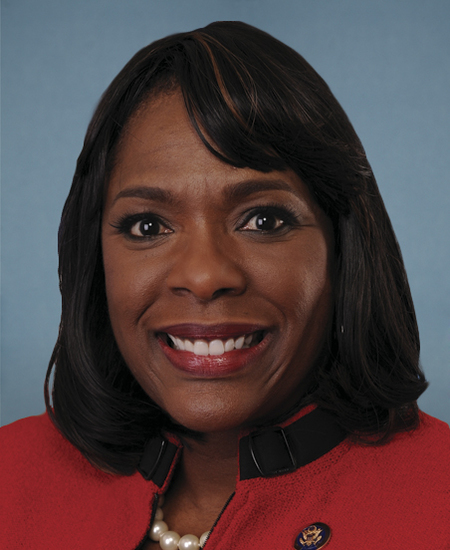
Rep. Terri A. Sewell
Sponsored bills
Maddy summaryHRES 239 is a non-binding resolution recognizing racial disparities in colorectal cancer (CRC) outcomes, specifically highlighting that Black Americans face 20% higher CRC rates and 40% higher death rates compared to non-Hispanic Whites. It directly affects Black communities disproportionately impacted by these disparities, which include the lowest 5-year survival rate for CRC. The resolution encourages the CDC to research screening disparities and develop strategies to eliminate them, promotes adherence to U.S. Preventive Services Task Force screening guidelines, and urges states to expand coverage for early CRC screenings, particularly for Black individuals and other high-risk groups. It does not create new laws but aims to raise awareness and guide existing public health efforts.
Maddy summaryThis resolution designates the week of March 9-15, 2025, as "Sleep Awareness Week" to raise public attention on sleep health. It does not create new laws or policies but symbolically recognizes sleep's role in health and encourages public health officials, healthcare providers, and individuals to prioritize sleep. The resolution cites statistics on sleep deprivation and health risks (like heart disease and mental health impacts) while referencing existing efforts like the National Sleep Foundation’s annual awareness week. It directly affects the public by promoting discussion of sleep habits with healthcare providers, though it has no binding requirements.
Maddy summaryThis resolution (HRES 195) requests the President to provide the House of Representatives with specific documents and communications related to the Social Security Administration (SSA) after January 20, 2025. It seeks information about the Department of Government Efficiency’s (DOGE) access to SSA systems, visits to SSA offices, compliance with certain executive orders, call volumes, office closures, and staff reductions. The request covers documents like IT access logs, correspondence, audit trails, and operational metrics, all to be provided within 14 days of the resolution's adoption. As a procedural oversight measure, it does not change laws but aims to gather facts about SSA operations.
Maddy summaryHRES 127 is a procedural resolution requesting documents from the executive branch. It directs the President and Treasury Secretary to provide the House of Representatives, within 14 days, any documents related to the Department of Government Efficiency (DOGE) accessing Treasury payment systems or confidential taxpayer data (like tax returns, SSNs, and debt information). The resolution specifically seeks records such as emails, logs, agreements, and screenshots involving DOGE, Elon Musk, or his team. This is not a law but a formal request for transparency regarding access to government systems and taxpayer information.
Maddy summaryThis bill authorizes $5 million annually (2026-2031) for the CDC to establish a research program focused on cerebral palsy. It directs the CDC to study diagnosis, treatment, prevention factors, health costs, and public health surveillance related to cerebral palsy, including evaluating impacts across different populations. The program aims to address gaps in understanding the condition - where 80% of causes are unknown - and support better care for the estimated 1 million Americans affected. This research funding directly benefits the CDC and researchers, with potential long-term benefits for people with cerebral palsy and their families.
Maddy summaryThis bill (HR 2199) prevents private health insurance plans from discriminating against patients with end-stage kidney disease (ESRD) who require dialysis. It amends the Social Security Act to prohibit plans from treating dialysis coverage differently than other medical services or applying network restrictions that disproportionately harm ESRD patients. The law clarifies that plans cannot deny or limit benefits for dialysis based on a patient’s diagnosis, while preserving a plan’s right to choose which dialysis providers are in their network. It directly affects ESRD patients and their private health insurance coverage, ensuring dialysis is treated equally with other covered medical services. The bill does not require plans to include specific dialysis providers but stops them from unfairly restricting access to necessary care.
Maddy summaryThis bill delays two Medicare billing deadlines for ground ambulance services from 2025 to 2028. It amends the Social Security Act to extend the timeline for implementing specific billing rules under Section 1834(l). The change directly affects Medicare ambulance providers by postponing compliance deadlines for billing requirements. No new services or funding are created - only a technical extension of existing timelines.
Maddy summaryThe Air America Act of 2025 authorizes one-time payments of $40,000 to individuals who worked for Air America or its affiliated companies for at least five years during 1950-1976, or to their surviving spouses, children, or dependents. Additional payments of $8,000 per full year beyond five years are allowed. The program is capped at $60 million total funding, with claims required within two years of final regulations. Payments are a single lump sum with no ongoing benefits, and the bill explicitly states it does not create new entitlements beyond this one-time award.
Maddy summaryThis bill amends the tax code to permanently establish a 7-year depreciation period for motorsports entertainment complexes, replacing a temporary provision. It directly affects businesses operating these facilities by allowing them to deduct the cost of qualifying assets over seven years instead of a shorter period. The key change is removing a temporary rule (subparagraph D) from the tax code, making the longer recovery period permanent for these specific properties. The bill focuses solely on clarifying and extending this tax treatment without additional policy changes.