

Neighborhood Access and Equity Grants Act This bill establishes discretionary grants for removing, replacing, or retrofitting highways and freeways to improve connectivity in communities and for planning and capacity building to increase community involvement in transportation planning and related activities. The bill prioritizes grants that fund projects in economically disadvantaged communities or that meet other criteria. The Federal Highway Administration (FHA) must award the grants to state, tribal, territorial, and local governments and metropolitan planning organizations. For the planning and capacity-building grants, the FHA may award grants to nonprofits or institutions of higher education that partner with governments or metropolitan planning organizations.
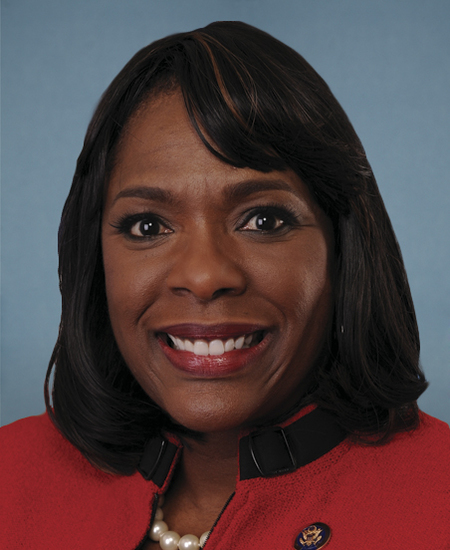
Rep. Terri A. Sewell
Sponsored bills
John R. Lewis Voting Rights Advancement Act of 2021 This bill establishes new criteria for determining which states and political subdivisions must obtain preclearance before changes to voting practices may take effect. Preclearance is the process of receiving preapproval from the Department of Justice (DOJ) or the U.S. District Court for the District of Columbia before making legal changes that would affect voting rights. A state and all of its political subdivisions shall be subject to preclearance of voting practice changes for a 10-year period if 15 or more voting rights violations occurred in the state during the previous 25 years; 10 or more violations occurred during the previous 25 years, at least 1 of which was committed by the state itself; or 3 or more violations occurred during the previous 25 years and the state administers the elections. A political subdivision as a separate unit shall also be subject to preclearance for a 10-year period if three or more voting rights violations occurred there during the previous 25 years. States and political subdivisions that meet certain thresholds regarding minority groups must preclear covered practices before implementation, such as changes to methods of election and redistricting. Further, states and political subdivisions must notify the public of changes to voting practices. Next, the bill authorizes DOJ to require states or political subdivisions to provide certain documents or answers to questions for enforcing voting rights. The bill also outlines factors courts must consider when hearing challenges to voting practices, such as the extent of any history of official voting discrimination in the state or political subdivision.
This resolution expresses support for the designation of National Prostate Cancer Awareness Month.
Rural Health Training Opportunities Act This bill requires the Department of Health and Human Services (HHS) to prioritize projects in rural areas when awarding grants for demonstration projects that provide education and training to low-income individuals for health care occupations. Specifically, HHS must give preference to projects that (1) serve a rural area where project participants reside, the project is conducted, or an employer partnership commits to hiring project participants; and (2) provide project participants with transportation assistance.
Carbon Capture and Sequestration Expansion Act This bill extends through 2031 the tax credit for carbon oxide sequestration. It also modifies carbon oxide capture requirements.
Low-Income Housing Renewable Energy Credit Act This bill increases the rate of the energy tax credit for solar facilities placed in low-income communities.
Voices for Veterans Act This bill expands the membership of the Advisory Committee on Minority Veterans to include veterans who are lesbian, gay, bisexual, transgender, gender diverse, gender non-conforming, intersex, or queer. Among other responsibilities, the committee advises the Department of Veterans Affairs on the administration of benefits and provision of health care, benefits, and services to minority veterans.
Improving Medicare Coverage Act This bill temporarily expands eligibility for Medicare. It also temporarily establishes a premium and cost-sharing assistance program for low-income beneficiaries. Specifically, the bill lowers the age of eligibility for Medicare from 65 to 60. The Centers for Medicare & Medicaid Services must establish procedures to provide for automatic enrollment of qualifying individuals. Enrollment must be completed within 11 months of the bill's enactment. The bill also establishes a program under Medicare to assist low-income Medicare beneficiaries with premiums, coinsurance, deductibles, and other costs. Currently, such assistance is provided through Medicare Savings Programs, which are administered by state Medicaid programs. The bill also establishes a related special enrollment period under Medicare, expands eligibility for assistance to beneficiaries with income up to 200% of the federal poverty line, and provides for joint eligibility determinations with respect to the bill's program and the low-income subsidy program under the Medicare prescription drug benefit. The bill's provisions generally take effect six months after the bill's enactment and terminate five years later.
This resolution expresses support for historically Black colleges and universities (HBCUs) and recognizes National HBCU Conference Week.
Prohibition of Medicaid Funding for Conversion Therapy Act This bill prohibits state Medicaid programs from covering conversion therapy. The bill defines conversion therapy as any practice or treatment that seeks to change a person's sexual orientation or gender identity in exchange for monetary compensation.