

Maddy summaryThe CCU Parity Act of 2023 increases tax credits for companies that capture and utilize carbon dioxide emissions. It raises the credit to $12 per metric ton for carbon used in certain processes and $17 per metric ton for carbon utilized in other ways, with future annual adjustments for inflation starting in 2025. This directly affects industrial facilities, such as cement or steel plants, that capture carbon dioxide from their operations. The changes apply to carbon captured after December 31, 2023, under existing tax code provisions.
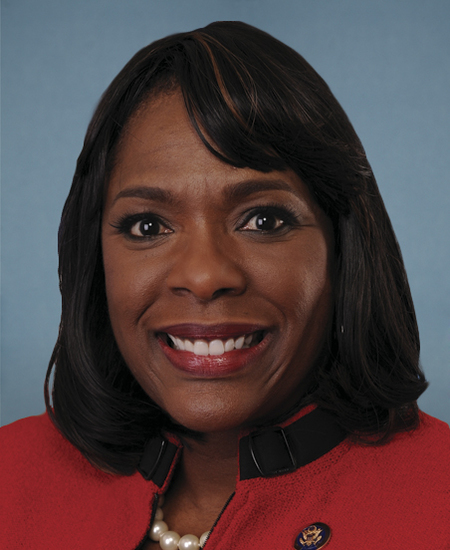
Rep. Terri A. Sewell
Sponsored bills
Maddy summaryHR 1247 would award a Congressional Gold Medal to the Freedom Riders collectively, honoring their pivotal role in challenging segregation in interstate travel during the Civil Rights movement. The medal, to be struck by the U.S. Mint and displayed at the Smithsonian Institution, recognizes their nonviolent protests that led to the 1961 federal ban on segregation in interstate public facilities. This is a symbolic tribute with no legal effect, as the bill does not create new policies or alter existing laws.
Maddy summaryHR 1244 authorizes Congress to award a gold medal collectively to Africans and their descendants who were enslaved in the U.S. from 1619 to 1865, recognizing their contributions to America's economic foundation. The bill directs the Treasury Secretary to design and strike the medal, which will be permanently displayed at the Smithsonian's National Museum of African American History & Culture. It also permits the sale of bronze duplicates to cover costs, with proceeds going to the U.S. Mint. This is a commemorative measure, not a policy change, focusing on symbolic recognition of historical contributions.
Maddy summaryThe Richard L. Trumka Protecting the Right to Organize Act of 2023 strengthens workers' rights to organize unions by making it harder for employers to interfere with organizing efforts. Key provisions include changing the definition of "employee" to make it more difficult to classify workers as independent contractors, prohibiting employers from threatening to permanently replace striking workers, and requiring employers to provide voter lists for union elections. The bill also creates a new electronic voting system for union elections, strengthens whistleblower protections for workers reporting labor violations, and increases penalties for unfair labor practices. These changes directly affect workers seeking to form unions, employers who may interfere with organizing, and labor organizations. The bill aims to make it easier for workers to exercise their right to collective bargaining under the National Labor Relations Act.
Maddy summaryHR 1202, the REDI Act, amends the Higher Education Act to allow medical and dental residents to temporarily pause federal student loan payments without accruing interest during their internship or residency programs. This directly affects borrowers with federal student loans who are enrolled in qualifying medical or dental training programs. The key provision adds a new rule (paragraph 6) ensuring these borrowers qualify for a deferment period where they don't pay principal and interest accrues at 0%. The change modifies existing loan rules to explicitly include medical/dental residents under the "in-school" deferment category. This policy change provides immediate financial relief during a critical training phase for healthcare professionals.
Dr. Norman C. Francis Congressional Gold Medal Act This bill provides for the award of a Congressional Gold Medal to Dr. Norman Christopher Francis in recognition of his contributions to the United States through his lifelong dedication to education, justice, and public service.
Maddy summaryThis bill makes it a federal crime to defraud veterans of their benefits, including benefits for dependents or survivors. It targets individuals who create schemes to steal or improperly obtain veterans' benefits, with penalties of up to five years in prison or fines. The law directly affects veterans, their families, and anyone seeking to exploit the benefits system. Key provisions define "veterans' benefits" broadly under federal law and establish criminal penalties for fraud attempts.
Maddy summaryHRES 150 is a ceremonial House resolution honoring the late civil rights leader John Robert Lewis (1940-2020). It formally recognizes his lifelong commitment to nonviolent activism, including his leadership in the Civil Rights Movement, the 1965 Selma voting rights march ("Bloody Sunday"), and his 30+ years serving as a U.S. Representative from Georgia. The resolution specifically commends his "towering achievements in the nonviolent struggle for civil rights" and his dedication to building the "Beloved Community" through justice and equality. As a commemorative resolution, it has no policy impact but serves as an official tribute to Lewis's legacy for the public and Congress.
Maddy summaryThis bill establishes the Ralph David Abernathy, Sr. National Historic Site in Georgia as part of the National Park System. It specifically preserves the West Hunter Street Baptist Church (where Abernathy served as pastor during the civil rights movement) and honors his leadership role. The site cannot be formally established until the National Park Service acquires sufficient land (through donation or purchase), and requires a management plan within 3 years of funding. The bill directly affects the National Park Service, the State of Georgia, and local communities by designating this location for preservation and public interpretation.
Maddy summaryThis resolution (HRES 99) is a non-binding statement supporting National Black HIV/AIDS Awareness Day, observed annually on February 7. It directly addresses the disproportionate impact of HIV/AIDS on Black communities in the U.S., citing data showing Black Americans face higher diagnosis rates, later care access, and greater mortality compared to other groups. The resolution encourages state/local governments and health agencies to promote HIV testing and awareness, supports the National HIV/AIDS Strategy, and advocates for culturally competent care and the "U=U" (Undetectable equals Untransmittable) messaging. It does not create new laws or allocate funding but urges recognition of existing disparities and community-led solutions.