

Maddy summaryThis resolution formally recognizes the importance of sleep health and expresses support for designating the week of March 9 through March 13, 2026, as "Sleep Awareness Week." The bill does not create new laws or regulations but instead encourages public health officials, healthcare providers, educators, and parents to promote adequate sleep practices among the public. It highlights existing research showing that many Americans do not get the recommended seven hours of sleep per night and acknowledges the health risks associated with sleep deprivation. The measure also recognizes disparities in sleep quality among different populations and supports ongoing efforts to raise awareness about sleep health benefits.
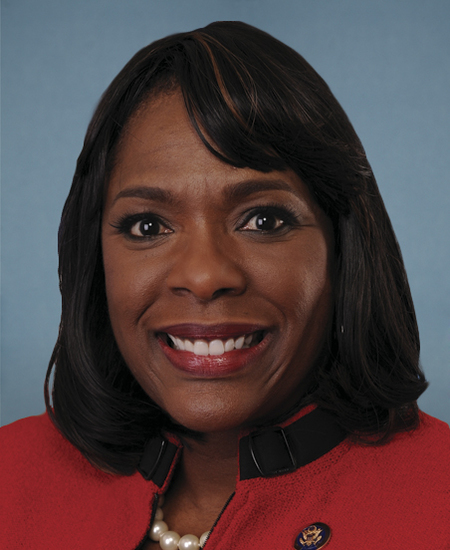
Rep. Terri A. Sewell
Sponsored bills
Maddy summaryThis bill cancels a presidential proclamation that would have imposed a temporary import surcharge on goods entering the United States. It directly affects businesses and consumers by declaring the surcharge invalid and prohibiting the government from collecting or spending money on it. The legislation also requires the President to refund any tariffs already collected under the canceled proclamation. This action effectively removes the proposed import tax and restores the previous trade policy status.
Lulu’s Law This bill requires the Federal Communications Commission to issue an order explicitly permitting the transmission of wireless emergency alerts to mobile phones in the event of a shark attack. (Under current regulations, authorized government authorities are permitted to send wireless emergency alerts regarding public safety emergencies, including severe weather, missing children, and other threats to life or property.)
Maddy summaryThis bill modifies the Consolidated Farm and Rural Development Act to update how federal grants support rural water systems. It allows nonprofit organizations to receive grants to provide loans and subgrants to individuals for building, repairing, or maintaining private household water wells and wastewater systems in rural areas. The bill adjusts eligibility income thresholds and increases the maximum loan amount to $20,000, while also requiring funding to cover at least five years of performance warranties for wastewater systems. The program's authorization period is extended from 2023 to 2031.
Maddy summaryThis bill directs the Secretary of Agriculture to create a pilot grant program that funds Food is Medicine initiatives, which connect community organizations with healthcare providers to help people manage diet-related diseases through nutrition-focused services. The program would provide grants for activities such as medically tailored grocery deliveries, cooking classes, and emergency food operations, with priority given to projects using local foods and involving nutrition professionals. Funding of up to $20 million is authorized for fiscal years 2027 through 2031, and the Secretary must submit reports to Congress on how the program affects participant health outcomes and system costs.
Maddy summaryThis bill (HR 7084) restricts U.S. port access for vessels arriving from specific Western Hemisphere ports that have been seized or expropriated by foreign governments from U.S. owners. It applies only to ports in countries with U.S. free trade agreements, where the port or its exclusive access land (owned by a U.S. person) was nationalized without proper compensation. The President must designate such ports if a foreign government seizes U.S. property under a free trade agreement, and may deny entry to vessels transiting those designated ports until the dispute is resolved. This policy change directly affects U.S. vessel operators and foreign governments involved in property disputes, requiring the President to remove designations once compensation is provided or the dispute is resolved.
Maddy summaryThe Maternal Vaccination Act amends the Public Health Service Act to expand a federal campaign focused on increasing vaccination rates among pregnant and postpartum individuals and their children. This legislation directly affects public health programs by updating language to explicitly include these populations and directing funding toward outreach efforts that address disparities among racial and ethnic minority groups. Key provisions modify existing sections of the Public Health Service Act to broaden the campaign's scope and increase the authorized funding amount from $15 million to $17 million per fiscal year for the period 2027 through 2031. The bill aims to improve vaccination equity by ensuring federal resources specifically target maternal and pediatric immunization efforts.
Maddy summaryThis bill directs the Joint Committee of Congress on the Library to commission and install a statue of Shirley Chisholm in a permanent public location within the United States Capitol. The legislation requires the committee to secure the statue within two years of enactment and authorizes the Architect of the Capitol to handle related contracts on the committee's behalf. Funding is authorized to cover the costs of obtaining and placing the statue, with appropriated funds remaining available until used. This measure directly affects the Capitol's art collection and honors Shirley Chisholm through physical representation in the legislative building.
Maddy summaryThe Save Struggling Hospitals Act adjusts Medicare reimbursement rates for hospitals in low-wage areas to help them remain financially viable. It directly affects hospitals located in regions where the average hospital wages fall below the 25th percentile nationally. The bill increases the area wage index for these struggling hospitals by half the difference between their current index and the 25th percentile threshold, starting with discharges on or after October 1, 2019. These adjustments are designed to be budget neutral, meaning the increased payments to low-wage hospitals are offset by reductions elsewhere without decreasing payments to hospitals in the top 75th percentile or reducing any hospital's payment by more than 5 percent from the previous year.
Maddy summaryThe Kira Johnson Act establishes a federal grant program to support community-based organizations in improving maternal health outcomes for populations facing higher rates of maternal mortality and health disparities. It allocates $100 million annually from 2027 to 2031 for grants that fund programs addressing social determinants of health, culturally congruent care, and support for midwifery practices. The bill also creates a separate $5 million annual funding stream for training all maternity care employees on bias reduction, trauma-informed care, and respectful service delivery. Additionally, the legislation requires hospitals and health systems to establish compliance programs that allow patients to report bias and mandates regular public reporting on these efforts. A study by the National Academies and ongoing evaluation by the GAO will assess the effectiveness of these initiatives in improving patient experiences and health outcomes for pregnant and postpartum individuals from racial and ethnic minority groups.