

Born-Alive Abortion Survivors Protection Act This bill establishes requirements for the degree of care a health care practitioner must provide in the case of a child born alive following an abortion or attempted abortion. Specifically, a health care practitioner who is present must (1) exercise the same degree of care as would reasonably be provided to any other child born alive at the same gestational age, and (2) ensure the child is immediately admitted to a hospital. Additionally, a health care practitioner or other employee who has knowledge of a failure to comply with the degree-of-care requirements must immediately report such failure to law enforcement. A health care practitioner who fails to provide the required degree of care, or a health care practitioner or other employee who fails to report such failure, is subject to criminal penalties—a fine, up to five years in prison, or both. An individual who intentionally kills or attempts to kill a child born alive is subject to prosecution for murder. The bill bars the criminal prosecution of a mother of a child born alive under this bill and allows her to bring a civil action against a health care practitioner or other employee for violations.
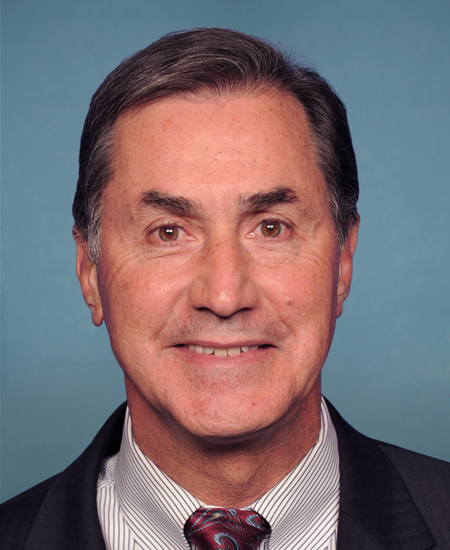
Rep. Gary J. Palmer
Sponsored bills
This resolution removes Representative Eric Swalwell from the House Permanent Select Committee on Intelligence.
Unauthorized Spending Accountability Act of 2021 This bill establishes a three-year budgetary level reduction schedule for unauthorized programs funded through the annual appropriations process. Under the bill, a budgetary level is an allocation provided to the congressional appropriations committees under Section 302(a) of the Congressional Budget Act of 1974 by a congressional budget resolution or a deeming resolution. The schedule applies to programs included in the Congressional Budget Office's annual report listing programs that are funded through the appropriations process and have an authorization of appropriations that has either expired or will expire during the year. For the first year after a program's authorization has expired, the bill requires the budgetary level to be reduced by 10% of the funds appropriated for the program in the expiring fiscal year. The bill then requires reductions of 15% in the second and third years before terminating the program at the end of the third unauthorized year. Programs that are reauthorized during the three-year period are exempt from the budgetary level reductions if the reauthorization contains a sunset provision limiting the authorization of appropriations period to no more than three years. The bill establishes the Spending and Accountability Commission to review all mandatory spending programs and submit to Congress a legislative proposal to establish an authorization cycle for discretionary spending programs. The commission may recommend legislation to replace the budgetary level reductions required by this bill with reductions in mandatory spending. The commission's reauthorization schedule must limit reauthorizations to three years, include the budgetary level reductions established by this bill, and establish a mechanism for replacing the budgetary level reductions with reductions to mandatory spending programs. The House of Representatives must consider the commission's proposal using specified expedited legislative procedures.
This bill directs the Speaker of the House and the President pro tempore of the Senate to arrange for the award of three Congressional Gold Medals to the U.S. Capitol Police (USCP) and other law enforcement agencies that protected the U.S. Capitol on January 6, 2021. Following the award of these medals, one medal shall be given to the USCP, one medal shall be given to the Metropolitan Police Department of the District of Columbia, and one medal shall be given to the Smithsonian Institution and displayed with a plaque listing all law enforcement agencies that participated in protecting the Capitol on January 6, 2021.
Developing Responsible Individuals for a Vibrant Economy Act or the DRIVE-SAFE Act This bill directs the Department of Transportation to promulgate regulations to implement an apprenticeship program for licensed commercial motor vehicle drivers under the age of 21. Under the program, an apprentice must complete two probationary periods that total 400 hours of on-duty time, of which at least 240 hours must be driving time in a commercial motor vehicle. Additionally, the apprentice must be accompanied in the cab of the commercial motor vehicle by an experienced driver. Further, the bill requires all commercial motor vehicles used in the program for training to be equipped with safety technology such as active braking collision mitigation systems and video event capturing systems. An employer shall not knowingly allow, require, permit, or authorize a driver under the age of 21 to operate a commercial motor vehicle unless the driver is participating in, or has completed, an apprenticeship program that meets the requirements set forth in this bill.
Child Welfare Provider Inclusion Act of 2021 This bill generally prohibits the federal government, states, tribal nations, or localities from discriminating or taking adverse action against a child welfare provider that declines to provide services due to the provider's sincerely held religious beliefs or moral convictions. However, government entities may still take adverse action against a provider that declines to provide adoption or foster care services based on race, color, or national origin. The Department of Health and Human Services must withhold a portion of federal funding for family services and child welfare activities from a government entity that discriminates against a child welfare provider in violation of this bill. Child welfare providers may also sue the government entity for such discrimination. A prevailing provider may recover reasonable attorney's fees and costs. Furthermore, government entities that accept certain federal funding for family services and child welfare activities must waive sovereign immunity as a defense to lawsuits brought under this bill. (In many cases, sovereign immunity shields states, territories, tribal nations, and some localities against private suits.)
Death Tax Repeal Act This bill repeals the estate and generation-skipping transfer taxes. It also makes conforming amendments related to the gift tax.
Justice for Victims of Sanctuary Cities Act of 2021 This bill provides a private right of action against state and local jurisdictions with certain policies that limit cooperation with federal immigration enforcement efforts, and contains additional provisions related to such jurisdictions. Currently, such cooperation is generally not required. An individual (or certain relatives of such an individual) who is the victim of any felony for which an alien has been arrested, convicted, or sentenced to a prison term of at least one year may sue a state or local jurisdiction if the jurisdiction failed to comply with (1) certain Department of Homeland Security (DHS) requests related to arresting and detaining aliens, and (2) a DHS request to detain the alien in question or provide a notification about the release of the alien. A jurisdiction that accepts certain federal grants may not assert immunity in such a civil action. A jurisdiction (or employee of a jurisdiction) that complies with certain DHS detainer requests shall be deemed to be acting as an agent of DHS. A complying jurisdiction or employee of the jurisdiction shall not be liable in any lawsuit relating to compliance with such requests. In a lawsuit against an employee of the jurisdiction, the United States shall be substituted in as the defendant, and remedies shall be limited to provisions for bringing tort claims against the federal government.
Dismemberment Abortion Ban Act of 2021 This bill restricts the performance of dismemberment abortions. It defines the term dismemberment abortion . Specifically, the bill prohibits a physician from knowingly performing a dismemberment abortion. It provides an exception for a dismemberment abortion that is necessary to save the life of a mother whose life is endangered by a physical disorder, illness, or condition. The bill establishes criminal penalties—a fine, a prison term of up to two years, or both—for a physician who performs a prohibited dismemberment abortion. It also authorizes civil remedies for a woman or parent of a minor who undergoes a dismemberment abortion. A woman who undergoes a dismemberment abortion may not be prosecuted or held civilly liable.
This joint resolution proposes a constitutional amendment limiting Representatives to three terms and Senators to two terms. Terms beginning before the ratification of this amendment do not count towards these term limits.