

TCJA Permanency Act This bill makes permanent provisions affecting individual and business taxpayers that were enacted in 2017 by the Tax Cuts and Jobs Act and are scheduled to expire at the end of 2025. The bill makes permanent reductions in individual and capital gain tax rates. The bill increases the standard tax deduction for individual taxpayers. It also increases and modifies the child tax credit and raises the contribution base for the tax deduction for charitable contributions. The bill allows additional contributions to ABLE accounts (tax-exempt accounts designed to enable individuals with disabilities to save and pay for disability-related expenses). It exempts from taxation combat zone benefits of members of the Armed Forces serving in the Sinai Peninsula of Egypt and limits the deduction for moving expenses to active duty members of the Armed Forces. Additionally, the bill expands the types of elementary and secondary school expenses eligible for payment from qualified tuition programs (529 programs); lowers to $750,000 the amount of mortgage debt eligible for an interest expense tax deduction; reinstates after 2023 the exclusion of income from the gross income of student loan borrowers for loan debt discharged due to death or total and permanent disability; makes permanent the limitation on the tax deduction for state and local taxes and denies a deduction for foreign real property taxes; makes permanent the tax deduction of the income of certain pass-through business entities; repeals the tax deduction for personal tax exemptions and the exclusion of employer-provided bicycle commuter fringe benefits; terminates certain miscellaneous itemized tax deductions; doubles the estate and gift tax exemption amount; and makes permanent the increase of the alternative minimum tax exemption amount for individual taxpayers.
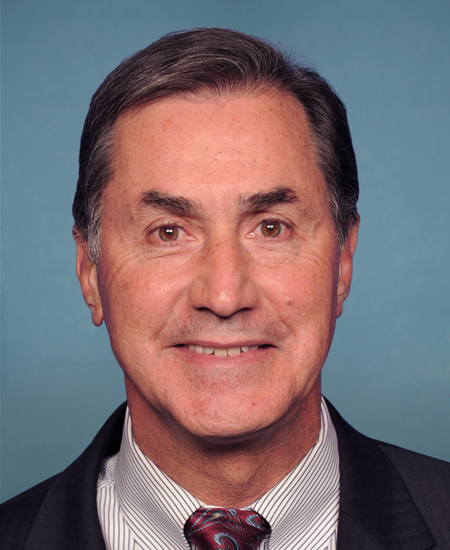
Rep. Gary J. Palmer
Sponsored bills
National Computer Forensics Institute Reauthorization Act of 2022 This bill reauthorizes through FY2032 the National Computer Forensics Institute within the U.S. Secret Service. The bill expands the mission of the institute to include educating, training, and equipping law enforcement officers and others on preventing (in addition to investigating) cybersecurity incidents, electronic crimes, and related cybersecurity threats. The bill requires the institute to develop and share information related to investigating cybersecurity incidents, electronic crimes, and related cybersecurity threats. The bill also requires the institute to report annually on its activities.
This bill revises requirements related to voter removal programs. Currently, each state must conduct a general program that makes a reasonable effort to remove the names of ineligible voters from the official lists of eligible voters by reason of (1) the death of the voter, or (2) a change in the residence of the voter. A state may meet this requirement by establishing a program under which change-of-address information is provided by the U.S. Postal Service (USPS). This bill removes the ability of states to rely on this change-of-address information provided by the USPS for the purpose of removing the names of ineligible voters from the official lists of eligible voters.
This bill revises requirements related to public disclosure of official lists of eligible voters. Currently, each state must maintain for public disclosure, for a minimum two-year period, all records pertaining to the accuracy and currency of official lists of eligible voters. This bill requires these records to also include lists of the names and addresses of all registrants who were inactive (i.e., the registrant failed to respond to a notice about a change in residence) and the length of time each registrant was inactive. The bill also requires each state to biennially submit a report to the Election Assistance Commission that includes information about inactive registrants in the state.
Citizen Ballot Protection Act This bill allows a state to include on its mail voter registration application form a requirement that the applicant provide proof of U.S. citizenship.
Preventing Racism in Medicare Act of 2022 This bill prohibits the Centers for Medicare & Medicaid Services from including the development of anti-racism plans (i.e., plans to address systemic racism in health care) as a qualifying clinical practice improvement activity under the Merit-based Incentive Payment System (MIPS), as described in a November 2021 rule. (MIPS is an incentive program under Medicare that allows health care professionals to receive payment adjustments based on certain performance measures.)
Formula Act of 2022 This bill requires the Food and Drug Administration to work through established processes to review and update internationally recognized standards for infant formula to ensure that such standards are consistent with standards applied to importing infant formula into the United States.
Benjamin Berell Ferencz Congressional Gold Medal Act This bill provides for the award of a Congressional Gold Medal to Benjamin Berell Ferencz in recognition of his service to the United States and the international community during the post-World War II Nuremberg trials and his lifelong advocacy for international criminal justice and the rule of law.
Maddy summaryThis bill prohibits the use of federal funds to establish or operate a Disinformation Governance Board under the Department of Homeland Security. It directly affects the Department of Homeland Security by blocking funding for this specific board, preventing its creation or activities. The measure restricts how existing federal appropriations can be applied, without altering other funding mechanisms.
This joint resolution nullifies the rule issued by the Centers for Disease Control and Prevention on February 3, 2021, that requires the use of face masks on planes, trains, buses, and other public conveyances and at transportation hubs to prevent the transmission of COVID-19.