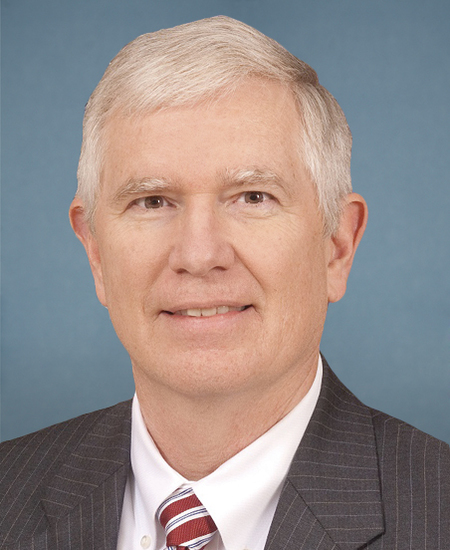
Photo of Mo Brooks
R United States House · District 5 · Alabama

Rep. Mo Brooks

Compare
Total votes
958
all sessions
Attendance
97%
26 missed
Lower than 79% of chamber peers
With party
83%
of cast votes
Lower than 95% of chamber peers
Bipartisan score
8%
crosses aisle rarely
Higher than 94% of chamber peers
Sponsored
276
bills & resolutions
Near the chamber average
Committees
0
assignments
276 bills and resolutions

Sponsored bills

Total
276
Primary
14
Co-sponsor
262
This page
276
matching current filters
Co-sponsor HRES 386
In committee · United States House · Co-sponsor
Expressing support for recognizing "National Police Week".

Maddy summaryHRES 386 is a symbolic resolution introduced in the U.S. House of Representatives that expresses support for recognizing "National Police Week" each year. The resolution acknowledges law enforcement officers' sacrifices, particularly during the pandemic, and encourages the public to honor their service. As a non-binding statement, this resolution does not create new law or change policy but serves as a formal expression of support for law enforcement officers across the United States.

In committee Nov 9, 2021 1 co-sponsor
Primary HR 3375
In committee · United States House · Lead sponsor
No Sanctuary for Criminals Act

No Sanctuary for Criminals Act This bill addresses issues related to immigration enforcement. A government entity may not prohibit its personnel or another government entity from cooperating with federal immigration enforcement efforts or making inquiries about an individual's immigration status. Currently, a government entity is only barred from prohibiting the sharing of immigration-related information with the Department of Homeland Security (DHS). A noncomplying state or local government shall be ineligible for certain grants and assistance related to law enforcement, terrorism, and immigration. DHS may (1) decline to transfer a detained alien to a noncomplying government entity even if that entity has issued a writ or warrant, and (2) issue a detainer if it believes that an individual arrested for any criminal or motor vehicle offense is inadmissible or deportable. DHS may not transfer an alien with a final order of removal to a noncomplying government entity. The bill also allows a victim of certain felonies (including murder and rape) to sue a state or local government entity if that entity had refused to honor an immigration detainer request and released the individual who later committed the crime. Furthermore, the bill (1) expands the categories of offenses requiring mandatory detention, (2) provides immunity for a state or local government entity or official temporarily detaining an alien under federal authority, (3) provides that an alien may be detained without time limitation while removal proceedings are pending, and (4) restricts a detained alien's release on bond.


In committee Nov 9, 2021 0 co-sponsors
Primary HR 3374
In committee · United States House · Lead sponsor
Kate's Law

Stop Illegal Reentry Act or Kate's Law This bill increases criminal penalties for certain aliens who illegally reenter the United States after removal or exclusion. Generally, an alien who had been denied entry into or removed from the United States and who later enters or attempts to enter the United States without prior approval from the Department of Homeland Security shall be fined, imprisoned for up to five years, or both. Current law requires a fine, imprisonment for up to two years, or both, for such an alien. An alien who had been denied entry or removed three or more times and who later enters or attempts to enter the United States shall be fined, imprisoned for up to 10 years, or both. An alien who was convicted of an aggravated felony or convicted at least two times before removal or departure and who subsequently enters or tries to enter the United States shall be imprisoned at least five years and for up to twenty years, and may also be fined. Currently, there is no minimum term of imprisonment for an alien who reenters after a conviction for an aggravated felony, and there are no criminal penalties for a reentering alien who had been convicted at least two times (other than the penalties for illegal reentry generally).

In committee Nov 9, 2021 0 co-sponsors
Co-sponsor HR 3343
In committee · United States House · Co-sponsor
Protecting America From Spies Act

Protecting America From Spies Act This bill expands the grounds for barring aliens who have engaged in acts relating to espionage or sabotage from entering the United States. Specifically, any alien shall be inadmissible if the alien has engaged in or will engage in an act that (1) violates a U.S. law relating to espionage or sabotage; (2) would violate any U.S. law relating to espionage or sabotage if it occurred in the United States; or (3) violates any U.S. law prohibiting the export of goods, technology, or sensitive information. Currently, an alien shall be inadmissible if the alien seeks to enter the United States to engage in such an action. Furthermore, the bill expands these grounds of inadmissibility and other security-related grounds to cover the spouse or child of the barred alien if the act occurred in the last five years. The bill also modifies the authority of the Department of Justice to waive certain security-related grounds of inadmissibility for an alien applying for a nonimmigrant visa.

In committee Nov 9, 2021 1 co-sponsor
Co-sponsor HRES 779
In committee · United States House · Co-sponsor
Expressing the sense of the House of Representatives that Congress disapproves of the Occupational Safety and Health Administration's Vaccine Mandate.

Maddy summaryHRES 779 is a symbolic resolution introduced in the U.S. House of Representatives on November 5, 2021. It expresses Congress’s disapproval of the Occupational Safety and Health Administration’s (OSHA) emergency temporary standard (ETS) requiring employers with over 100 workers to mandate COVID-19 vaccinations or weekly testing/mask-wearing. The resolution argues OSHA overstepped its authority by treating COVID-19 as a workplace-specific risk, despite Congress having delegated vaccine-related authority to other agencies like the FDA and CDC. As a non-binding resolution, it does not change any laws or enforceable requirements - it only states congressional opinion on the ETS.

In committee Nov 5, 2021 1 co-sponsor
Co-sponsor HR 5908
In committee · United States House · Co-sponsor
Stop Vaccine Mandates Act

Stop Vaccine Mandates Act This bill rescinds the executive order titled Ensuring Adequate COVID Safety Protocols for Federal Contractors and the executive order titled Requiring Coronavirus Disease 2019 Vaccination for Federal Employees , both published on September 9, 2021. The bill provides that these executive orders shall have no force or effect.

In committee Nov 5, 2021 1 co-sponsor
Co-sponsor HR 5894
In committee · United States House · Co-sponsor
Protecting Our Kids from Harmful Research Act

Protecting Our Kids from Harmful Research Act This bill prohibits the use of federal funds for research or publications concerning gender transitions in individuals under the age of 18.

In committee Nov 5, 2021 1 co-sponsor
Primary HR 5835
In committee · United States House · Lead sponsor
Defund Federal Vaccine Mandates Act

Maddy summaryThe Defund Federal Vaccine Mandates Act would prohibit federal funds from being used to establish, implement, or enforce any requirement that people receive vaccinations. It directly affects federal agencies and programs that rely on federal funding to mandate vaccines, such as those requiring vaccinations for federal employees, contractors, or federally funded services. The key provision is a spending restriction that would block federal money from supporting vaccine mandates, requiring agencies to find alternative funding sources or discontinue such mandates. This bill does not eliminate vaccine mandates but would cut off federal financial support for them.

In committee Nov 4, 2021 0 co-sponsors
Co-sponsor HR 5826
In committee · United States House · Co-sponsor
To allow States to elect to observe year-round daylight saving time, and for other purposes.

Maddy summaryHR 5826 would allow U.S. states to choose year-round daylight saving time (DST) instead of switching back to standard time each fall. It amends the 1966 Uniform Time Act to remove the requirement for states to revert to standard time, enabling states to pass laws applying DST continuously. This would directly affect any state that adopts the change, eliminating the need for biannual clock adjustments within that state. The bill provides the legal mechanism for states to make this choice but does not require any state to do so.

In committee Nov 3, 2021 1 co-sponsor
Showing 91 to 100 of 276 bills
Previous 1 … 9 10 11 … 28 Next