

Health Care Practitioner Disaster Protection Act This bill extends certain liability protections available for health care practitioners who provide voluntary health care services in declared emergencies through a community health center other than the one that initially sponsored them. Current law makes the liability protections available to volunteer practitioners that are sponsored by a particular community health center. This bill maintains the liability protections for a volunteer practitioner who provides services through a different community health center if the center (1) seeks the assistance of the volunteer practitioner to respond to a declared emergency, and (2) promptly notifies the Department of Health and Human Services that the volunteer practitioner will be providing services.
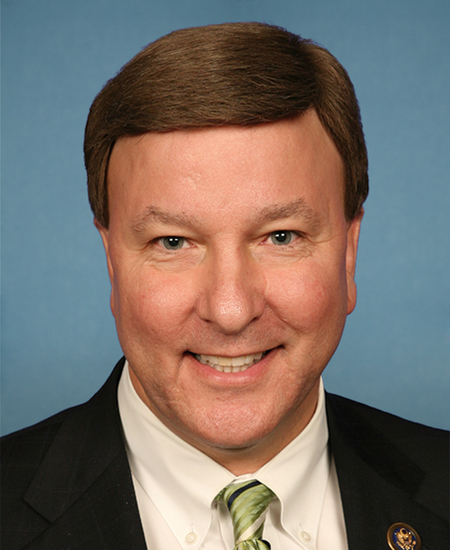
Rep. Mike Rogers
Sponsored bills
Maddy summaryHR 5880 makes reimbursements to Members of Congress (including delegates and resident commissioners) for official duty expenses tax-free. Specifically, it excludes from gross income any reimbursement paid from a Member's Representational Allowance (MRA) for expenses incurred while performing official duties, as defined in the House's Members' Congressional Handbook. This change applies only to MRA reimbursements for legitimate official expenses, not other income, and ensures these amounts are not counted toward taxable income or used to calculate other tax benefits under the Internal Revenue Code.
Maddy summaryHR 5561, the Protecting the Right to Keep and Bear Arms Act of 2023, prevents federal agencies from using emergency declarations to implement gun control measures. It specifically prohibits the President from declaring a national emergency under the National Emergencies Act or the Robert T. Stafford Act for gun control purposes, and stops the Health and Human Services Secretary from declaring a public health emergency under the Public Health Service Act for the same reason. The bill also amends the Stafford Act to explicitly prohibit any emergency-related restrictions on possessing, manufacturing, selling, or transferring firearms, ammunition, ammunition feeding devices, or firearm accessories. This directly affects how federal agencies can respond during emergencies without violating the Second Amendment. The law aims to limit executive actions during emergencies that could restrict gun rights.
Maddy summaryHRES 684 is a symbolic congressional resolution passed by the U.S. House of Representatives on September 14, 2023, condemning New Mexico Governor Michelle Lujan Grisham's emergency order that temporarily suspended open and concealed carry firearm rights for 30 days. The resolution asserts the order violated the Second Amendment, citing Supreme Court precedents (Heller, McDonald, Bruen) and noting a federal judge had already blocked the order's firearm restrictions. It does not change any laws or impose legal consequences - it is solely a formal expression of disapproval from Congress. The resolution directly addresses the Governor's actions but has no effect on New Mexico's laws or citizens' rights.
Maddy summaryHR 5609 bans the use of federal funds for security protection (including U.S. Marshal services) for the former director of the National Institute of Allergy and Infectious Diseases who served from January 1984 to December 2022. The bill directly affects that specific individual by ending federal funding for their security needs after their tenure. It does not alter security eligibility for other former officials or create new protections. The policy change is limited to removing federal funding for this one former position’s security coverage.
Maddy summaryThis bill creates a new program to incentivize SNAP (Supplemental Nutrition Assistance Program) recipients to purchase "naturally nutrient-rich dairy" like fluid milk, yogurt, and cheese at checkout. It allocates $10 million annually to fund competitive grants for state/local governments and nonprofits to implement projects that provide point-of-sale incentives for qualifying dairy products. Projects must use electronic systems to apply incentives only toward eligible dairy purchases and undergo independent evaluations using rigorous methods to measure impact on consumption. The program replaces an existing dairy incentive initiative under the 2018 farm bill, with a transition period ensuring no disruption to current projects.
Maddy summaryThis bill requires the Bureau of Prisons to develop and implement a strategy for scanning all incoming mail at federal prisons to stop fentanyl and other synthetic drugs from entering facilities. It directs the Bureau to evaluate existing scanning technology within 180 days and submit a detailed plan to Congress within 90 days, including how to provide digital copies of mail to inmates within 24 hours and physical copies within 30 days (if safe). The strategy must achieve 100% mail scanning capacity at all federal prisons, prioritize high-security facilities, and include a budget proposal for fiscal years 2024-2026. This directly affects federal prisons, inmates, and Bureau employees by changing mail processing procedures to enhance safety and reduce staffing burdens from manual mail checks.
Maddy summaryThis bill directs the U.S. Treasury to mint commemorative coins marking the Marine Corps' 250th anniversary in 2025. It authorizes three coin types: $5 gold coins (max 50,000), $1 silver coins (max 400,000), and half-dollar coins (max 750,000), with surcharges of $35, $10, and $5 respectively. The surcharge proceeds will fund the Marine Corps Heritage Center's educational programs, with no net cost to taxpayers as the Treasury must recover all minting costs through the surcharges. The coins can only be issued during 2025, and the Treasury must ensure all costs are covered before distributing funds to the Heritage Foundation.
Maddy summaryHR 4721, the Main Street Tax Certainty Act, makes a permanent the 20% tax deduction for eligible small business owners under Section 199A of the tax code. This provision directly affects pass-through business owners (like S-corps, partnerships, and sole proprietorships) who qualify for the deduction. The bill achieves this by removing the temporary expiration language (subsection (i)) from the existing tax code provision. The key change is ending the need for annual congressional extensions of this deduction, providing long-term tax certainty for small businesses.
Maddy summaryThis bill prohibits the General Services Administration (GSA) from considering the legality or availability of abortion when acquiring, constructing, leasing, or entering into agreements for federal buildings or properties. It directly affects GSA's decisions regarding federal real estate, ensuring that such actions are not influenced by state abortion laws. The law amends specific sections of Title 40 (including building acquisition, construction, and leasing rules) to explicitly ban this consideration. It does not change abortion laws or apply to non-federal properties.