

Maddy summaryHCONRES 13 is a concurrent resolution expressing Congress's support for maintaining the current policy that prohibits imposing new fees on local radio stations for playing music. It states that Congress should not impose any performance fee, tax, royalty, or charge on local radio stations for broadcasting sound recordings over the air, or on businesses like bars and restaurants that play music publicly. The resolution argues that such fees would harm local radio stations - critical sources for emergency information and community programming - and jeopardize the economic model that has supported both radio and the music industry for decades. This resolution does not create new law but formally opposes potential legislative changes to the existing fee structure.
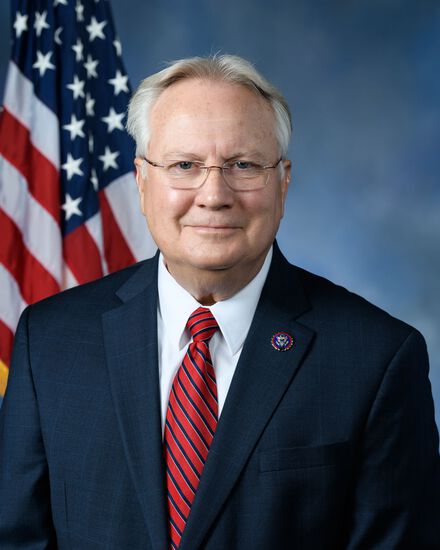
Rep. Jerry L. Carl
Sponsored bills
Freight Rail Assistance and Investment to Launch Coronavirus-Era Activity and Recovery Act of 2023 or the Freight RAILCAR Act of 2023 This bill provides a new tax credit through 2025 for 10% of freight railcar fleet modernization expenses (i.e., railcar replacement and modernization expenses for meeting fuel efficiency and performance standards). The bill provides that no more than 2,000 freight railcars per taxpayer may be taken into account for purposes of determining the credit in a taxable year. The Department of the Treasury must report to Congress on the credit to provide information on the number of times the credit was claimed and the number of railcars scrapped or built as a result of the credit.
Maddy summaryHR 781, the GIG Act, clarifies the definition of an independent contractor under federal law. It adds specific factors the Secretary of Labor must consider when determining if a worker is an independent contractor, such as whether the worker has substantial control over their work, can earn profits or losses based on their initiative, and whether their services require specialized skills performed continuously. The bill explicitly states that the Secretary cannot consider unmet contractual terms or unrelated services when making this determination. This directly affects workers classified as independent contractors and the businesses that hire them, by establishing a clearer, more objective standard for classification. The change aims to reduce misclassification disputes under the Fair Labor Standards Act.
Maddy summaryThis bill creates a new federal crime for assaulting law enforcement officers causing serious injury or death, with penalties up to 10 years in prison for serious injury and up to life for aggravated cases involving death, kidnapping, or attempted killing. It applies when offenses involve interstate travel, commerce, or target officers engaged in law enforcement duties. Federal prosecution requires Attorney General certification that state authorities cannot or will not handle the case, or that federal action is necessary for public safety. The law covers all law enforcement officers (state, local, and federal) who enforce criminal laws or detain individuals.
FTO Passport Revocation Act of 2022 This bill authorizes the Department of State to revoke or refuse to issue a passport for an individual who has aided an organization that the State Department has designated as a foreign terrorist organization. The individual may request a hearing with the State Department upon being notified of a revocation or refusal.
Prohibition of Agricultural Land for the People's Republic of China Act This bill requires the President to prohibit nonresident aliens, foreign businesses, and agents associated with China's government from (1) purchasing agricultural (including ranching) real estate located in the United States, or (2) participating in Department of Agriculture programs that are unrelated to food and safety regulatory requirements.
Maddy summaryHR 139, the SHOW UP Act of 2023, requires U.S. federal executive agencies to revert to their pre-pandemic telework policies and levels by January 30, 2024 (30 days after enactment). Agencies must conduct a study on pandemic-era telework impacts - including effects on mission performance, costs from underused offices or incorrect pay classifications, and employee productivity - and submit a new plan to Congress if they seek to expand telework beyond 2019 levels. This plan requires certification from the Office of Personnel Management (OPM) Director confirming it will improve mission performance, reduce real property costs, lower locality pay expenses, and ensure secure remote work tools without increasing overall costs. The bill directly affects all federal executive agencies and their telework policies, mandating a return to pre-2020 practices while creating a formal process for any future telework expansion.
Maddy summaryHR 382, the "Pandemic is Over Act," terminates the federal public health emergency declaration for the COVID-19 pandemic. The bill ends the emergency status declared on January 31, 2020, effective upon the bill's enactment. This action directly ends the federal authority tied to the emergency, including related public health measures and funding mechanisms under the Public Health Service Act.
Disaster Reforestation Act This bill sets forth a special rule for the tax deduction for casualty losses of uncut timber (including pre-merchantable timber). It provides that in losses of any uncut timber from fire, storm, insects, invasive species, drought, or other casualty, or from theft, the basis for determining the amount of the deduction for such loss shall not be less than the excess of the value of such timber determined immediately before such loss was sustained, over the salvage value of such timber. To be eligible for the casualty loss deduction, the uncut timber subject to the loss must be reforested not later than the close of the five-year period beginning on the date of the loss.
Maddy summaryHR 582, the Credit Union Board Modernization Act, changes the required meeting frequency for boards of directors at federal credit unions. It replaces a simple "monthly" requirement with tiered schedules based on each credit union's performance rating under the Uniform Financial Institutions Rating System. Top-rated credit unions (ratings 1 or 2) must meet at least six times yearly, with one meeting per fiscal quarter. Lower-rated credit unions (ratings 3, 4, or 5) must meet monthly, and new credit unions must meet monthly for their first five years. This directly affects all federal credit unions by adjusting their board meeting obligations based on their regulatory rating.