

Maddy summaryThe TERRA Act (Tribal Environmental Resiliency Resources Act) allows Indian Tribes to integrate funding from multiple Federal environmental and disaster-related programs into a single comprehensive plan to address threats like flooding, erosion, wildfires, and sea level rise. It streamlines processes by reducing administrative burdens through consolidated reporting requirements, enabling Tribes to create one annual report instead of multiple reports for individual programs, and allowing reallocation of funds for community-driven relocation or environmental remediation without additional approvals. The Act establishes the Department of the Interior as the lead agency with sole authority to approve these plans and integrate Federal programs, while providing mechanisms for Tribes to request waivers of certain statutory requirements and expedite land trust acquisitions for relocation purposes. Tribes can use integrated funds for infrastructure development, environmental remediation, and community-driven relocation, with reduced requirements for separate recordkeeping and reporting for each Federal program.
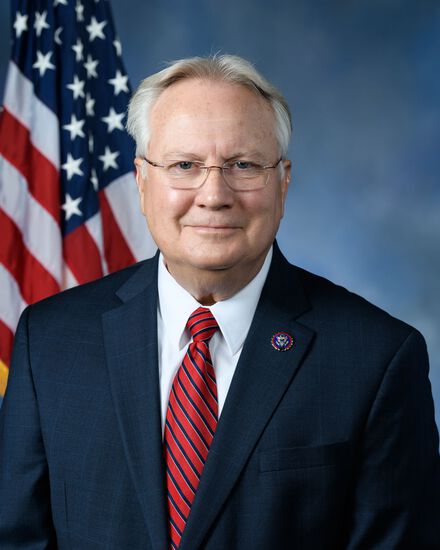
Rep. Jerry L. Carl
Sponsored bills
Maddy summaryHR 6814 allows offshore oil and gas platforms and pipelines (called "idle structures") to be repurposed as artificial reefs instead of being fully removed during decommissioning. It requires the Secretary of the Interior to delay removal until NOAA assesses whether the structure supports an "established reef ecosystem" (identified reef-associated species). Operators can request "reef in place" status within 5 years of filing decommissioning plans, subject to safety and environmental checks, and states can manage these structures using funds covering up to 50% of removal costs. The bill also mandates a public dashboard tracking Gulf of Mexico infrastructure and requires annual reports on reef assessments.
Maddy summaryHR 6727 establishes the United States Foundation for International Conservation, a nonprofit organization that will provide grants to support long-term management of protected and conserved areas in eligible countries. The Foundation requires a 2:1 cost match from other sources, demands host country and community consent through binding agreements, and prioritizes areas with high biodiversity or species of significant importance. It will be governed by a Board of Directors including government officials and private sector experts, operate for 10 years with $1 million authorized for 2024 and $100 million annually from 2025-2035, and must follow international conservation standards while prohibiting funding for countries supporting terrorism or violating human rights.
Maddy summaryThe Protecting American Energy Production Act (HR 1121) states that Congress believes states should have primary authority to regulate hydraulic fracturing for oil and gas production on state and private lands. It prohibits the President from declaring a moratorium on hydraulic fracturing without specific authorization from Congress. This bill directly affects federal and state governments by limiting the executive branch’s power to halt hydraulic fracturing operations and reinforcing state regulatory control. The key provision ensures any federal restriction on hydraulic fracturing would require a new law passed by Congress, not a presidential order.
Maddy summaryHR 7725 would block federal funding for graduate medical schools that require students or staff to adopt specific statements about race, gender, or identity (like claiming systemic racism or collective guilt), use race-based distinctions in admissions or programs, maintain DEI offices, or mandate "diversity statements" for admission. It directly affects graduate medical schools at colleges/universities receiving federal financial aid, including student loans. The bill exempts medical education about race-related health needs, demographic data collection for reporting, and religious institutions from adhering to policies conflicting with their beliefs. Schools violating these rules would lose eligibility for federal funds, though they could still comply with anti-discrimination laws and provide general academic instruction.
Maddy summaryThe BRIDGE Production Act of 2023 requires the U.S. Department of the Interior to hold at least four offshore oil and gas lease sales in the Gulf of Mexico between 2024 and 2025, with each sale offering a minimum of 80 million acres. It mandates these sales follow specific timelines (March/August 2024 and 2025) and use the same terms as a 2021 lease sale, applying an existing environmental review to streamline approvals. The bill also limits legal challenges by stating courts cannot block issued leases or delay drilling permits for projects on those leases, though they may require the Department to correct compliance issues. This directly affects oil and gas companies bidding on Gulf of Mexico leases and the Bureau of Ocean Energy Management, which administers the sales.
Maddy summaryHR 7478, the PROTECT Jewish Student and Faculty Act, amends the Higher Education Act to require colleges and universities receiving federal funds to take specific steps against antisemitism. The bill mandates that these institutions include the International Holocaust Remembrance Alliance's definition of antisemitism in all campus conduct documents and explicitly state that antisemitic conduct by students may lead to expulsion, while antisemitic conduct by employees may result in termination. This directly affects all institutions covered under the Higher Education Act by imposing new requirements for policy documentation and disciplinary consequences. The key mechanism is the mandatory inclusion of the IHRA definition and clear statements of penalties, aiming to standardize how institutions address antisemitism on campus.
Maddy summaryHR 7450, the Protecting Privacy in Purchases Act, prohibits payment card networks and covered entities (like payment processors) from requiring or assigning merchant category codes that specifically identify firearms retailers as different from general stores or sporting goods retailers. This directly affects firearms retailers and payment networks by preventing them from using business classification codes that could flag firearm sales. The bill establishes an enforcement process where the Attorney General investigates complaints, issues remediation notices, and can seek court injunctions for non-compliance, while preempting state or local laws on this issue. It does not create private lawsuits for individuals.
Maddy summaryH.Res. 1019 is a resolution passed by the U.S. House of Representatives condemning the Nicaraguan government's imprisonment of 11 individuals affiliated with Mountain Gateway Ministry. The resolution states these arrests occurred without due process on baseless charges of money laundering and organized crime, with detainees lacking adequate legal counsel. It specifically calls on Nicaragua to address these violations of religious freedom and human rights, following the government's pattern of targeting religious groups. This symbolic resolution expresses congressional disapproval but does not impose legal requirements on Nicaragua.
Maddy summaryHRES 966 is a symbolic resolution condemning alleged sexual violence committed by Hamas during its October 7, 2023, attack on Israel. It specifically references eyewitness accounts, forensic evidence, and Hamas fighters' admissions of ordering gang rape, sexual mutilation, and assault against Israeli civilians. The resolution calls for international condemnation of such acts as weapons of war, urges nations to criminalize sexual violence, and supports investigations into Hamas' actions. As a non-binding resolution, it does not create new laws or directly affect any individuals but formally expresses the House's position on the issue.