

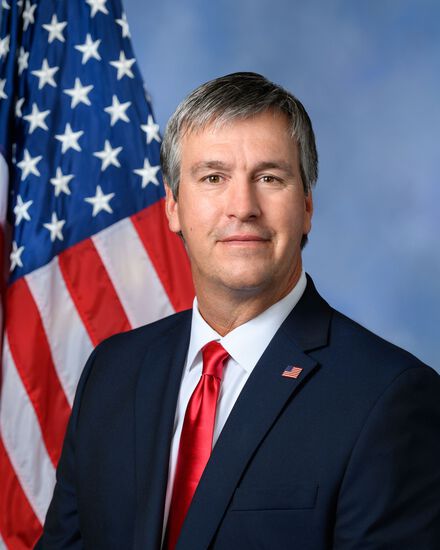
Short Line Railroad Relief Act This bill authorizes the Department of Transportation to provide emergency grants or enter into contracts and other agreements for capital projects for short line railroads. A project must protect, repair, reconstruct, or replace short line railroad equipment and facilities in danger of suffering catastrophic damage, or that have suffered catastrophic damage, as a result of an emergency. An emergency includes a natural disaster affecting a wide area or a catastrophic failure from any external cause that results in the declaration of an emergency or a major disaster.
Sponsored bills
Maddy summaryThis resolution recognizes the need for improved access to rural and agricultural media programming, such as agricultural weather reports, market news, and western lifestyle content, which directly affects farmers, ranchers, and rural communities. It highlights that media consolidation has reduced availability of this programming, which informs the public about food supply chains, agricultural research, and rural life. The resolution urges media companies to prioritize delivering such content but does not create new laws, funding, or mandates. As a non-binding recognition, it has no direct policy impact on legislative or regulatory changes.
Maddy summaryThis bill amends the Federal Trade Commission Act to restrict the FTC's ability to act when all remaining commissioners belong to the same political party. Specifically, it modifies Section 1 of the FTC Act to state that if all commissioners are from the same party (as determined at their appointment), they cannot exercise the commission's powers. The bill directly affects the FTC's operational capacity, preventing it from functioning when partisan alignment exists among commissioners. This change aims to ensure bipartisan representation is maintained for the FTC to make decisions.
Maddy summaryThis bill creates a new tax credit for expenses related to "qualified access technology for the blind" under the Internal Revenue Code. It allows taxpayers to claim a credit of up to $2,000 per year (adjusted for inflation) for costs paid for hardware, software, or IT that converts visual information into formats usable by blind individuals, covering the taxpayer, their spouse, or a dependent who is blind. The credit is limited to $2,000 over any three consecutive tax years per blind individual and expires after 2028. It directly affects blind individuals and their families who purchase qualifying assistive technology. The credit cannot be claimed for expenses already covered by other tax deductions or credits.
Maddy summaryThis bill requires all non-profit organizations receiving federal funds to certify they comply with anti-human trafficking, anti-smuggling, and fraud laws, and have no convictions under immigration law (8 U.S.C. 1324). Nonprofits must submit this certification within 60-120 days of the law's enactment; failure to certify or violation of the law results in repayment of funds and potential loss of tax-exempt status. The Department of Homeland Security must create compliance guides and publish violation data, while the GAO will report annually on non-compliance. The law applies to all nonprofits with federal contracts, grants, or agreements, aiming to prevent federal funds from supporting entities involved in trafficking or smuggling.
Maddy summaryHouse Resolution 437 is a procedural resolution formally censuring Rep. Adam Schiff (CA-30) for allegedly making false claims about Trump-Russia collusion and misusing intelligence access. The resolution demands Schiff appear in the House chamber for a public censure reading and imposes a $16 million fine, citing specific incidents including false statements about the Steele dossier and a flawed FISA memo. This resolution does not change laws or policies but addresses Schiff's conduct as a representative, based on the resolution's allegations. It was introduced by Rep. Luna on May 23, 2023, and referred to the Committee on Ethics.
Maddy summaryThis resolution, introduced by Rep. Marjorie Taylor Greene, proposes impeaching Attorney General Merrick Garland based on allegations of politicizing the justice system. It claims Garland failed to impartially enforce laws, targeted parents and religious groups, and pursued politically motivated prosecutions (like against former President Trump) while ignoring alleged misconduct by the Biden administration. As a procedural resolution, it has been referred to the Judiciary Committee but has not advanced to a vote or Senate trial. It does not enact any policy changes - it is solely a formal accusation seeking removal from office.
Maddy summaryHRES 411 is a resolution introduced by House members to impeach Secretary of Homeland Security Alejandro Mayorkas, alleging he failed to secure U.S. borders and enforce immigration laws. It claims he violated the Secure Fence Act of 2006 and the Immigration and Nationality Act by not maintaining border control (citing statistics like 6 million border encounters during his tenure), ending border wall construction, and implementing policies like "catch and release" that allegedly facilitated illegal crossings and drug trafficking. The resolution specifically cites failures related to fentanyl seizures (over 14,000 pounds in 2023) and border security protocols. This is a formal House accusation seeking Senate trial, not a law or policy change.
Maddy summaryThis resolution (HRES 405) is a symbolic House action seeking to impeach Matthew M. Graves, the U.S. Attorney for the District of Columbia. It claims he failed to prosecute 67% of arrests in 2022 (doubling the prior decade's rate), allowed violent crime to rise 23% overall (with homicides up 30%), and prioritized prosecuting political protesters over serious crimes. The resolution asserts these actions "endangered the justice system" and violated his constitutional oath, though it is not a binding legal proceeding. As a procedural resolution, it does not change law or policy and reflects a partisan political statement, not a legislative bill with concrete policy changes.
Maddy summaryHRES 406 is a resolution introduced by Representative Marjorie Taylor Greene (R-GA) on May 16, 2023, seeking to impeach FBI Director Christopher Wray. It alleges Wray "facilitated the development of a Federal police force" to target individuals opposing the Biden administration, citing specific FBI actions like the August 2022 raid on Donald Trump’s home and claims of surveillance targeting pro-life advocates and Catholic groups. The resolution frames these as violations of Wray’s constitutional oath, arguing he has undermined democratic principles by enabling political persecution. As a procedural resolution (not a law), it does not change policy but formally accuses Wray of misconduct for potential Senate trial. The resolution remains pending before the House Judiciary Committee.