

Maddy summaryHR 5636, the "Protect Children’s Innocence Act," prohibits federal criminal penalties for performing gender-affirming medical care on minors under specific circumstances. It defines prohibited care as surgeries (like hysterectomy or mastectomy), puberty blockers, and hormone therapies at supraphysiologic doses, with exceptions for medical emergencies, intersex conditions, or life-threatening illnesses. The law only applies when the care involves interstate commerce (e.g., payments, communications, or travel across state lines). Minors receiving such care cannot be prosecuted, but they may sue providers for civil damages. The bill directly affects minors under 18, healthcare providers, and families seeking gender-affirming medical treatment.
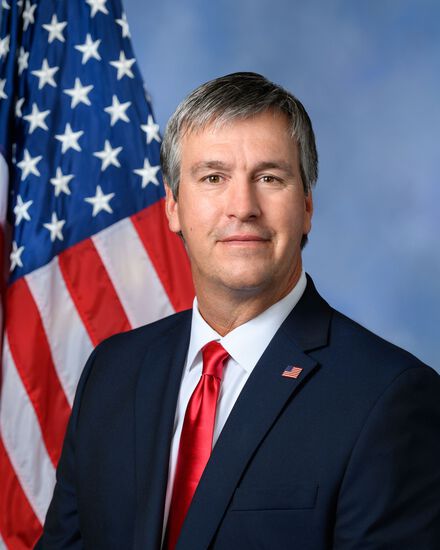
Sponsored bills
Maddy summaryThis bill prohibits federal funding for colleges and universities that require students or staff to get a COVID-19 vaccine to enroll, work, or access services. It directly affects institutions of higher education receiving federal funds, such as those participating in student aid programs. The key provision blocks all federal financial support if an institution enforces such vaccine requirements as a condition of enrollment, employment, or benefits. The law does not ban vaccine mandates outright but ties federal funding to compliance with this prohibition.
Maddy summaryHR 5630, the TITLE Act, requires all U.S. government agencies to stop using the term "Chinese Taipei" and instead use "Taiwan" in official communications and websites, with limited exceptions for historical context or formal document titles. The bill mandates that agencies update their websites within 14 days of enactment to reflect this terminology change. It directly affects federal agencies' public communications, aiming to affirm Taiwan's distinct status separate from China. The bill's purpose is to align U.S. nomenclature with Congress's view that Taiwan's sovereignty should be resolved peacefully, respecting the wishes of Taiwan's people.
Maddy summaryHR 5609 bans the use of federal funds for security protection (including U.S. Marshal services) for the former director of the National Institute of Allergy and Infectious Diseases who served from January 1984 to December 2022. The bill directly affects that specific individual by ending federal funding for their security needs after their tenure. It does not alter security eligibility for other former officials or create new protections. The policy change is limited to removing federal funding for this one former position’s security coverage.
Maddy summaryHR 5577, the FACE Act Repeal Act of 2023, would repeal a federal law (Section 248 of Title 18, U.S. Code) that made it a crime to block access to abortion clinics or threaten clinic staff. This repeal would remove criminal penalties for obstructing access to clinics, affecting abortion providers, clinic staff, and individuals attempting to access or block clinic entrances. The bill specifically targets the repeal of this prohibition, applying to prosecutions pending or initiated after the law's enactment. It does not change other abortion-related laws or create new policies.
Maddy summaryHR 5106 requires the Secretary of Agriculture to publish food safety criteria for meat and poultry processing plants seeking to operate under alternative inspection rates (above standard rates) within 90 days of enactment. It mandates that the Secretary review and respond to such requests within 90 days, automatically approving requests if they miss the deadline. Existing plants already using alternative rates can continue operating while their requests are reviewed, provided they maintain food safety standards, and must be given a 180-day grace period to address any noncompliance before potential revocation. The bill also requires the Secretary to minimize disruptions during rate adjustments by consulting affected plants and considering impacts on animal producers and contractual obligations.
Maddy summaryHR 5044, the Timber Innovation for Building Rural Communities Act, creates a federal platform to track carbon emissions and storage from forests and wood products, using data from USDA programs. It establishes grant programs to fund wood-building projects in rural areas with high unemployment, support wood-based construction education at colleges, and pilot innovative wood infrastructure projects like mass timber buildings in rural communities. The bill prioritizes projects that boost local jobs, reduce wildfire risks, and demonstrate economic benefits from wood products, requiring matching funds from non-federal sources. These grants, totaling up to $10 million annually per program, aim to strengthen rural economies tied to forestry while promoting wood as a carbon-friendly building material.
Maddy summaryHR 5465, the Congressional Access to Bureaucratic Offices Act (CABO Act), requires federal agency heads to allow Members of Congress and their staff access to agency headquarters buildings during regular business hours. It mandates that access be granted upon presentation of valid congressional identification (for Members) or a staff badge while accompanied by the employing Member (for staff), with exceptions for areas requiring secret-level security clearance. The bill also ensures this access applies during declared emergencies (like national emergencies under the National Emergencies Act or public health emergencies), without imposing additional costs by using existing agency funds. This directly affects how federal agencies manage physical access for congressional personnel.
Maddy summaryThis bill requires the HHS Secretary to publish all HHS-held information about the origins of the COVID-19 pandemic within 90 days of enactment, including research records, communications with Chinese institutions, and data from Wuhan. Specific categories include unpublished reports (like the 2019 CDC workshop), grant applications, EcoHealth Alliance records, and records of researchers in China. HHS may withhold classified, personally identifiable, or sensitive commercial information. Failure to comply results in daily $1 million rescissions from HHS funds, deposited to reduce the national debt.
Maddy summaryHRES 685 is a symbolic House resolution honoring country music legend Hank Williams on the 100th anniversary of his birth. It recognizes his life, legacy, and influence on country music through three specific acknowledgments: his generation-defining impact on the genre, his contributions to American music and culture, and his role in transforming country music into a major cultural force. The resolution does not create new laws, impose obligations, or affect any individuals or groups - it is purely a commemorative gesture with no concrete policy changes. It was introduced by multiple representatives and passed by the House as a formal tribute.