

Maddy summaryHR 3073 creates a federal grant program to fund community-based mental wellness and resilience initiatives. It provides planning grants (up to $250,000) for organizations to form community networks and assess needs, followed by program grants (up to $500,000 annually for 4 years) to implement evidence-based programs. The bill requires grantees to use a public health approach, collect community input, and develop strategic plans addressing protective factors and risk factors for mental wellness. At least 20% of funds must support rural communities, and programs must involve diverse community groups like schools, faith organizations, health professionals, and local government. The bill authorizes $36 million over 2024-2028 to support these community-led efforts.
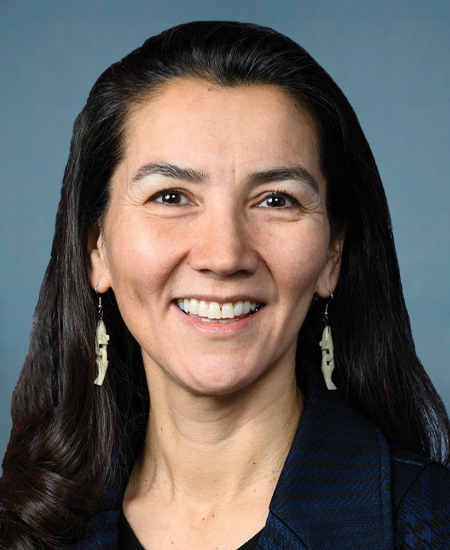
Rep. Mary Sattler Peltola
Sponsored bills
Maddy summaryThe SAFE Banking Act of 2023 would protect banks and financial institutions that provide services to state-legal marijuana businesses and hemp-related businesses by preventing federal regulators from taking adverse actions against them solely for serving these businesses. It clarifies that income from state-legal marijuana businesses can be considered for mortgage applications, and requires regulators to update guidance on suspicious activity reports related to these businesses. The bill does not require financial institutions to serve these businesses, but ensures they won't face penalties for doing so. It extends similar protections to hemp-related businesses, which have faced banking challenges despite being federally legal under the 2018 Farm Bill.
Maddy summaryHRES 341 is a nonbinding resolution expressing the House's support for maintaining cash as a viable payment option. It highlights that 18.6% of U.S. households (nearly 6 million) rely solely on cash due to lack of bank access, privacy concerns, and risks associated with digital payments like data breaches. The resolution cites legal tender status under U.S. Code and Federal Reserve Chair Powell's testimony emphasizing cash's critical role for unbanked and low-income communities. It does not create new laws but urges businesses to accept cash to protect consumer privacy and financial security.
Maddy summaryThe Returning Home Act (HR 2994) establishes a new federal grant program to provide rental assistance and housing support for individuals recently released from incarceration. It directly affects people leaving prisons, jails, juvenile facilities, or halfway houses who are at risk of homelessness or housing insecurity within 365 days of release. The program funds 24 months of rental assistance (60% minimum), housing counseling, case management, landlord incentives, and other supportive services like pre-release planning and mental health referrals. It authorizes $100 million annually for these services and prohibits funding for law enforcement entities.
Maddy summaryHR 3006 creates a competitive grant program for colleges to place licensed social workers and social work students in public libraries, particularly in underserved communities. The bill requires participating colleges to partner with libraries, pay interns at least $15/hour, and ensure social workers provide referrals to health, mental health, and financial services - without offering direct medical care or reporting undocumented immigrants. Libraries must provide space and support for social workers and interns, while the program includes a national technical assistance center to share best practices. This directly affects public libraries in high-need areas, social work students seeking field placements, and licensed social workers expanding community service access.
Maddy summaryHR 3024, the Life Saving Leave Act, amends the Family and Medical Leave Act to provide eligible employees with up to 40 hours of additional unpaid leave per year for bone marrow or blood stem cell donation activities. This leave covers predonation, donation, and postdonation medical care, and can be taken intermittently. Employees may substitute accrued paid leave (like vacation or sick days) for this time, but employers cannot require it. The bill requires employees to give employers at least 30 days' notice (or as soon as practicable if urgent) and to schedule the leave to minimize disruption.
Maddy summaryThis bill protects living organ donors from insurance discrimination by prohibiting life, disability, and long-term care insurers from denying coverage, raising premiums, or altering policy terms solely because someone donated an organ while alive. It also updates the Family and Medical Leave Act to include recovery from organ donation surgery as a qualifying health condition, allowing donors to take protected leave for this purpose. Additionally, the bill requires the Health and Human Services Secretary to update public educational materials about living donation benefits, risks, and insurance protections within six months of enactment. These changes directly affect living organ donors, insurers, employers, and healthcare systems by ensuring fair access to insurance and workplace leave.
Bruce's Law This bill reauthorizes certain grants through FY2028 and sets out other activities to address the dangers of fentanyl-related drug overdoses, with a particular focus on drug contamination with fentanyl or other synthetic opioids. Specifically, the bill (1) reauthorizes grants that are available through the White House Office of National Drug Control Policy (ONDCP) for community-based coalitions to address local drug crises, and (2) authorizes new grants for coalitions to implement education and prevention strategies in communities that face significant levels of drug overdoses related to fentanyl and other synthetic opioids. The ONDCP may delegate authority to execute the new grants to the Centers for Disease Control and Prevention. Additionally, the Department of Health and Human Services (HHS) must carry out a campaign to increase public awareness of the dangers of fentanyl, including the risk of contamination of counterfeit drugs with fentanyl or other synthetic drugs. The bill also establishes an interagency work group to coordinate and improve federal efforts to reduce and prevent drug overdoses involving contamination with fentanyl or other synthetic opioids. Work group members include the ONDCP, HHS, the Department of Justice, and the Department of State.
Maddy summaryThe PREPARE Act establishes a new pre-disaster mitigation loan program for small businesses through the Small Business Administration (SBA). It authorizes $25 million annually from 2024 to 2028 to provide loans of up to $500,000 per business, enabling small businesses to fund projects that protect their property and operations from disaster damage (e.g., flood barriers or structural reinforcements). The SBA must conduct targeted outreach to businesses in economically distressed areas, offer technical assistance, and require borrowers to maintain insurance during loan terms. Annual reports will track program outcomes, including project types, cost savings avoided, and regional impacts, to evaluate effectiveness.
Maddy summaryThe Election Mail Act (HR 2987) establishes new requirements for handling mail-in ballots in federal elections to improve reliability and accessibility. It requires the Postal Service to process absentee ballots on the same day received, place postmarks indicating mailing dates on ballot envelopes, and treat election mail as first-class mail with free postage for completed ballots. The bill also mandates states to use intelligent mail barcodes on return envelopes, affix specific tags for ballot visibility, and adopt a uniform 7-day deadline for accepting mailed ballots postmarked on or before election day. These changes apply to federal elections, with most provisions taking effect for the 2024 election cycle. The bill includes additional provisions for the Postal Service to consult with Indian Tribes about voting barriers on tribal lands.