

National Law Enforcement Officers Remembrance, Support and Community Outreach Act This bill directs the Department of Justice (DOJ) to establish a National Law Enforcement Officers Remembrance, Support, and Community Outreach Program. The bill further directs DOJ to award a grant under the program to the National Law Enforcement Officers Memorial Fund for the expenses associated with community outreach, public education, and officer safety and wellness programs operated by the of the National Law Enforcement Officers Memorial Fund and National Law Enforcement Museum.
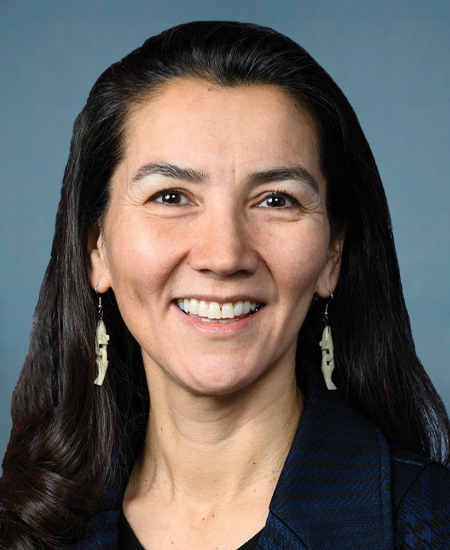
Rep. Mary Sattler Peltola
Sponsored bills
Maddy summaryHR 3341, the Respect for Workers Act, amends the Federal Reserve Act to change how the Board of Governors is structured. It requires that at least one Board member appointed after the bill's enactment must have demonstrated experience supporting worker rights and serve as the lead for employment policy. This change directly affects future Federal Reserve Board appointments by adding a specific qualification for one seat. The bill does not create new worker protections or alter Fed policy; it only modifies the appointment criteria for Board membership. The key mechanism is a procedural change to the Board's composition, not a substantive policy shift.
Maddy summaryThe FIGHT Act (HR 2742) amends the Animal Welfare Act to specifically target animal fighting events, such as cockfighting, by defining "rooster" as any male chicken over six months old and banning the live broadcasting (simulcasting) of such events. It prohibits using the postal service or interstate transport to move roosters for animal fighting purposes and adds civil enforcement tools allowing citizens to sue violators after a 60-day notice period. Fines up to $5,000 per violation may be imposed, and property used in animal fighting ventures can be seized. These changes strengthen enforcement against animal fighting by expanding legal remedies for the public and authorities.
Maddy summaryHR 3255, the Freight Rail Workforce Health and Safety Act, requires major freight railroads (Class I carriers) to provide employees with at least 7 days of paid sick leave annually. This includes leave for personal illness, family care, preventive medical visits, and situations related to domestic violence, sexual assault, or stalking. Employees can carry over unused days to the next year, and railroads cannot require workers to find replacements before taking leave or penalize them for using it. The law prohibits retaliation, such as termination or demotion, for requesting or using sick leave, and ensures paid sick leave is separate from existing vacation or holiday time.
Maddy summaryHR 3236, the Tribal Police Department Parity Act, updates federal firearm laws to grant tribal law enforcement departments equal access to firearms and tax exemptions as state police. It amends Title 18 (18 U.S.C. §922(o)(2)(A) and §925(a)(1)) and the Internal Revenue Code (26 U.S.C. §5853) to explicitly include "Indian Tribe" departments under existing state-level provisions. This means tribal police can now legally transfer, possess, transport, and receive firearms and ammunition without additional restrictions, and qualify for firearm tax exemptions similarly to state agencies. The bill directly affects tribal law enforcement agencies recognized under the Indian Self-Determination Act (25 U.S.C. §5304), aligning their regulatory status with state police departments. The changes apply to firearms transferred or made after the bill's enactment.
Maddy summaryThe HELPER Act of 2023 creates a new FHA mortgage insurance program specifically for first responders and K-12 teachers. It allows eligible first-time homebuyers in these professions to secure mortgages with 100% financing (no down payment required) for purchasing or repairing a primary residence. To qualify, applicants must be employed as law enforcement, firefighters, paramedics, or K-12 teachers, have completed housing counseling, and meet specific employment history requirements (e.g., 4 years in the role or disability-related release). The program authorizes $660,000 for fiscal year 2024 and $160,000 annually through 2030, with authority expiring after 5 years.
Maddy summaryHR 676, the Coastal Communities Ocean Acidification Act of 2023, amends the 2009 Federal Ocean Acidification Research and Monitoring Act to improve collaboration on ocean acidification efforts. It requires the federal Advisory Board to establish ongoing input mechanisms with coastal stakeholders, fishery councils, indigenous knowledge groups, and non-Federal experts, and mandates two Indian Tribe representatives on the Board. The bill also updates definitions to specifically include "Indian Tribe" and strengthens coordination with Tribal organizations for vulnerability assessments and research planning. These changes directly affect coastal communities, fisheries, Tribal nations, and local governments managing ocean acidification impacts. The law focuses on integrating diverse stakeholder input into federal research and monitoring activities.
Explore America Act of 2023 This bill modifies and sets forth new provisions regarding the Preserve America Program and authorizes partnerships with gateway communities adjacent to units of the National Park System. The Department of the Interior shall offer to enter into partnerships with gateway communities, including Native American communities and National Heritage Areas, to leverage heritage tourism assets in order to strengthen the local economies and create jobs in those communities.
Maddy summaryThis bill modifies how distilled spirits taxes collected in Puerto Rico are handled. It repeals a rule limiting tax coverage to Puerto Rico and the U.S. Virgin Islands, allowing those territories to transfer certain distilled spirits taxes to the U.S. Treasury. Crucially, it requires Puerto Rico to transfer 1/6 of the tax difference (above $10.50 per gallon) from rum taxes covered over into the Puerto Rico Conservation Trust Fund, which supports natural habitat conservation and sustainable agriculture. This directly affects Puerto Rico's rum industry and ensures a portion of those tax revenues funds conservation efforts.
Maddy summaryHR 2757, the Puerto Rico Status Act, establishes a process for Puerto Rico to determine its political status through a plebiscite on November 2, 2025, offering three options: independence, sovereignty in free association with the United States, or statehood. If no option receives a majority in the initial vote, a runoff plebiscite would be held on March 8, 2026. The bill outlines transition processes for each option, including constitutional conventions, implementation steps, and provisions for citizenship, immigration, and economic benefits. It mandates bilingual voter education materials and requires oversight by the Elections Commission and the Attorney General to ensure fair representation of all options. This legislation directly affects Puerto Rico's residents by providing a structured process to choose their permanent political relationship with the United States.