

Maddy summaryThe WIC for Kids Act expands eligibility for the Special Supplemental Nutrition Program for Women, Infants, and Children (WIC) by adding new qualifying pathways. It allows children to qualify if they live in households where someone receives Head Start, Indian reservation food assistance, or Puerto Rico/Northern Mariana Islands nutrition block grants, and streamlines documentation by permitting states to use existing records. The bill extends certification periods for children from one to two years and automatically enrolls infants born to current WIC participants. This directly affects low-income families with children who qualify for related assistance programs but previously faced barriers to WIC access.
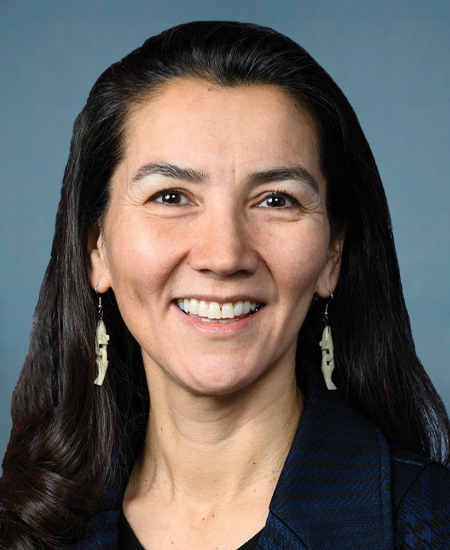
Rep. Mary Sattler Peltola
Sponsored bills
Maddy summaryHR 5728, the Government Shutdown Impact Report Act of 2023, requires the Congressional Budget Office (CBO) to issue daily reports during government shutdowns. The CBO must submit reports within 24 hours of each shutdown day, detailing specific economic impacts like lost GDP, unprovided Small Business Administration assistance, lost park revenue, and tourism revenue declines. These reports will provide Congress with real-time data on the costs of shutdowns to taxpayers and the economy. The bill directly affects how Congress receives information about shutdown consequences, mandating standardized, frequent reporting on economic and service disruptions.
Pay Our Border Patrol and Customs Agents Act This bill provides FY2024 appropriations for the salaries and expenses of certain U.S. Customs and Border Protection (CBP) employees who are required to work during a lapse in appropriations (i.e., government shutdown) in FY2024. Specifically, the bill provides appropriations to CBP for the salaries and expenses of agents of the U.S. Border Patrol and officers of the Office of Field Operations who are excepted from furlough (i.e., required to work) during a lapse in discretionary appropriations in FY2024.
Maddy summaryHR 5162 increases funding and clarifies grant terms for agricultural education programs serving Alaska Native and Native Hawaiian communities. It raises annual funding from $10 million (2023) to $15 million (2024-2028) for grants to Alaska Native and Native Hawaiian-serving institutions focused on agriculture education. The bill also limits each grant to a maximum 3-year period, replacing previous indefinite terms. These changes directly affect institutions receiving these specific agricultural education grants.
Maddy summaryHR 5569, the Child Care Nutrition Enhancement Act of 2023, increases funding for child care nutrition programs. It adds a 10-cent per meal reimbursement for providers participating in the Child and Adult Care Food Program (CACFP), applying to all meals and supplements served. This change directly affects child care centers, family day care homes, and group day care homes that receive CACFP funding. The additional reimbursement is calculated alongside existing payment rates and applies to all meals served after the bill's enactment. The bill modifies specific sections of the Richard B. Russell National School Lunch Act to implement this funding increase.
Maddy summaryHR 5059 would allow eligible states to receive their emergency food assistance funding as cash instead of in-kind commodities, enabling them to directly purchase food from private suppliers. Currently, the federal government buys and distributes food to states; this bill would let states elect to use cash for their own purchases in the commercial marketplace. The bill defines "eligible states" based on criteria from the 2018 Agriculture Improvement Act and applies only to states that choose this option. This change provides states with greater flexibility in sourcing food for emergency feeding programs.
Maddy summaryThis bill extends existing programs that provide payments to counties and states with federal land, primarily to support local schools and communities. It updates key deadlines, extending secure payments through 2026, special project authorities through 2029, and county fund expenditure authority through 2028. A new pilot program allows regional foresters to appoint resource advisory committee members directly, with this authority ending October 1, 2028. These changes directly affect rural counties and states managing federal lands, maintaining current funding mechanisms without altering eligibility or payment amounts.
Maddy summaryHR 4845, the Food Secure Strikers Act of 2023, amends the Food and Nutrition Act to remove a restriction that previously disqualified workers from the Supplemental Nutrition Assistance Program (SNAP) if they were on strike. The bill changes eligibility rules so that striking workers are no longer automatically ineligible for SNAP benefits solely because they are participating in a labor strike. This change directly affects workers involved in strikes who rely on SNAP for food assistance, ensuring they can access benefits during labor disputes. The key provision removes specific language from Section 6(d) of the Food and Nutrition Act that had barred strike participants from SNAP enrollment.
Maddy summaryThe Gateway Community and Recreation Enhancement Act (HR 3200) helps communities near federal recreation areas - like national parks and forests - manage tourism impacts. It requires the Interior and Agriculture Secretaries to assess local needs (such as housing shortages and infrastructure demands) and provide financial or technical assistance to businesses (e.g., hotels, campgrounds) to support sustainable visitation. The bill also establishes a unified system for tracking annual visitor numbers, launches a pilot program for real-time visitation data at 20+ recreation sites, and mandates a digital version of national park passes by January 2024. These changes directly affect gateway communities, federal land managers, and tourism businesses, aiming to distribute visitor traffic more evenly and improve data transparency.
Maddy summaryThe John R. Lewis Voting Rights Advancement Act of 2023 would strengthen the Voting Rights Act of 1965 by updating the criteria for which states and localities must obtain federal preclearance before changing voting practices. It would establish new standards for proving vote dilution and vote denial by requiring courts to consider historical discrimination, racial polarization in voting, and whether voting practices disproportionately burden minority voters. The bill would also require states and localities to provide public notice of voting changes and share demographic data about polling locations. These changes would primarily affect jurisdictions with a history of voting rights violations, aiming to prevent discriminatory voting practices before they take effect.