

Maddy summaryHRES 1063 is a non-binding resolution passed by the U.S. House of Representatives to reaffirm America's commitment to NATO ahead of its 75th anniversary. It formally recognizes NATO's role in collective security, emphasizes Article 5's importance for mutual defense, and supports Finland and Sweden's membership. The resolution also calls on NATO allies to meet the 2% defense spending target, but does not create new laws or affect specific individuals or groups.
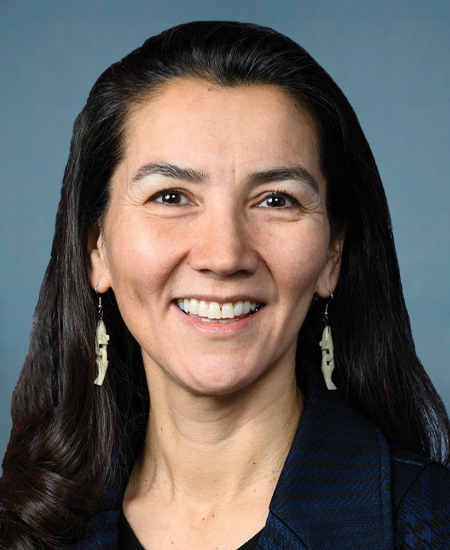
Rep. Mary Sattler Peltola
Sponsored bills
Maddy summaryThe Public Service Freedom to Negotiate Act of 2024 establishes federal minimum standards for collective bargaining rights for public employees and supervisory employees. The Federal Labor Relations Authority will determine if each state's laws "substantially provide" for these rights, and if not, federal standards will apply to that state. These standards include the right to self-organization, collective bargaining, recognition of labor organizations, and procedures for resolving disputes. The bill preserves existing collective bargaining agreements and excludes certain employee categories like emergency services workers from some provisions.
Maddy summaryThe READ Act Reauthorization Act of 2023 extends the authorization period for the Reinforcing Education Accountability in Development Act (commonly known as the READ Act) from five to ten fiscal years. This change allows U.S. international education programs, administered by agencies like USAID, to operate without annual reauthorization for a longer period. The bill directly affects programs providing educational support in developing countries, such as teacher training and literacy initiatives. The key mechanism is amending Section 4(a) of the existing law to adjust the funding duration, ensuring continued program stability.
Maddy summaryThis bill removes a $200,000 spending cap on federal cost sharing for water infrastructure projects in U.S. territories and Indian Tribes under the 1986 Water Resources Development Act. It directly affects tribal nations and territories by allowing them to access full federal funding for eligible water projects without the previous limit. The key change eliminates the $200,000 maximum for cost-sharing amounts, streamlining how federal funds cover project expenses. This amendment simplifies the process for these entities to secure federal support for water resource development.
Maddy summaryThe Rights for the TSA Workforce Act of 2024 would transition Transportation Security Administration (TSA) employees, particularly screening agents, from TSA-specific personnel rules to the standard federal government personnel system under Title 5 of the U.S. Code by December 31, 2024. The bill prohibits changes to current personnel policies for covered employees until the transition date and ensures no reduction in pay or benefits during the conversion process. It preserves certain benefits like law enforcement availability pay for Federal air marshals and maintains collective bargaining rights for screening agents. The bill also requires various reports to Congress on recruitment, implementation, diversity, and workplace safety to be submitted within specified timeframes.
Maddy summaryThe Chugach Alaska Land Exchange Oil Spill Recovery Act of 2024 resolves a land ownership conflict stemming from the 1989 Exxon Valdez oil spill cleanup efforts. The bill authorizes a land exchange where Chugach Alaska (a Native Regional Corporation) would convey approximately 231,000 acres of subsurface rights to the Federal Government in exchange for about 65,400 acres of surface land. This addresses a longstanding split ownership issue where the Federal Government owned surface rights acquired through oil spill settlement funds, but Chugach Alaska retained subsurface rights, creating management challenges. The exchange implements recommendations from a 2022 Bureau of Land Management study and aims to consolidate surface and subsurface ownership to better manage conservation areas while allowing Chugach Alaska to develop its subsurface resources as required by the Alaska Native Claims Settlement Act.
Maddy summaryThis bill directs the Health and Human Services Secretary to fund research on early detection and treatment of uterine fibroids, with a focus on reducing health disparities. It authorizes grants to states for screening programs (including advanced imaging), patient navigation services, and public education campaigns - prioritizing areas with socially vulnerable populations at higher risk. States receiving funds must implement evidence-based strategies to improve access to early intervention. The bill also requires regular reports to Congress on grant outcomes and research findings related to fibroid treatment disparities and related conditions like Asherman’s Syndrome.
Maddy summaryThe Mining Regulatory Clarity Act of 2024 clarifies rights for individuals and companies holding mining claims on public land. It defines "operations" broadly to include exploration, development, extraction, reclamation, and related infrastructure like roads or pipelines, even without finding minerals. Claimants must pay standard location and maintenance fees (or meet assessment work requirements) to maintain their rights to use and occupy land for these activities. This change ensures compliance with the Federal Land Policy and Management Act by explicitly linking claimholder obligations to land use rights.
Maddy summaryThis concurrent resolution designates Northwest Coast Art as a "rare and valuable national treasure," recognizing it as a significant Indigenous American art form with over 4,000 years of cultural and artistic evolution. It formally acknowledges the art’s importance to Northwest Coast Indigenous communities, its influence on broader American art, and its role in the nation’s cultural heritage. While not creating new laws or funding, the resolution expresses congressional support for preserving and celebrating this art form for future generations. It specifically highlights the need for better documentation and preservation as master artists pass away.
Maddy summaryThis bill codifies the Environmental Protection Agency's 2023 determination that the Pebble Mine project would cause unacceptable harm to Bristol Bay's salmon habitats. It makes the EPA's prohibition on the mine's waste disposal sites legally binding, directly affecting the Pebble Mine developers and protecting the watershed. The key provision permanently enforces the EPA's finding that the mine would destroy critical salmon streams, wetlands, and fishery areas vital to the region's ecosystem and Indigenous subsistence culture.