

Assuring Regular Consultation to Have Indigenous Voices Effectively Solicited Act This bill establishes requirements for tribal consultation prior to the sale or transfer of certain federal civilian real property. Federal civilian real property generally refers to federal real property assets, including public buildings, occupied and improved grounds, leased space, or other physical structures under the custody and control of a federal agency. Specifically, a federal agency must consult with tribal governments prior to the sale or transfer of certain federal civilian real property if the proposed sale or transfer would affect a tribe's access to federal agency services. Further, the bill prohibits the property from being sold or transferred if the sale or transfer would substantially reduce or eliminate a tribe's access to these services.
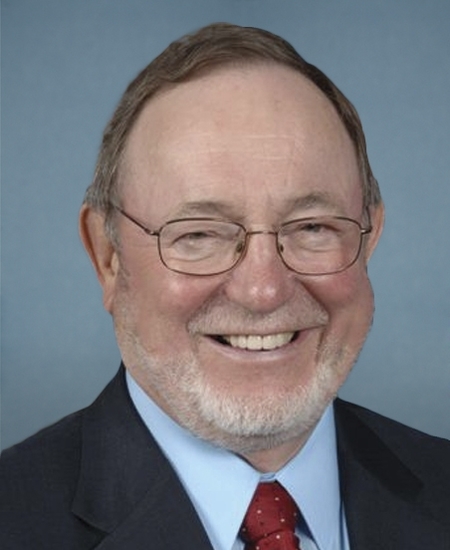
Rep. Don Young
Sponsored bills
Cancer Drug Parity Act of 20 21 This bill requires group health plans that cover anticancer medications administered by a health care provider to provide no less favorable cost sharing for patient-administered anticancer medications. This requirement applies to medications that are (1) approved by the Food and Drug Administration; (2) medically necessary for the cancer treatment; and (3) clinically appropriate in terms of type, frequency, extent site, and duration. To comply with this requirement, plans may not, with respect to anticancer medications (1) change or replace benefits to increase out-of-pocket costs, (2) reclassify benefits to increase costs, or (3) apply more restrictive limitations to orally administered medications than to intravenously administered or injected medications.
Recreation Not Red-Tape Act This bill revises and sets forth provisions related to recreation areas and special recreation permits issued by the Department of the Interior and the Department of Agriculture (USDA) for individual or group use of federal recreational lands and waters. The bill makes permanent certain authorizations, including regarding such permits and the fees charged for them and for related administration, overhead, and indirect costs. Interior and USDA shall evaluate the special recreation permitting process and identify opportunities for eliminating duplicative processes, reducing costs, and decreasing processing times; establish categorical exclusions from environmental review requirements for special recreation permits if it would reduce processing times or costs without significantly affecting the human environment; authorize the issuance of temporary permits for new or additional recreational uses of federal lands and waters managed by the Forest Service and the Bureau of Land Management; allow online payment of certain federal passes and fees; develop initiatives to promote private-sector volunteer opportunities; and establish an interagency trail management plan. Permittees issued a special recreation permit may voluntarily and temporarily return one or more of their service days. The bill sets forth requirements for review by USDA of the renewal or adjustment of the allocations for the use of a special recreation permit. Interior and USDA may enter into agreements with states to allow the purchase of federal and state recreation passes in the same transaction. The bill establishes a National Recreation Area System.
Sustainable Shark Fisheries and Trade Act of 20 21 This bill revises provisions regarding shark conservation and fishery management. The bill requires any country that seeks to import shark products into the United States to obtain a certification from the Department of Commerce that the country has a regulatory program in effect to provide for the conservation and management of sharks, including measures to prohibit the removal of any of the fins of a shark (including the tail). Commerce must revise its regulations to include rays and skates as species that are subject to the Seafood Traceability Program. The Seafood Traceability Program has data reporting and recordkeeping requirements at the time of entry for imported fish or fish products entered into U.S. commerce.
National Oceanic and Atmospheric Administration Sexual Harassment and Assault Prevention Improvements Act of 202 1 This bill addresses sexual harassment and sexual assault involving personnel of the National Oceanic and Atmospheric Administration (NOAA). The bill specifies that NOAA's sexual harassment prevention and response policy applies to personnel such as observers, at-sea monitors, and voting members and staff of regional fishery management councils. It also requires victim advocates at NOAA to be full-time employees whose sole job is advocacy for survivors rather than a volunteer collateral duty of an existing employee. Additionally, the bill expands reporting requirements on sexual harassment, sexual assault, and equal opportunity employment. The bill also provides for a restricted reporting structure that allows survivors of sexual assault to receive services without triggering an investigative process. The Office of Marine and Aviation Operations within NOAA must develop and implement a policy to report to the Coast Guard Suspension and Revocation National Center of Expertise the names of NOAA personnel who are under investigation for an offense detrimental to good discipline and safety at sea, such as sexual harassment or sexual assault or any other offense for which suspension or revocation of a merchant mariner credential is either mandatory or sought. Further, the bill removes the requirements that acts of assault, resistance, opposition, intimidation, sexual harassment, bribery, or interference with a fishery observer be forcible in nature and occur on a vessel to be unlawful.
Law Enforcement Officer Recreation Pass Act This bill directs the Department of Agriculture and the Department of the Interior to make the National Parks and Federal Recreational Lands Pass available, without charge and for the lifetime of the passholder, to law enforcement officers.
Federal Retirement Fairness Act This bill modifies the federal civilian service that is creditable service under the Federal Employees Retirement System (FERS). Specifically, it expands the nondeduction service that may be creditable under FERS. Nondeduction service is federal service where an employee's pay is not subject to retirement deductions (e.g., service under a temporary appointment). Currently, nondeduction service performed before January 1, 1989, is creditable under FERS so long as a deposit is made into the retirement fund to cover the period of nondeduction service. This bill allows nondeduction service performed on or after January 1, 1989, to be creditable under FERS so long as a deposit is made into the retirement fund.
Sgt. Ketchum Rural Veterans Mental Health Act of 2021 This bill requires the Department of Veterans Affairs (VA), during FY2022, to establish and maintain three new centers of the Rural Access Network for Growth Enhancement (RANGE) Program in areas with interest from personnel and a need for additional mental health care for rural veterans. The RANGE Program serves veterans in rural areas who are experiencing mental illness. The bill requires the Government Accountability Office to conduct a study and report on whether the VA has sufficient resources to serve rural veterans who need mental health care that is more intensive than traditional outpatient therapy.
Advancing FASD Research, Services, and Prevention Act or the FASD Respect Act This bill expands and establishes programs for fetal alcohol spectrum disorders (FASD). Specifically, it directs the Department of Health and Human Services, the National Institutes of Health, the National Center on Birth Defects and Developmental Disabilities, and the Health Resources and Services Administration to carry out and coordinate research, surveillance, and related activities to diagnose, prevent, and treat FASD. Furthermore, the bill establishes various grant programs to support FASD coalitions and develop systems of care; provide services for individuals affected by FASD and other conditions related to prenatal substance exposure; identify and implement best practices for educating children with FASD; and establish centers for excellence to build relevant capacity for preventing, treating, and responding to the needs of individuals with FASD. The bill also directs the Department of Education and the Department of Justice to develop and disseminate trainings and best practices related to FASD in schools and correctional facilities, respectively.
Arctic Security Initiative Act of 2021 This bill requires the Department of Defense (DOD) to conduct an assessment and implement a program related to national security interests in the Arctic region. Specifically, the Commander of the United States Northern Command of DOD must consult and coordinate with specified defense entities to conduct an independent assessment with respect to the activities and resources required for FY2023-FY2027 to achieve specified objectives related to national security interests in the Arctic region. The assessment must focus on the activities and resources required to achieve the following objectives: the implementation of the National Defense Strategy and military service-specific strategies with respect to the Arctic region; the maintenance or restoration of the comparative military advantage of the United States in response to great power competitors in the Arctic region; the reduction of the risk of executing operation and contingency plans of DOD; and to maximize execution of DOD operation and contingency plans, in the event deterrence fails. Additionally, DOD must establish the Arctic Security Initiative program to enhance security in the Arctic region, to be informed by the assessment required by this bill. DOD must annually submit an unclassified future years plan, which may include a classified annex, for the activities and resources of the program that includes specified elements (e.g., a detailed time line for achieving requirements). The plan must also be included in budget materials submitted by DOD in support of the budget of the President for FY2023.