Urban Indian Health Providers Facilities Improvement Act This bill expands the authority of the Indian Health Service (IHS) to make funds available for urban Indian organizations to renovate, construct, or expand urban Indian health facilities. Specifically, the bill authorizes the IHS to (1) make funds available for renovations even if the renovations are not minor, and (2) make funds available for purposes other than assisting the organizations in meeting certain accreditation standards.
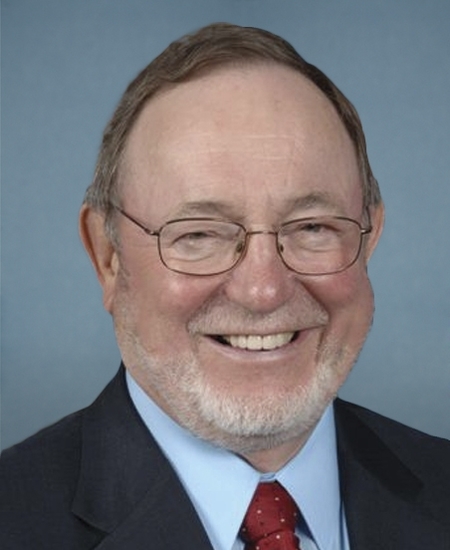
Rep. Don Young
Sponsored bills
Fighting Homelessness Through Services and Housing Act This bill requires the Health Resources and Services Administration to award grants to local and tribal government entities for the planning and implementation of programs to address homelessness.
Tax Fairness for Tribal Youth Act of 2021 This bill treats certain payments made by Indian tribal governments to children as earned income of the child for the purposes of the kiddie tax (the tax on the unearned income of children). This has the effect of exempting the payments from the tax. The bill applies to taxable years beginning after December 31, 2021.
Maintaining and Enhancing Hydroelectricity and River Restoration Act of 2021 This bill allows a new tax credit for maintaining and enhancing hydroelectric dams that is equal to 30% of the basis of any qualified dam safety, environmental, and grid resilience enhancement property placed in service in a taxable year. It also allows a 30% credit for qualified obsolete river obstruction removal expenditures for demolishing and removing certain nonpowered or hydroelectric dams.
Pathways to Health Careers Act This bill provides funding for, reauthorizes through FY2026, and makes a variety of changes to certain grants administered by the Department of Health and Human Services that provide education and training to low-income individuals for health care occupations, including by establishing a new competitive grant for projects designed to train low-income individuals in allied health professions.
Mono Lake Kutzadikaᵃ Tribe Recognition Act This bill extends federal recognition to the Mono Lake Kutzadikaᵃ Tribe. The bill makes the tribe and its members eligible for services and benefits provided to federally recognized tribes and their members, without regard to the existence of a reservation or the location of the residence of any member. The service area of the tribe is considered to be Mono and Inyo counties, California. In addition, the bill grants the tribe hunting and fishing rights on all federal lands within its aboriginal land area. Further, the tribe must submit a membership roll to the Department of the Interior as a condition of receiving recognition, services, and benefits. The tribe must maintain the membership roll. Interior, upon the request of the tribe, must take into trust certain land in Mono County, California, for the benefit of the tribe.
SFC Heath Robinson Burn Pit Transparency Act This bill implements reporting requirements and policies related to the treatment and documentation of veterans who have been exposed to open burn pits. A burn pit is an area used for burning solid waste in open air without equipment. First, the bill requires the Department of Veterans Affairs (VA) to submit quarterly reports on veterans' burn pit exposure The bill also requires the VA to collaborate with the Department of Defense to submit an annual report detailing specified information about veterans who have been exposed to open burn pits, such as the number of claims for disability compensation approved and denied (including the rationale for denials). The bill authorizes the survivor of a deceased veteran to report a veteran's exposure to toxic substances from an open burn pit in the Airborne Hazards and Open Burn Pit Registry, even if the veteran was not included prior to their death. VA medical professionals must inform veterans of the registry if they present at a medical facility for treatment related to exposure to toxic chemicals by open burn pits. Finally, the Government Accountability Office must report on the effectiveness of any memorandum of understanding entered into by the VA with respect to the processing of reported cases of burn pit exposure and the coordination of care and provision of health care related to such cases at VA and non-VA facilities.
Veterans Burn Pits Exposure Recognition Act of 2021 This bill requires the Department of Veterans Affairs (VA) to concede, for the purposes of health care benefits and wartime disability compensation, that a veteran was exposed to certain toxic substances, chemicals, and hazards from burn pits if such veteran served on active duty in a covered location during a specified time frame (unless there is affirmative evidence to establish that the veteran was not exposed during such service). A burn pit is an area used for burning solid waste in open air without equipment. Specifically, the bill covers the following locations and corresponding time periods: Iraq between August 2, 1990, and February 28, 1991, as well as from March 19, 2003, until burn pits are no longer used in this location; Somalia and Southwest Asia (including Kuwait, Saudi Arabia, Oman, and Qatar) from August 2, 1990, until burn pits are no longer used in these locations; and Afghanistan, Syria, Jordan, Egypt, Lebanon, Yemen, Uzbekistan, the Philippines, and Djibouti from September 11, 2001, until burn pits are no longer used in these locations. Under the bill, if an exposed veteran submits insufficient evidence to establish a service-connection for purposes of disability compensation, the VA shall provide a medical examination and request a medical opinion regarding a causal link between the disability and a toxin, chemical, or hazard.

Veterans' Right to Breathe Act This bill provides a presumption of service-connection to burn pit-exposed veterans for certain diseases. Under a presumption of service-connection, specific conditions diagnosed in certain veterans are presumed to have been caused by the circumstances of their military service. Health care benefits and disability compensation may then be awarded. A burn pit-exposed veteran is a veteran who was supporting a contingency operation on or after January 1, 1990, and was stationed at a location where an open burn pit (an area used for burning solid waste in open air without equipment) was used.
This resolution recognizes and expresses support for the efforts of democracy and human rights activists in Cuba.