Issue · Veterans

Veterans

Every veterans bill, vote, and legislator stance in United States, automatically classified by Maddy, our AI policy reader.

Total bills
1,186
119th Congress
Top supporter
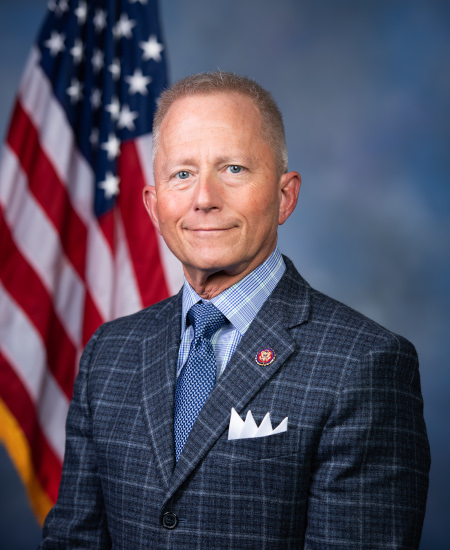
John Fetterman
88% support rate
Top opponent
Rand Paul
12% support rate
Ranked legislators
10
5 support · 5 oppose
Key legislators

Who's moving veterans in United States

Legislators moving veterans in United States
Legislator Party Stance Support rate Decisive votes
John Fetterman
John Fetterman Senate
D
Strong +
88% 40
Angus S. King, Jr.
Angus S. King, Jr. Senate
I
Strong +
83% 42
Catherine Cortez Masto
Catherine Cortez Masto Senate
D
Strong +
83% 42
Clay Fuller
Clay Fuller House · District 14
R
Strong +
80% 10
Jefferson Van Drew
Jefferson Van Drew House · District 2
R
Support
76% 17
Rand Paul
Rand Paul Senate
R
Strong −
12% 42
Adelita S. Grijalva
Adelita S. Grijalva House · District 7
D
Strong −
18% 11
Analilia Mejia
Analilia Mejia House · District 11
D
Strong −
20% 10
Christian D. Menefee
Christian D. Menefee House · District 18
D
Strong −
20% 10
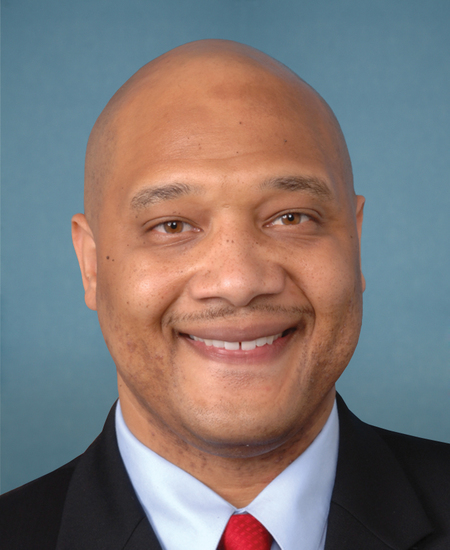
André Carson
André Carson House · District 7
D
Oppose
25% 16
Showing 471–480 of 1,186 bills

All veterans bills

in committee · United States · Senate Sep 14, 2026

S 917: A bill to designate the facility of the United States Postal Service located at 620 East Pecan Boulevard in McAllen, Texas, as the "Agent Raul H. Gonzalez Jr. Memorial Post Office".

This bill (S 917) designates the U.S. Postal Service facility at 620 East Pecan Boulevard in McAllen, Texas, as the "Agent Raul H. Gonzalez Jr. Memorial Post Office." It directly affects the McAllen post office location and all official U.S. government references to that facility. The bill updates all federal documents, maps, and records to use the new name, replacing the previous designation. No new policies or funding are created - this is purely a commemorative name change honoring Agent Raul H. Gonzalez Jr.
in committee · United States · House Dec 16, 2025

HR 6730: HERO Act

HR 6730, the HERO Act, allows active-duty military members and reservists on active duty to sue the U.S. government directly for medical negligence at military hospitals (excluding combat zones). It replaces a previous law by creating a new federal claim process for injuries or deaths caused by faulty medical care, dental services, or related health functions provided by military staff. The bill prevents the government from reducing compensation by veterans' benefits or military life insurance payouts and sets a 10-year deadline from when the injury was discovered to file a claim. This change directly affects service members who suffer harm due to medical errors at covered military treatment facilities.
Sub-Topics Veteran Healthcare
in committee · United States · House Sep 17, 2025

HR 5443: Fair Housing Improvement Act of 2025

HR 5443, the Fair Housing Improvement Act of 2025, expands federal housing anti-discrimination protections to include "source of income," "veteran status," and "military status." It defines "source of income" broadly to cover housing vouchers, Social Security benefits, child support, and other lawful income sources like savings or gifts. The bill adds these categories to all existing anti-discrimination provisions in the Fair Housing Act, prohibiting housing providers from refusing to rent or sell based on these factors. This directly affects renters and homeowners using housing assistance, veterans, active military members, and individuals receiving non-wage income.
in committee · United States · House Jul 2, 2025

HR 4289: TRICARE Travel Improvement Act

This bill changes TRICARE travel reimbursement rules by reducing the required distance for coverage from 100 miles to 50 miles for most beneficiaries seeking specialty care. It directly affects service members, veterans, and their families who travel for medical treatment outside their local area. The key provision lowers the threshold for reimbursement eligibility, making it easier to qualify for travel cost coverage. Military retirees and their dependents are also covered under the new 50-mile standard, previously subject to different rules.
in committee · United States · Senate Feb 10, 2025

S 492: Improve and Enhance the Work Opportunity Tax Credit Act

This bill increases the Work Opportunity Tax Credit (WOTC) for employers hiring from targeted groups. It raises the credit rate to 50% for the first $6,000 in wages for most workers, and adds a 50% credit for wages between $6,000 and $12,000 for workers with at least 400 hours of service. For veterans, the wage limits for the credit are doubled (to $12,000 and $24,000), and the bill removes the previous age limit for Supplemental Nutrition Assistance Program (SNAP) recipients. These changes apply to workers hired after December 31, 2024.
in committee · United States · House Dec 3, 2025

HR 6400: Rx ACCESS Act

The Rx ACCESS Act improves prescription drug access for TRICARE beneficiaries, including military service members, retirees, and their families, by establishing fair reimbursement standards for pharmacies and expanding medication choice. It requires pharmacies to be reimbursed at actual drug costs (or the national average drug cost for certain medications) plus a standard dispensing fee, while banning hidden fees like point-of-sale charges. Starting October 1, 2026, beneficiaries can choose how they receive non-generic medications for ongoing health conditions. The law also mandates annual audits to verify reimbursement fairness and ensure pharmacy networks provide accessible care, especially in rural and underserved areas.
Sub-Topics Prescription Drugs
in committee · United States · Senate May 14, 2025

S 1753: End Price Gouging for Medications Act

This bill sets annual reference prices for prescription drugs based on the lowest prices in specific countries (like Canada, UK, and Germany), preventing manufacturers from charging more than this price for drugs covered under major federal health programs. It directly affects Medicare, Medicaid, VA care, TRICARE, and other federal health programs by capping drug costs at the reference price. Manufacturers must sell drugs at or below this reference price to all patients, including those without insurance, with civil penalties of up to five times the revenue difference for non-compliance. Collected penalties fund drug research through the National Institutes of Health.
in committee · United States · House Jan 15, 2026

HR 6182: Find It Early Act

The Find It Early Act requires most health insurance plans, Medicare, Medicaid, TRICARE, and VA benefits to cover certain breast cancer screenings without cost-sharing for specific at-risk groups. It affects individuals at increased breast cancer risk (as determined by medical guidelines), those with dense breast tissue (as defined by the American College of Radiology), and others requiring screening due to factors like age, race, ethnicity, or family history. The bill mandates coverage for various screening methods including mammograms, ultrasounds, MRI, and other technologies at frequencies recommended by the National Comprehensive Cancer Network. This requirement takes effect for plan years beginning January 1, 2026, removing financial barriers to early detection.
in committee · United States · House Feb 25, 2026

HR 7672: Parity for Pacific Radiation Survivors Act

HR 7672, the Parity for Pacific Radiation Survivors Act, expands eligibility under the Radiation Exposure Compensation Act (RECA) for individuals exposed to radiation from Pacific nuclear tests. It adds Guam to the list of covered territories for claims and clarifies specific time periods for physical presence (e.g., July 1946-November 1992 or April-November 1962) or military cleanup participation (Enewetak Atoll, May 1977-May 1980). The bill also adds renal disease to the list of covered conditions and updates disease terminology to include "renal" alongside other illnesses. These changes directly affect Pacific Islanders, military personnel, and survivors who participated in or were exposed during specific nuclear testing periods. The amendments adjust existing RECA criteria to ensure broader access to compensation for qualifying radiation exposure claims.
in committee · United States · House Mar 4, 2025

HR 657: VA CPE Modernization Act

HR 657, the VA CPE Modernization Act, increases reimbursement for continuing education expenses for certain full-time Veterans Affairs (VA) health care professionals. It sets a maximum annual reimbursement of $2,000 per professional for physicians, dentists, nurses, physician assistants, psychologists, and other specified roles. The bill allows the VA Secretary to adjust this amount over time, but ensures reimbursements never fall below $2,000 yearly. This directly affects VA-employed health care professionals who need to cover costs for ongoing training and certification.
Showing 471 to 480 of 1,186 bills
Previous 1 47 48 49 119 Next