Issue · Transportation

Transportation

Every transportation bill, vote, and legislator stance in United States, automatically classified by Maddy, our AI policy reader.

Total bills
730
119th Congress
Top supporter
Martin Heinrich
78% support rate
Top opponent
Marsha Blackburn
22% support rate
Ranked legislators
10
5 support · 5 oppose
Key legislators

Who's moving transportation in United States

Legislators moving transportation in United States
Legislator Party Stance Support rate Decisive votes
Martin Heinrich
Martin Heinrich Senate
D
Support
78% 9
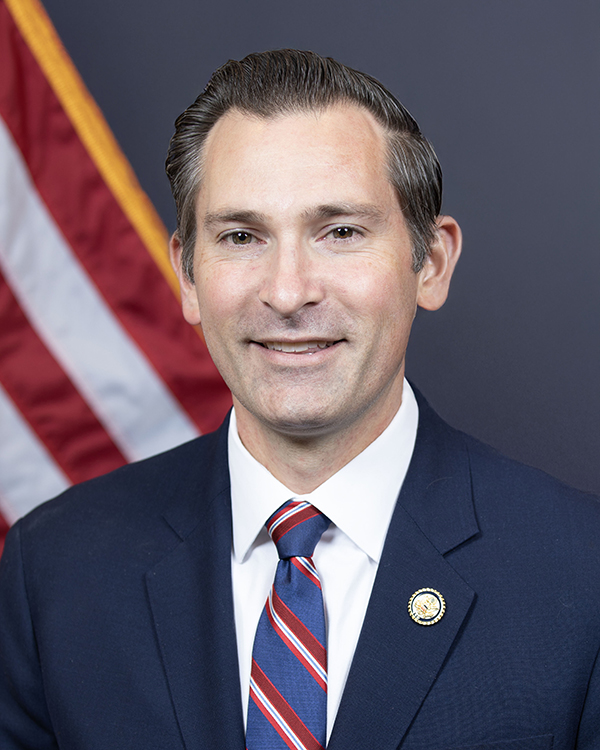
Matt Van Epps
Matt Van Epps House · District 7
R
Support
78% 9
Greg Casar
Greg Casar House · District 35
D
Support
75% 12
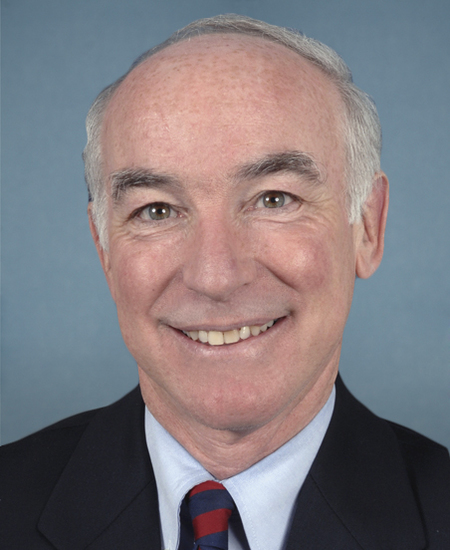
Joe Courtney
Joe Courtney House · District 2
D
Support
75% 12
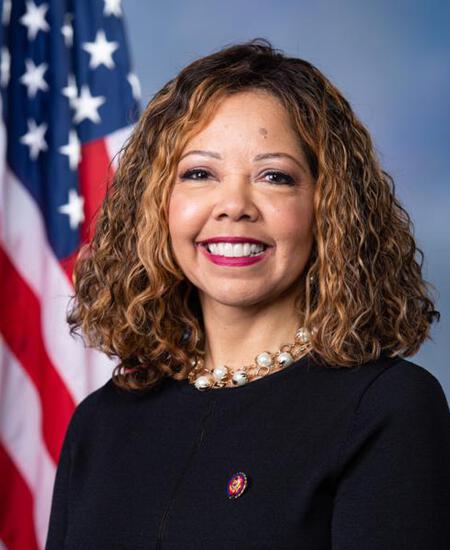
Lucy McBath
Lucy McBath House · District 6
D
Support
75% 12
Marsha Blackburn
Marsha Blackburn Senate
R
Oppose
22% 9
Ted Budd
Ted Budd Senate
R
Oppose
25% 12
Mary E. Miller
Mary E. Miller House · District 15
R
Oppose
29% 14
Wesley Hunt
Wesley Hunt House · District 38
R
Oppose
30% 10
Joni Ernst
Joni Ernst Senate
R
Oppose
31% 26
Showing 461–470 of 730 bills

All transportation bills

in committee · United States · House Feb 2, 2026

HR 6673: To amend title 49, United States Code, to clarify airport revenue use of local general sales taxes, and for other purposes.

This bill clarifies that certain local general sales tax revenues can be used for airport purposes without being subject to existing restrictions. It directly affects local governments that met three specific conditions: they had a general sales tax excluding aviation fuel before December 2014, are not airport sponsors, and have a large hub airport (over 35 million passenger boardings in 2021) within their jurisdiction. The key provision modifies federal airport funding rules to explicitly permit these local tax revenues for airport-related expenses. The change applies only to qualifying local governments with these specific historical and geographic criteria.
in committee · United States · House Nov 21, 2025

HR 6250: Cold Weather Diesel Reliability Act of 2025

This bill allows diesel vehicles operating in extremely cold regions to temporarily disable engine shutdowns and emissions-related functions when temperatures drop below freezing, ensuring critical transportation and emergency services remain operational. It grants year-round exemptions from diesel exhaust fluid (DEF) system requirements for vehicles primarily operating north of 59°N latitude or in areas where DEF systems become impractical due to prolonged freezing conditions. The exemptions apply only during cold weather (below freezing) for engine derates/shutdowns or permanently for DEF systems, without altering emissions standards outside these specific conditions. It directly affects diesel vehicles used by emergency responders, rural transport, and critical infrastructure in Arctic or sub-Arctic regions. The EPA must implement these changes within 180 days of the bill’s enactment.
in committee · United States · House Jun 14, 2025

HR 4012: National Airport Supersonic Readiness Act of 2025

HR 4012, the National Airport Supersonic Readiness Act of 2025, directs the Federal Aviation Administration (FAA) to study whether major U.S. airports can safely accommodate supersonic and hypersonic commercial aircraft. The study will assess runway length, ground equipment, noise regulations, air traffic systems, and economic impacts at large hub airports. The FAA must report findings and recommendations to Congress within one year, including cost estimates and timelines for potential infrastructure upgrades. This bill does not fund changes or create new rules, but rather evaluates current airport capabilities for future high-speed air travel.
Sub-Topics Airports
in committee · United States · House Mar 6, 2025

HR 1896: Renewable Fuel for Ocean-Going Vessels Act

This bill amends the Clean Air Act to update the definition of fossil fuel, explicitly including "fuel for ocean-going vessels" alongside home heating oil and jet fuel. It directly affects the shipping industry by requiring the Environmental Protection Agency (EPA) to issue regulations within one year of enactment to implement this updated definition. The key mechanism is changing the statutory definition to ensure ocean vessel fuels are covered under existing fossil fuel regulations, potentially influencing future clean fuel standards for ships. The EPA must also submit a report to Congress on implementation within one year of finalizing these regulations.
Sub-Topics Air Quality Ports
in committee · United States · House Sep 9, 2025

HR 5205: Aircraft Noise Reduction Act

HR 5205, the Aircraft Noise Reduction Act, gives general aviation airports (smaller, noncommercial airports) new authority to adjust flight paths and training patterns to reduce noise for nearby communities. Airport operators can request these changes from the FAA, which must consult with them and consider community input, without risking loss of federal funding. The bill requires the FAA to update its regulations to support these noise-reduction measures at such airports. It does not create new noise standards but provides a mechanism for airports to implement existing noise limitations through operational adjustments. This directly affects residents near general aviation airports and the airports themselves.
Sub-Topics Airports
in committee · United States · House Feb 13, 2025

HR 1361: Collision Avoidance Systems Act of 2025

This bill updates federal vehicle safety standards to permit pulsating light systems on high-mounted stop lamps, directly affecting vehicle manufacturers and safety regulators. It requires the Transportation Secretary to issue new regulations within 180 days establishing performance rules for these systems. The key provision defines a "pulsating light system" as one that emits rapid pulses (max 4 pulses within 1.2 seconds) when brakes are applied, then switches to steady light, with a mandatory 5-second lockout period before pulses can repeat after brake release. The bill amends Federal Motor Vehicle Safety Standard 108 to formally allow this technology under specific technical parameters.
Sub-Topics Traffic Safety
in committee · United States · House Sep 19, 2025

HR 5455: Aviation Funding Stability Act of 2025

HR 5455, the Aviation Funding Stability Act of 2025, ensures continued operation of the Federal Aviation Administration (FAA) during government funding gaps. If Congress fails to pass regular appropriations or a continuing resolution before the new fiscal year begins, the bill allows the FAA to use existing funds from the Airport and Airway Trust Fund to maintain essential programs and airport infrastructure at the previous year’s funding level. This prevents shutdowns for FAA operations like air traffic control, airport grants, and safety programs for up to 30 days or until regular funding is enacted. The bill directly affects all FAA programs funded through the trust fund, including airport improvements and aviation safety initiatives, without creating new policies or altering funding levels.
in committee · United States · Senate May 8, 2025

S 1706: A bill to require aircraft operating in Class B airspace in the national airspace system to install and operate ADS-B In and ADS-B Out equipment, and for other purposes.

This bill requires all aircraft (including military aircraft) operating in Class B airspace - typically around major airports - to install and activate ADS-B In and ADS-B Out equipment starting upon the bill's enactment. ADS-B Out broadcasts an aircraft's position and speed data to ground systems and other aircraft, while ADS-B In receives similar data for pilots. The bill repeals a prior exemption that allowed military aircraft to skip this requirement under the 2019 Defense Act. It directly affects pilots, airlines, and military operators flying in high-traffic airspace by mandating this technology for improved air traffic surveillance and safety.
in committee · United States · House Dec 11, 2025

HR 6632: El Paso Air Traffic Control Tower Modernization Act

The El Paso Air Traffic Control Tower Modernization Act (HR 6632) authorizes federal funding to replace the aging air traffic control tower at El Paso International Airport in Texas. This bill directly affects the airport's operations by providing necessary funds for infrastructure modernization, ensuring continued safe air traffic management. The key provision is a specific appropriation from Treasury funds to cover the tower replacement costs, with no new regulations or broader policy changes. The legislation focuses solely on this single airport project without altering national aviation standards.
Sub-Topics Airports
in committee · United States · House Sep 15, 2025

HR 5356: National Infrastructure Bank Act of 2025

The National Infrastructure Bank Act of 2025 would establish a government-owned bank to finance infrastructure projects across the United States, aiming to address a $3.69 trillion financing gap identified by the American Society of Civil Engineers. The bank would provide loans up to $5 trillion for transportation, energy, environmental, and community development projects, with specific criteria focused on economic growth, environmental benefits, and serving disadvantaged communities. It would be governed by a 25-member Board of Directors with diverse regional and expertise qualifications, and would operate with tax exemptions and capital requirements to ensure financial stability. The bill also establishes regional economic accelerator planning groups to coordinate infrastructure development and create a pipeline of projects for the bank to finance.
Showing 461 to 470 of 730 bills
Previous 1 46 47 48 73 Next