Issue · Technology

Technology

Every technology bill, vote, and legislator stance in United States, automatically classified by Maddy, our AI policy reader.

Total bills
1,678
119th Congress
Top supporter
Ami Bera
86% support rate
Top opponent
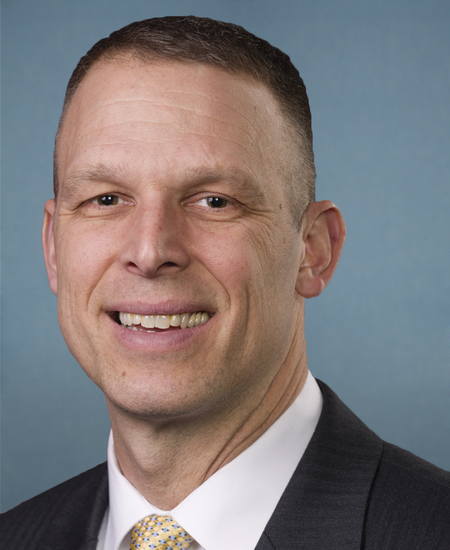
Scott Perry
14% support rate
Ranked legislators
10
5 support · 5 oppose
Key legislators

Who's moving technology in United States

Legislators moving technology in United States
Legislator Party Stance Support rate Decisive votes
Ami Bera
Ami Bera House · District 6
D
Strong +
86% 22
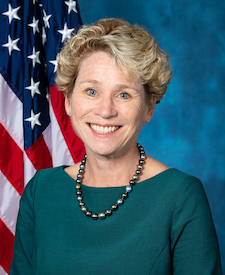
Chrissy Houlahan
Chrissy Houlahan House · District 6
D
Strong +
86% 22
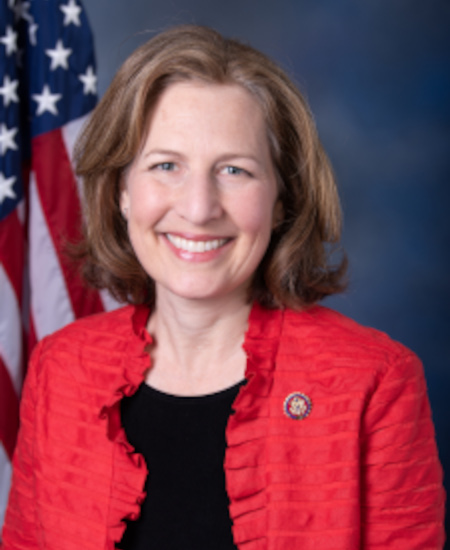
Kim Schrier
Kim Schrier House · District 8
D
Strong +
86% 22
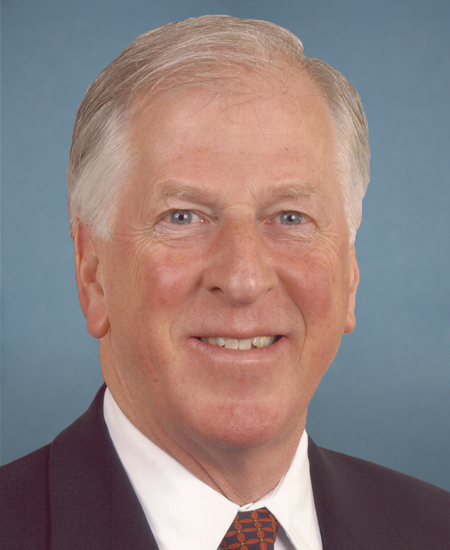
Mike Thompson
Mike Thompson House · District 4
D
Strong +
86% 22
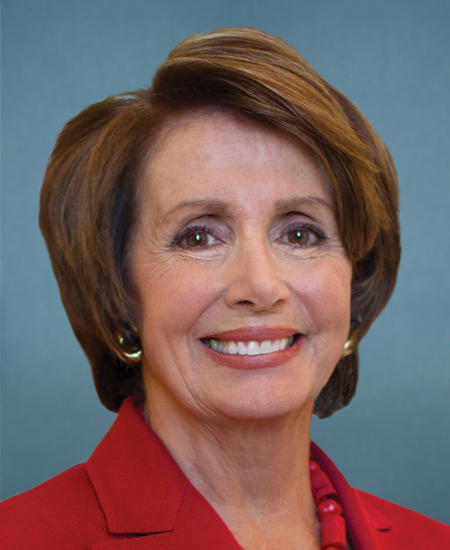
Nancy Pelosi
Nancy Pelosi House · District 11
D
Strong +
86% 22
Scott Perry
Scott Perry House · District 10
R
Strong −
14% 21
AA
Alan Armstrong Senate
R
Strong −
17% 29
Rand Paul
Rand Paul Senate
R
Strong −
17% 46
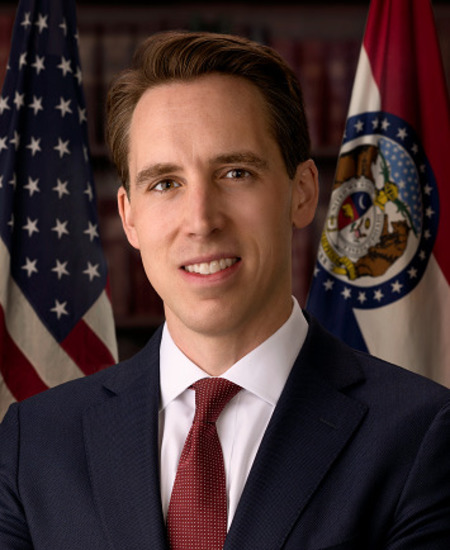
Josh Hawley
Josh Hawley Senate
R
Strong −
18% 45
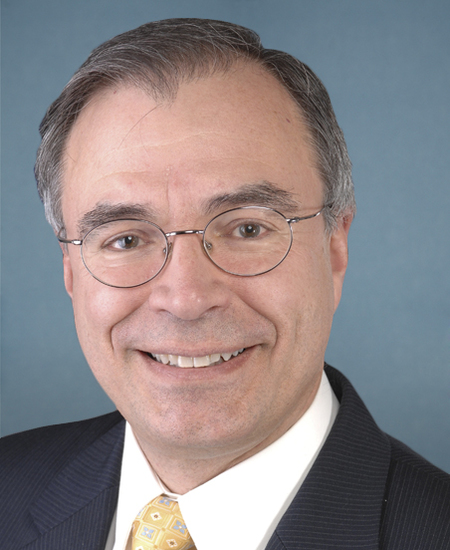
Andy Harris
Andy Harris House · District 1
R
Strong −
18% 22
Showing 771–780 of 1,678 bills

All technology bills

in committee · United States · House Feb 18, 2025

HR 1430: No CBDC Act

HR 1430, the "No CBDC Act," prohibits federal entities like the Federal Reserve, Treasury Department, and their agents from creating, issuing, or managing central bank digital currency (CBDC) for individuals or businesses. The bill specifically bans these agencies from minting CBDC directly to people, offering CBDC-related services, maintaining individual accounts (including through intermediaries), or holding government-issued digital currency on their balance sheets. It directly affects the Federal Reserve and other federal agencies by blocking their role in developing a government-run digital currency system. The law aims to prevent federal involvement in digital currency issuance, focusing on restricting specific actions by government bodies rather than impacting private digital currency markets.
in committee · United States · House Feb 27, 2025

HR 1649: Expanding Student Access to Mental Health Services Act

HR 1649, the Expanding Student Access to Mental Health Services Act, amends the Elementary and Secondary Education Act to allow states and school districts to use existing federal funds for student mental health services. It directs states to support mental health by identifying best practices for mental health first aid, establishing school emergency response teams, coordinating with local health providers, and expanding telehealth access. School districts must now specify how they will use funds for these mental health activities in their grant applications. The bill also permits schools to use technology infrastructure for mental health services without counting against separate technology funding limits.
in committee · United States · House Dec 11, 2025

HR 6681: National Scam Prevention Coordination Act

HR 6681 establishes the Office of National Fraud and Scam Prevention within the White House, led by a Director appointed by the President with Senate approval. The Office coordinates federal efforts across agencies like Homeland Security, Justice, and the FTC to prevent scams, share non-personal scam data via a "fraud data shield," and manage large-scale fraud incidents (defined as causing over $5 million in losses or affecting 1,000+ people). It requires annual reports to Congress on scam threats and mandates federal agencies to align their budgets and strategies with national prevention goals. The Office expires after five years.
in committee · United States · Senate Aug 1, 2025

S 2653: RECHARGE Act

The RECHARGE Act (S 2653) requires the federal government to permit electric vehicle (EV) charging stations at rest areas along interstate highways. This directly affects EV drivers by addressing "range anxiety" on long trips, as it allows charging infrastructure at designated rest stops. The key provision amends highway law to explicitly authorize EV charging infrastructure (excluding other commercial activities) at these locations, while making minor technical adjustments to existing transportation programs related to natural gas refueling. The bill does not create new funding but changes where charging stations may be installed on the interstate system.
in committee · United States · House May 5, 2025

HR 3200: Critical Minerals and Manufacturing Support Act

HR 3200 increases the tax credit for battery production by raising the advanced manufacturing credit for electrode active materials from 10% to 25%. It requires that qualifying battery components meet specific sourcing thresholds: by 2026, at least 70% of critical minerals must be extracted, processed, or recycled in the U.S., U.S. free trade agreement countries, or North America, rising to 80% after 2026. The bill also mandates that 70% of battery component materials must be produced in North America by 2026, increasing to 100% after 2028. Components containing critical minerals or materials sourced from "foreign entities of concern" are excluded from the tax credit, and the changes apply to components produced and sold after December 31, 2025.
in committee · United States · House Feb 27, 2025

HR 1711: DHS Intelligence and Analysis Oversight and Transparency Act

HR 1711, the DHS Intelligence and Analysis Oversight and Transparency Act, requires the Department of Homeland Security's Office of Intelligence and Analysis to conduct annual audits of its information systems and "bulk data" (large data sets without specific identifiers). The bill mandates that the DHS Under Secretary for Intelligence and Analysis notify Congress within 30 days of using new bulk data or changing its terms, and submit audit findings to Congress within 30 days after each audit. These audits, conducted annually after the bill's enactment, are designed to increase transparency around how DHS handles bulk data. The law directly affects DHS's Intelligence and Analysis Office and requires reporting to the Homeland Security and Intelligence committees in both the House and Senate.
Tags Government Transparency
in committee · United States · House Feb 27, 2025

HR 1658: SAFE Lending Act of 2025

The SAFE Lending Act of 2025 strengthens consumer protections in electronic and small-dollar lending. It prohibits third parties from creating checks drawn from a consumer’s account without explicit written authorization (e.g., stopping unauthorized "remote" checks), requires small-dollar lenders (transactions under $5,000) to register with the Consumer Financial Protection Bureau, and bans fees for overdrafts on prepaid accounts. The bill also restricts lead generation for small-dollar loans by requiring lenders to directly provide credit, not just collect consumer data. A separate provision mandates a study on small-dollar lending impacts for Native American tribal communities within 180 days of enactment.
in committee · United States · House Feb 10, 2026

HR 2110: Safe Vehicle Access for Survivors Act

Safe Vehicle Access for Survivors Act This bill requires providers of connected vehicle services, upon the request of a domestic violence survivor, to terminate or disable an identified domestic abuser’s access to a vehicle’s connected capabilities and data. Specifically, within two business days of receiving a request from a survivor, a covered provider must, if technically feasible (1) terminate or disable the connected vehicle account associated with the identified abuser or the relevant vehicle, or the vehicle’s connected capabilities; or (2) instruct the survivor on how to terminate or disable connected services directly. Covered providers may not make the termination of connected vehicle services or accounts contingent on any requirement other than the provision of specified information by the survivor. For example, a provider may not require a survivor to pay a fee or extend their contract with the provider. Under the bill, an abuser is an individual identified by a survivor who committed or allegedly committed certain acts against the survivor, including domestic violence, sexual assault, stalking, and sex trafficking. A survivor is an adult against whom such an act was committed. Further, a covered provider is a vehicle manufacturer, affiliate, or entity acting on behalf of a manufacturer that provides a connected vehicle service. Connected vehicle service is any capability that enables a person to remotely access data from or send commands to a vehicle. Finally, the Federal Communications Commission must prescribe regulations governing how covered providers address survivors’ requests related to connected vehicles.
in committee · United States · House May 21, 2025

HR 3536: CRISIS Act of 2025

HR 3536, the CRISIS Act of 2025, creates a special immigrant visa category for Russian nationals with advanced STEM degrees. It allows up to 3,000 individuals annually (2026-2029) who hold doctoral degrees or equivalent in science, technology, engineering, or mathematics fields to enter the U.S. for work in those areas, including their spouses and children. The bill exempts these applicants from standard visa numerical limits and requires background checks and vetting equivalent to refugee programs. It explicitly states no U.S. job offer is required for eligibility, and processing must be completed within 90 days of full documentation. The program terminates after fiscal year 2029, though approved petitions may still lead to permanent residency.
passed · United States · House May 20, 2025

HR 1147: Veterans Accessibility Advisory Committee Act of 2025

HR 1147 establishes the Veterans Accessibility Advisory Committee to improve accessibility for veterans with disabilities across Department of Veterans Affairs (VA) services. The committee, composed of 15 members including four veterans with disabilities, four accessibility experts, two VA staff, and five veteran service organization representatives, will assess barriers in VA facilities, digital services, benefits, and communications. It must submit biennial reports identifying accessibility gaps and recommending improvements, with the VA required to respond to these reports within 90 days. The committee directly affects veterans with disabilities by mandating regular VA consultation on compliance with accessibility laws like the Americans with Disabilities Act and Section 508 of the Rehabilitation Act.
Showing 771 to 780 of 1,678 bills
Previous 1 … 77 78 79 … 168 Next