Issue · Technology

Technology

Every technology bill, vote, and legislator stance in United States, automatically classified by Maddy, our AI policy reader.

Total bills
1,641
119th Congress
Top supporter
Suzan K. DelBene
86% support rate
Top opponent
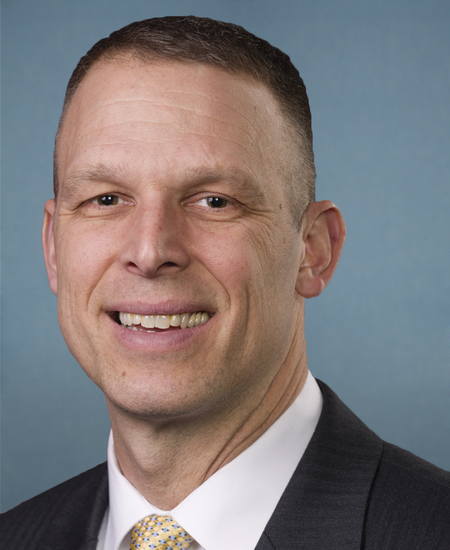
Scott Perry
14% support rate
Ranked legislators
10
5 support · 5 oppose
Key legislators

Who's moving technology in United States

Legislators moving technology in United States
Legislator Party Stance Support rate Votes
Suzan K. DelBene
Suzan K. DelBene House · District 1
D
Strong +
86% 259
Mike Thompson
Mike Thompson House · District 4
D
Strong +
86% 261
Chrissy Houlahan
Chrissy Houlahan House · District 6
D
Strong +
86% 259
Nancy Pelosi
Nancy Pelosi House · District 11
D
Strong +
86% 246
Kim Schrier
Kim Schrier House · District 8
D
Strong +
86% 261
Scott Perry
Scott Perry House · District 10
R
Strong −
14% 252
AA
Alan Armstrong Senate
R
Strong −
14% 46
Rand Paul
Rand Paul Senate
R
Strong −
16% 223
Andy Harris
Andy Harris House · District 1
R
Strong −
18% 257
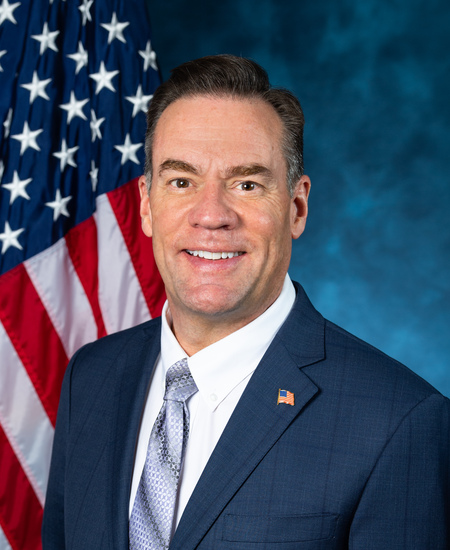
Russ Fulcher
Russ Fulcher House · District 1
R
Strong −
18% 262
Showing 51–60 of 1,641 bills

All technology bills

in committee · United States · House Jul 22, 2026

HR 9858: STRATA Act of 2026

The STRATA Act of 2026 establishes a new program within the Department of State to foster international partnerships focused on advancing critical minerals technologies, aiming to strengthen U.S. supply chains and national security. This initiative allows the Secretary of State to form alliances with allied and partner nations, universities, and private companies while explicitly prohibiting collaborations with designated countries of concern such as China and Russia. Key provisions include the creation of International Centers of Excellence for research and training, the development of a digital platform to connect stakeholders with funding opportunities, and the establishment of clear guidelines for intellectual property and data security within these partnerships. The program authorizes the use of specific funding sources to support joint projects in extraction, recycling, and manufacturing, with a requirement that all activities conclude within ten years of the bill's enactment.
in committee · United States · Senate Jul 30, 2026

S 5181: MAP Roads Act

The MAP Roads Act creates a pilot program that provides federal grants to states to help digitize and map county roads, directly affecting state and local transportation agencies. To receive funding, states must demonstrate they can distribute money to counties and maintain a centralized, publicly accessible online database for road data. The program prioritizes states with significant gaps in digital road records and requires that the resulting data be compatible with popular mapping platforms and updated at least once a year. Authorized funding of $20 million annually from 2026 to 2031 will support these efforts, while the bill explicitly ensures it does not change existing laws regarding road ownership or jurisdiction.
Sub-Topics Roads & Highways
in committee · United States · Senate Jul 29, 2026

S 5159: STRONG GRID Act of 2026

The STRONG GRID Act of 2026 directs state regulators to develop rules for connecting microgrids and for measuring the value of investments in grid resilience, while exempting military installations from these new standards. To support these efforts, the bill creates a new grant program that provides up to $500 million over five years to help states deploy microgrids, with priority given to projects in rural areas, low-income communities, and those that improve energy reliability or cybersecurity. Additionally, the Department of Energy will offer technical assistance to utilities and regulators and launch a $200 million pilot program to fund innovative microgrid projects that test new technologies and management systems.
in committee · United States · House Jul 27, 2026

HR 9954: Build America Fund Act

The Build America Fund Act creates a new government entity called the Manufacturing Sovereign Wealth Fund to invest billions of dollars in U.S. companies for the purpose of rebuilding domestic industrial capacity and reducing reliance on foreign supply chains. This fund will make loans and equity investments in strategic sectors like advanced manufacturing and technology, but it will require companies to keep operations and intellectual property within the United States for at least 50 years. In exchange for this capital, the fund will hold veto power over decisions to offshore production, sell to foreign buyers, or move research abroad, and it will enforce strict labor standards and prohibit stock buybacks. The bill also establishes an Industrial Sovereignty Council to oversee these investments and introduces new fees on corporate stock buybacks, high-volume trading, and specific offshoring activities to help finance the fund. Additionally, the legislation creates a future tax credit for eligible individuals funded by the fund's profits and increases the corporate tax rate to generate further revenue for the program.
in committee · United States · Senate Aug 3, 2026

S 5211: A bill to require the Under Secretary of Defense for Policy and the Chairman of the Joint Chiefs of Staff to submit a strategy for cyber cooperation in the Indo-Pacific region, and for other purposes.

This bill requires the Under Secretary of Defense for Policy and the Chairman of the Joint Chiefs of Staff to create a strategy for improving cyber cooperation with allies and partners in the Indo-Pacific region. The document must outline current and future needs for defensive and offensive cyber operations, information sharing, and workforce development through 2040, while also assessing existing agreements and capability gaps among partner nations. Additionally, the law mandates a funding plan and a progress report to Congress by March 2028 to track the implementation of these efforts.
Sub-Topics Cybersecurity
in committee · United States · House Aug 3, 2026

HR 10033: AV Emergency Response Coordination Act

The AV Emergency Response Coordination Act requires manufacturers and operators of autonomous vehicles to provide emergency responders with detailed guides and rescue sheets detailing how to safely interact with these vehicles during incidents. These documents must outline procedures for communicating with the vehicle, assessing its operational status, accessing occupants, and recovering data, and they must be submitted to the National Highway Traffic Safety Administration and made publicly available online. The bill also mandates that autonomous vehicle operators maintain a 24/7 hotline for emergency coordination and comply with geofence notices issued by government agencies to restrict vehicle movement in specific areas during emergencies. Furthermore, the Administrator is tasked with establishing uniform standards for emergency response procedures within two years, after which compliance with these standards becomes mandatory for operating or selling autonomous vehicles on public roads.
Sub-Topics Autonomous Vehicles Roads & Highways Traffic Safety Tags Emergency Management Public Safety
in committee · United States · Senate Jul 28, 2026

S 5154: CHAT Act 2.0

The CHAT Act 2.0 requires companies operating AI chatbots to register users with age verification and implement specific safety measures to protect minors from harm. The law categorizes these chatbots into three tiers based on their purpose, imposing stricter rules on those designed for companionship or mental health support, such as mandatory break reminders, limits on memory retention, and protocols to detect and report suicidal thoughts. Covered entities must clearly disclose that the chatbot is not human, prohibit the sale of minor users' data, and ensure that any AI providing therapeutic services is supervised by a licensed professional. Enforcement of these requirements falls under the Federal Trade Commission, which also has the authority to work with state attorneys general to address violations.
in committee · United States · House Aug 6, 2026

HR 10044: AI Tax and Work Protection Act

The AI Tax and Work Protection Act imposes a new excise tax on companies that develop or sell artificial intelligence foundation models, with rates that increase based on the national unemployment level. The revenue generated from this tax is placed into a dedicated trust fund to finance a new federal jobs program administered by a newly created Office of Job Creation within the Department of Labor. This program awards grants to state, local, and tribal governments to hire permanent, full-time workers for specific public service roles, such as in education, healthcare, infrastructure, and community safety. To ensure the jobs created do not replace existing workers, the bill includes strict nondisplacement rules and mandates that grant recipients provide employees with strong labor protections, including collective bargaining rights, competitive wages, and paid leave. Additionally, the legislation directs the Bureau of Labor Statistics to study the impact of AI on the workforce and establishes an advisory committee to guide the implementation of the job creation initiatives.
in committee · United States · Senate Jul 30, 2026

S 5198: Build to Scale Reauthorization Act of 2026

The Build to Scale Reauthorization Act of 2026 extends federal funding for the Regional Innovation Program through fiscal year 2030, providing up to $50 million annually to support economic development in specific areas. The bill defines eligible partners as state or nonprofit organizations that offer direct financing, commercialization services, and entrepreneurial support to local businesses. It mandates that the federal government contribute no more than 50 percent of project costs, with an additional 40 percent available based on regional needs, and requires outreach to rural communities and areas facing economic distress. Additionally, the legislation allows agencies to use unspent funds from previous years and updates the program's focus to include specific initiatives aimed at accelerating innovation.
Tags Economic Development
in committee · United States · Senate Jul 23, 2026

S 5105: Collaboration on Adversarial Threats and Security Risks Act

This bill creates a legal exemption from antitrust laws for private companies that share information or coordinate actions to protect against specific artificial intelligence security risks. It defines these risks as scenarios where AI could be stolen, weaponized, used to create dangerous weapons, disrupt critical infrastructure, or evade oversight by authorities. To qualify for this protection, companies must act in good faith, use the shared information solely for security purposes, and notify the Department of Justice before any coordinated efforts to delay or limit AI development. The law also ensures that information shared with the government remains confidential and allows the Attorney General to seek court orders if a company fails to prove it acted properly or if the actions ultimately increase security risks.
Showing 51 to 60 of 1,641 bills
Previous 1 5 6 7 165 Next