Issue · Technology

Technology

Every technology bill, vote, and legislator stance in United States, automatically classified by Maddy, our AI policy reader.

Total bills
210
119th Congress
Top supporter
Suzan K. DelBene
86% support rate
Top opponent
Scott Perry
14% support rate
Ranked legislators
10
5 support · 5 oppose
Key legislators

Who's moving technology in United States

Legislators moving technology in United States
Legislator Party Stance Support rate Votes
Suzan K. DelBene
Suzan K. DelBene House · District 1
D
Strong +
86% 259
Mike Thompson
Mike Thompson House · District 4
D
Strong +
86% 261
Chrissy Houlahan
Chrissy Houlahan House · District 6
D
Strong +
86% 259
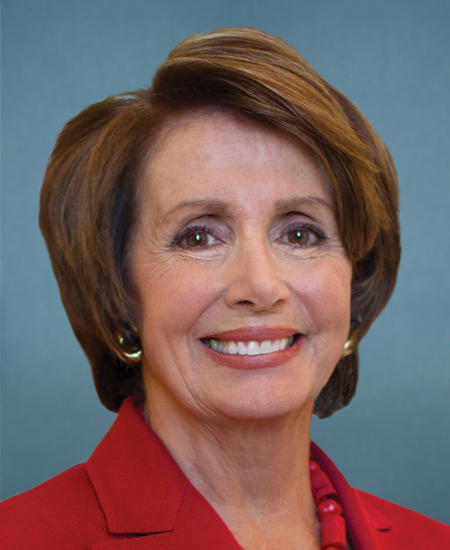
Nancy Pelosi
Nancy Pelosi House · District 11
D
Strong +
86% 246
Kim Schrier
Kim Schrier House · District 8
D
Strong +
86% 261
Scott Perry
Scott Perry House · District 10
R
Strong −
14% 252
AA
Alan Armstrong Senate
R
Strong −
14% 46
Rand Paul
Rand Paul Senate
R
Strong −
16% 223
Andy Harris
Andy Harris House · District 1
R
Strong −
18% 257
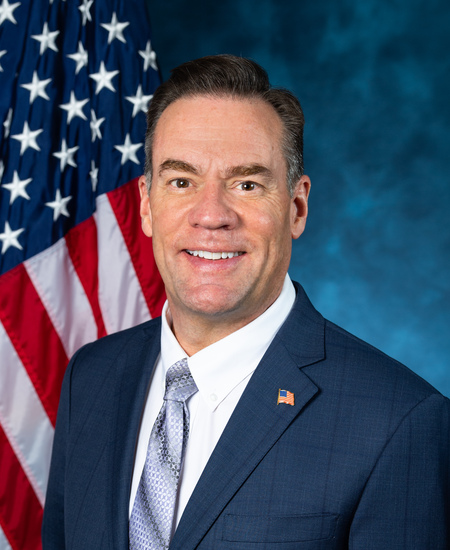
Russ Fulcher
Russ Fulcher House · District 1
R
Strong −
18% 262
Showing 151–160 of 210 bills

All technology bills

in committee · United States · Senate Jul 24, 2025

S 2455: TRAIN Act

The TRAIN Act (S.2455) allows copyright owners to request court-issued subpoenas requiring developers of generative AI models to disclose records showing whether their copyrighted works were used to train the model. It directly affects AI developers who create or substantially modify generative AI systems (like those producing text, images, or audio) by making them subject to these disclosure requests. To obtain a subpoena, a copyright owner must submit a sworn declaration showing a good-faith belief that their specific works were used in training, and the records can only be used to protect their copyright. The bill includes safeguards, such as prohibiting requests for others' works, requiring confidentiality of disclosed records, and imposing sanctions for bad-faith requests.
in committee · United States · Senate Dec 11, 2025

S 3469: BIOSECURE Act of 2025

S 3469, the BIOSECURE Act of 2025, prohibits U.S. federal agencies from contracting with or using biotechnology equipment/services from companies identified as "biotechnology companies of concern" (primarily those linked to foreign adversaries like China that pose national security risks, such as through unauthorized collection of genetic data). It directly affects federal agencies, contractors, and grant recipients by banning purchases or contracts involving such companies' products, with exceptions for intelligence activities, overseas health care for military personnel, and public health emergencies. Key mechanisms include a defined list of prohibited companies (updated annually), waiver options for national security needs (requiring congressional notice), and strict rules for identifying risks related to multiomic data (genomic, proteomic, etc.). The law aims to prevent U.S. citizens' biological data from being exploited by foreign adversaries through federal contracts.
in committee · United States · Senate Jan 29, 2025

S 321: Decoupling America's Artificial Intelligence Capabilities from China Act of 2025

The Decoupling America's Artificial Intelligence Capabilities from China Act of 2025 would prohibit the import of artificial intelligence technology and intellectual property from China into the United States and ban the export of such technology from the United States to China. It would also prohibit U.S. persons from conducting AI research or development in China, for Chinese entities, or in collaboration with Chinese entities, as well as restrict U.S. financing of Chinese AI entities involved in China's military-civil fusion strategy, surveillance development, or human rights abuses. Violations could result in fines up to $100 million for organizations and $1 million for individuals, along with loss of federal benefits. The bill directly affects U.S. companies, researchers, and financial institutions engaged with Chinese AI entities, aiming to limit the transfer of AI capabilities between the two nations.
in committee · United States · Senate Oct 23, 2025

S 3037: No AliPay Act of 2025

S 3037, the No AliPay Act of 2025, prohibits U.S. persons from conducting any financial transaction with AliPay (China) Internet Technology Company Limited. This affects U.S. citizens, permanent residents, U.S.-based businesses, and individuals physically in the U.S. who currently use AliPay for payments or processing. The bill bans all transactions involving the movement of funds or use of financial services connected to AliPay, including its apps. It applies broadly to any financial activity affecting interstate or foreign commerce, as defined in the bill.
in committee · United States · Senate Jun 25, 2025

S 2165: 3D Printed Gun Safety Act of 2025

This bill makes it illegal to distribute online digital instructions (like 3D printer files) that can automatically program a 3D printer to create a firearm or complete a firearm receiver. It directly affects individuals who share such files online, including those creating or distributing "ghost gun" schematics. The key mechanism prohibits the internet distribution of these specific digital files under federal law, aiming to prevent untraceable firearms. This addresses the concern that 3D-printed guns lack serial numbers, making them difficult for law enforcement to trace after crimes.
in committee · United States · House Feb 27, 2025

HJRES 64: Disapproving the rule submitted by the Bureau of Consumer Financial Protection relating to "Defining Larger Participants of a Market for General-Use Digital Consumer Payment Applications".

HJRES 64 is a joint resolution disapproving a rule issued by the Bureau of Consumer Financial Protection (CFPB) that defined "larger participants" in the market for general-use digital payment applications. The resolution directs Congress to reject the rule (published in the Federal Register on December 10, 2024), stating it shall have no force or effect. This action directly affects the CFPB’s regulatory authority over digital payment platforms, specifically targeting how the agency classifies major companies in this sector. The resolution does not create new policy but formally overturns the CFPB’s existing rule on this matter.
in committee · United States · Senate Jul 10, 2025

S 2259: Protecting Military Bases from Connected Vehicles of Concern Act of 2025

S 2259 prohibits the operation of connected vehicles designed, developed, manufactured, or supplied by foreign-owned entities posing national security risks on all Department of Defense property after January 1, 2028. The Secretary of Defense must create and annually update a public list of such vehicles by January 2027, incorporating existing federal security rules and including vehicles that threaten critical infrastructure or U.S. security. Military installations and DOD property will be required to enforce this ban, with the implementation plan due by June 2027 detailing oversight, threat assessment, and compliance measures. This bill directly affects military bases, DOD operations, and manufacturers/suppliers of covered vehicles linked to foreign entities of concern.
in committee · United States · Senate Feb 5, 2025

S 404: Focus on Learning Act

The Focus on Learning Act requires the Surgeon General to study how mobile device use affects student learning, mental health, and school climate in K-12 schools. It establishes a pilot program offering $5 million to fund secure containers/lockers for schools to create "mobile device-free environments" during school hours (excluding school-issued devices). Participating schools must maintain communication systems for staff/emergency response, have clear parent contact processes, and get parental input before implementing the policy. The bill directly affects elementary and secondary schools, students, and parents by mandating a study and pilot program to test device-free learning environments.
in committee · United States · Senate Mar 13, 2025

S 1053: FIGHT China Act of 2025

The FIGHT China Act of 2025 restricts U.S. investments in Chinese companies with ties to China's military or surveillance sectors. It prohibits U.S. persons from engaging in transactions involving "prohibited technologies" such as advanced semiconductors (with specific technical specifications), AI systems, quantum computing, and hypersonic weapons, while requiring notification for certain "notifiable technology" investments. The bill mandates that U.S. investors divest from companies on the Non-SDN Chinese Military-Industrial Complex Companies List within one year of enactment. It establishes a process for identifying Chinese entities subject to these restrictions, with annual reports to Congress required for seven years.
in committee · United States · House Aug 22, 2025

HR 5022: No Advanced Chips for the CCP Act of 2025.

This bill would require U.S. companies to obtain both Commerce Department approval and a specific congressional joint resolution before exporting advanced AI semiconductors to China. The Commerce Secretary must first conduct an interagency review assessing national security risks, military applications, human rights concerns, and economic impacts. Congress would then need to pass a dedicated resolution approving each export, effectively giving lawmakers a veto over such transactions. The bill defines "advanced AI semiconductors" by technical thresholds (e.g., 2,400+ processing performance) and applies to all exports targeting China, including Hong Kong and Macau.
Showing 151 to 160 of 210 bills
Previous 1 15 16 17 21 Next