Issue · Technology

Technology

Every technology bill, vote, and legislator stance in United States, automatically classified by Maddy, our AI policy reader.

Total bills
1,641
119th Congress
Top supporter
Suzan K. DelBene
86% support rate
Top opponent
Scott Perry
14% support rate
Ranked legislators
10
5 support · 5 oppose
Key legislators

Who's moving technology in United States

Legislators moving technology in United States
Legislator Party Stance Support rate Votes
Suzan K. DelBene
Suzan K. DelBene House · District 1
D
Strong +
86% 259
Mike Thompson
Mike Thompson House · District 4
D
Strong +
86% 261
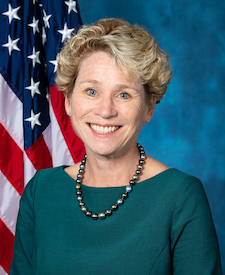
Chrissy Houlahan
Chrissy Houlahan House · District 6
D
Strong +
86% 259
Nancy Pelosi
Nancy Pelosi House · District 11
D
Strong +
86% 246
Kim Schrier
Kim Schrier House · District 8
D
Strong +
86% 261
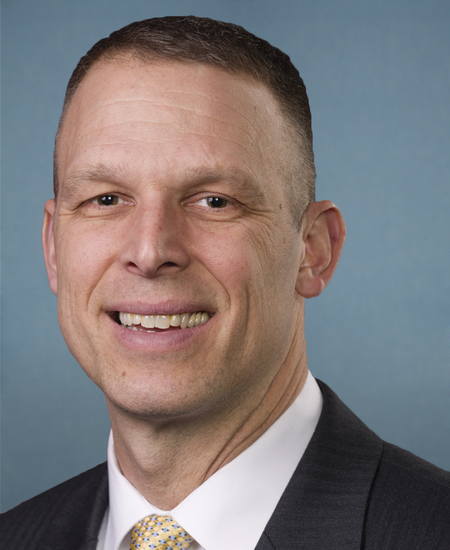
Scott Perry
Scott Perry House · District 10
R
Strong −
14% 252
AA
Alan Armstrong Senate
R
Strong −
14% 46
Rand Paul
Rand Paul Senate
R
Strong −
16% 223
Andy Harris
Andy Harris House · District 1
R
Strong −
18% 257
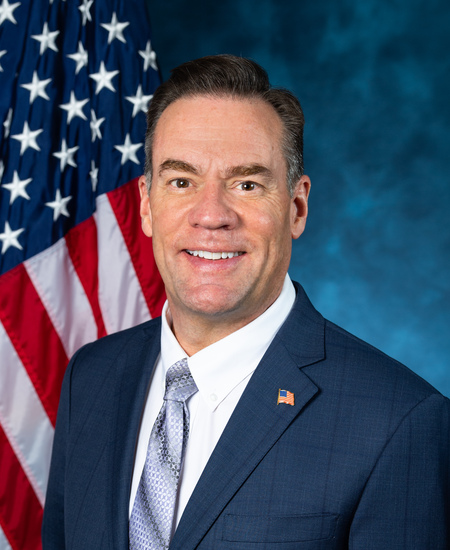
Russ Fulcher
Russ Fulcher House · District 1
R
Strong −
18% 262
Showing 101–110 of 1,641 bills

All technology bills

in committee · United States · House Jul 24, 2026

HR 9917: AI Kill Switch Act

This bill, known as the AI Kill Switch Act, requires companies developing high-cost artificial intelligence systems to build the technical ability to immediately stop or shut down their technology if it poses a serious risk. It defines "covered technology" as AI systems trained using more than $100 million in computing power and applies these rules to businesses that earn at least $500 million annually from such systems, while exempting non-commercial or academic users. Under the law, companies must report incidents causing significant harm or loss of control and could face emergency orders from the Department of Homeland Security to throttle, disable, or fully shut down their AI if a dangerous event occurs. The legislation also establishes a graduated framework for corrections, allowing for proportional responses like limiting user access or compute resources before resorting to a complete shutdown, and includes provisions for civil penalties and judicial review.
in committee · United States · House Jul 22, 2026

HR 9862: Responsible Artificial Intelligence for Veterans Act of 2026

The Responsible Artificial Intelligence for Veterans Act of 2026 requires the Department of Veterans Affairs to hire an independent research center to evaluate artificial intelligence tools currently used or being developed for patient care within the Veterans Health Administration. This evaluation will focus on five specific high-risk systems to assess their safety, accuracy, fairness, and how well they integrate with existing medical workflows. The law mandates that the findings be reported to Congress within a year, followed by a detailed plan from the VA to address any identified risks or gaps in oversight. Additionally, a government auditor will review both the evaluation and the VA's response plan to ensure accountability, all without requesting new funding for the initiative.
in committee · United States · House Jul 22, 2026

HR 9844: CHARTS Act

The CHARTS Act authorizes $5 million over two years to provide grants to long-term care and post-acute care providers, such as nursing facilities and home health agencies, for implementing specific health information technology systems. These funds, capped at $500,000 per provider, must be used to develop tools that enable real-time data sharing among doctors, insurers, and government programs while improving care coordination and reducing duplicate services. The Department of Health and Human Services will prioritize grants for facilities serving Medicare and Medicaid beneficiaries and will ensure recipients represent a diverse range of geographic and demographic populations. Additionally, the bill requires the agency to submit reports evaluating how these technologies impact patient outcomes, costs, and care transitions over a six-year period.
in committee · United States · House Jul 30, 2026

HR 9997: National Guard for National Service Act of 2026

This bill directs the National Guard Bureau and the Corporation for National and Community Service to create a pilot program that combines military service with national service activities. The program aims to protect critical infrastructure like energy and transportation systems, improve cybersecurity for schools and local governments, and help communities prepare for disasters. It also seeks to build a nationwide training pipeline that connects part-time National Guard members with career opportunities to address economic insecurity. Before launching the pilot, the agencies must conduct a feasibility study to determine the costs, necessary legal changes, and potential benefits of integrating these two types of service.
in committee · United States · House Jul 22, 2026

HR 9880: GPS Modernization Acceleration Act

The GPS Modernization Acceleration Act directs the President to speed up the transition to a more secure and resilient Global Positioning System by updating aging satellites and ground control systems. This legislation requires the creation of a clear timeline to deploy 24 new GPS IIIF satellites and prioritizes the L5 signal to improve accuracy and reduce vulnerability to interference, jamming, or spoofing. It mandates coordination between the Department of Defense, the Department of Transportation, and other federal agencies to upgrade military equipment and protect critical civilian infrastructure. Additionally, the bill requires the Secretary of Defense to submit annual reports to Congress detailing progress, funding needs, and strategies for countering GPS threats over a three-year period.
in committee · United States · Senate Jul 23, 2026

S 5111: Strengthening EFIN Confirmation for User Reliability and Electronic (SECURE) Tax Filing Act

The SECURE Tax Filing Act requires the Treasury Department to validate electronic filing identification numbers before they are used to submit tax returns. This validation system will confirm that an ID is active and that the person using it is authorized to file on behalf of taxpayers. The law mandates that tax preparation software must check this status in real-time before allowing any electronic filing to occur. Additionally, the Treasury must create an implementation plan within 180 days and submit regular reports on the system's performance and security. These changes directly affect tax professionals, software developers, and taxpayers who rely on electronic filing services.
in committee · United States · Senate Jul 22, 2026

S 5090: Digital Age Assurance Act of 2026

The Digital Age Assurance Act of 2026 establishes a system where operating system providers must collect a user's date of birth and share only their age range with apps and websites using secure, privacy-preserving methods. This bill directly affects technology companies, internet service providers, and users by mandating that platforms verify a user's age bracket before allowing access to age-restricted content. Key provisions prohibit the sale of children's data, ban targeted advertising toward minors, and prevent companies from using age information for profiling or marketing purposes. Additionally, the law includes anti-competitive rules to ensure that third-party apps face the same age-related restrictions as those owned by the platform itself. Enforcement is handled by the Federal Trade Commission and state attorneys general, who can impose fines for violations.
in committee · United States · Senate Jul 22, 2026

S 5063: FIRST Act

The FIRST Act establishes a new program within the Department of State to promote the international deployment of American small modular reactor technology. Managed by the Under Secretary for Arms Control and International Security, the program will advocate for U.S. nuclear exports, ensure high safety and security standards, and provide support for project development and workforce training abroad. The legislation requires the program to submit detailed reports and briefings to Congress every 120 days regarding its activities and funding, and it is set to expire in 2034.
Sub-Topics Nuclear
in committee · United States · House Jul 23, 2026

HR 9909: Small Unmanned Aircraft Systems Operational Test, Evaluation, and Training Corridor Act

This bill directs the Department of Defense to create designated airspace corridors specifically for testing and training small drones and the systems used to detect or neutralize them. These zones would allow military personnel to safely practice operating various drone technologies, such as sensors and autonomous software, alongside counter-drone measures like electronic warfare and directed energy weapons. The Secretary of Defense must identify suitable locations, potentially building new facilities or using existing ones, while consulting with other government agencies to ensure safety and address regulatory hurdles. Additionally, the bill requires the Pentagon to report to Congress within 90 days of establishing a corridor, providing details on its location, necessary resources, and any agreements with other federal partners.
Sub-Topics Emerging Technology
in committee · United States · Senate Jun 24, 2026

S 4931: End EPA Abuse Act of 2026

The End EPA Abuse Act of 2026 amends the Clean Air Act to place specific limits on the Environmental Protection Agency's ability to issue new regulations. It directly affects the EPA Administrator by prohibiting the creation of rules that restrict the sale or use of internal combustion engine vehicles, force power plants to switch fuel sources, or reduce the reliability of the electric grid. Additionally, the bill forbids regulations requiring technologies that are commercially unavailable, too expensive without subsidies, or technically infeasible due to geographic or infrastructure limitations. Finally, it bars the agency from issuing rules that significantly expand its authority beyond what Congress originally intended.
Showing 101 to 110 of 1,641 bills
Previous 1 10 11 12 165 Next