Issue · Healthcare

Healthcare

Every healthcare bill, vote, and legislator stance in United States, automatically classified by Maddy, our AI policy reader.

Total bills
3,118
119th Congress
Top supporter
Alan Armstrong
83% support rate
Top opponent
Ashley Moody
20% support rate
Ranked legislators
10
5 support · 5 oppose
Key legislators

Who's moving healthcare in United States

Legislators moving healthcare in United States
Legislator Party Stance Support rate Decisive votes
AA
Alan Armstrong Senate
R
Strong +
83% 6
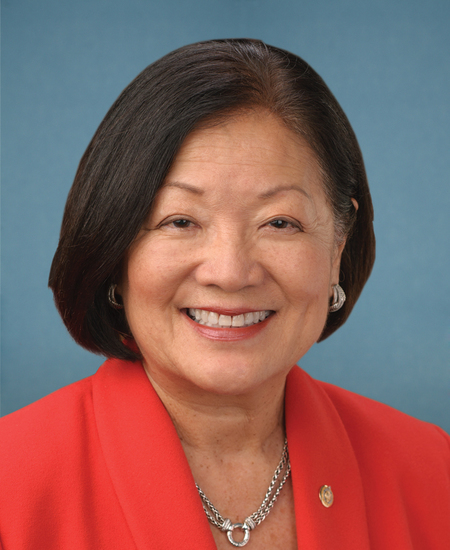
Mazie K. Hirono
Mazie K. Hirono Senate
D
Strong +
80% 20
Peter Welch
Peter Welch Senate
D
Strong +
80% 20
Ron Wyden
Ron Wyden Senate
D
Strong +
80% 20
Alex Padilla
Alex Padilla Senate
D
Support
74% 19
Ashley Moody
Ashley Moody Senate
R
Strong −
20% 20
Rick Scott
Rick Scott Senate
R
Strong −
20% 20
Rand Paul
Rand Paul Senate
R
Oppose
25% 20
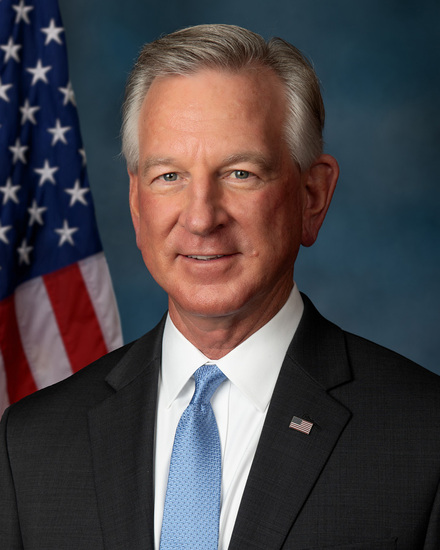
Tommy Tuberville
Tommy Tuberville Senate
R
Oppose
26% 19
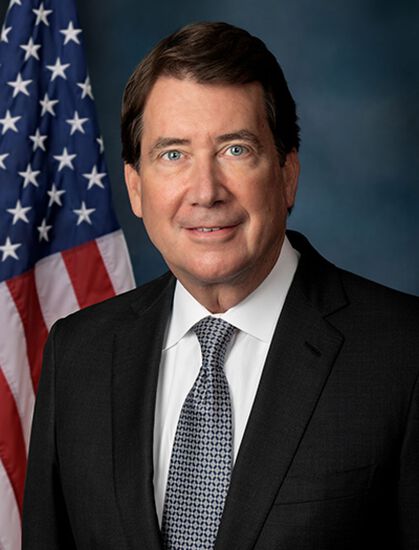
Bill Hagerty
Bill Hagerty Senate
R
Oppose
28% 18
Showing 2,851–2,860 of 3,118 bills

All healthcare bills

in committee · United States · House Sep 18, 2025

HR 5496: HEALTH Act of 2025

This bill permanently expands Medicare telehealth coverage for Federally Qualified Health Centers (FQHCs) and Rural Health Clinics (RHCs). It allows audio-only telehealth visits (not requiring video) to be covered under Medicare and removes the previous rule requiring patients to be at specific locations (like clinics) to access these services. As a result, Medicare beneficiaries in rural or underserved areas served by FQHCs/RHCs can now receive covered telehealth care from any location, including their homes, without location restrictions. The bill also ensures these clinics receive standard reimbursement rates for telehealth services, treating them the same as in-person visits for payment purposes.
in committee · United States · House Feb 26, 2025

HR 1627: TREATS Act

This bill changes rules for prescribing certain medications used to treat substance use disorders. It allows healthcare providers to use telehealth for the initial patient evaluation instead of requiring an in-person visit, but only for drugs approved by the FDA for addiction treatment (schedules III-V). The telehealth must meet specific standards, including real-time audio/video communication. This affects doctors and other practitioners who prescribe these medications for substance use disorders.
in committee · United States · Senate Apr 29, 2026

S 3706: Produce Prescriptions for Veterans Act

This bill adds "produce prescriptions" as a covered medical service under the VA healthcare system. It directly affects veterans with diet-related chronic conditions (like diabetes or heart disease) who are also food-insecure. The key provision requires the VA to provide veterans with vouchers or debit cards for purchasing fruits and vegetables to improve their health, rather than just offering standard medical treatment. This creates a concrete policy change where nutritional support becomes part of VA care for eligible veterans.
in committee · United States · Senate Jan 24, 2025

S 249: Access to Pediatric Technologies Act of 2025

This bill requires Medicare to establish national payment rates for qualifying pediatric medical devices when manufacturers request it. It directly affects device manufacturers and Medicare by creating a formal process to set these rates, which are used to reimburse doctors for using these devices. Key provisions include a timeline for requests (by May 1 annually), requiring manufacturers to submit data like pricing and claims information, and defining qualifying devices as those approved for pediatric use in procedures predominantly for children or specifically designed for them. The bill does not change Medicare coverage requirements but streamlines payment rate establishment for existing approved devices.
in committee · United States · House Dec 4, 2025

HR 6445: Fast Track Healthcare Apprenticeships Act

The Fast Track Healthcare Apprenticeships Act streamlines the registration process for healthcare apprenticeship programs under the National Apprenticeship Act. It requires the Secretary of Labor to decide on program applications within 45 days or provide a written explanation with a 90-day timeline for a decision if delayed. The bill also mandates digitizing all apprenticeship forms, including employer agreements and disability disclosures, for healthcare programs. This applies to healthcare occupations as defined by the Bureau of Labor Statistics, such as nurses, medical technicians, and support roles.
in committee · United States · House Mar 18, 2026

HR 4876: Reproductive Freedom for Veterans Act

This bill requires the Department of Veterans Affairs (VA) to cover abortion care, counseling, and related medication as part of standard hospital and medical services for eligible veterans and certain dependents. It amends VA healthcare law to explicitly include these services under existing coverage for veterans qualifying under section 1703 and dependents eligible under section 1781(a). The policy directly affects veterans and their dependents enrolled in VA healthcare programs by expanding covered benefits to include abortion-related care. This is a concrete policy change to VA healthcare benefits, not a broader abortion law.
in committee · United States · Senate Jan 22, 2025

S 177: Protect Funding for Women's Health Care Act

S 177, the Protect Funding for Women's Health Care Act, prohibits federal funding from being provided to Planned Parenthood Federation of America or its affiliates, clinics, subsidiaries, or successors. This directly affects Planned Parenthood as a recipient of federal funds for women's health services. The bill ensures that funds previously allocated to Planned Parenthood will instead be made available to other eligible providers like community health centers, hospitals, and clinics serving women. It explicitly states this prohibition does not reduce overall federal funding for women’s health care or affect existing abortion-related funding restrictions in appropriations acts.
Sub-Topics Women's Health
in committee · United States · House Jun 6, 2025

HR 3808: Expanding Seniors Access to Mental Health Services Act

This bill expands Medicare coverage for mental health services provided by clinical social workers to seniors in skilled nursing facilities. It removes an exclusion that previously prevented these services from being covered under Medicare's skilled nursing facility payment system. The bill specifically adds defined mental health service codes (including those for assessment and treatment) to Medicare's coverage, ensuring seniors can access these services without additional barriers. These changes will take effect for services provided on or after January 1, 2026.
Sub-Topics Long-Term Care Medicare Mental Health Tags Seniors
in committee · United States · House Apr 10, 2025

HR 2874: Defense of Conscience in Health Care Act

This bill requires the Health and Human Services Secretary to issue a final rule within six months of enactment that reinstates the 2019 "protecting statutory conscience rights in health care" regulation. It directly affects healthcare providers and facilities receiving federal funds, ensuring they can refuse certain services (like abortion or contraception) based on religious or moral beliefs without penalty. The rule must explicitly supersede any conflicting current regulations. This is a procedural rule restoration, not a new policy, aimed at preserving existing conscience protections under federal law.
Sub-Topics Women's Health
died · United States · Senate Dec 11, 2025

S 3386: Health Care Freedom for Patients Act of 2025

Health Care Freedom for Patients Act of 2025 This bill allows certain individuals with health savings accounts (HSAs) to receive federal payments. It also restricts payments under Medicaid and the Children's Health Insurance Program (CHIP) regarding certain noncitizens and restricts coverage of gender-transition procedures. Specifically, the bill provides funds for the Department of Health and Human Services to deposit payments into an individual’s HSA during 2026-2027 if the individual has a bronze or catastrophic plan through a health insurance exchange, is between the ages of 18 and 64, and has income up to 700% of the federal poverty level (FPL). Individuals may receive $1,000 or $1,500 annually, depending on age.  The bill also provides funds, beginning in 2027, for cost-sharing reductions for certain individuals who have a silver plan and income up to 250% of the FPL. Beginning in 2027, the bill allows any individual to enroll in a catastrophic plan. Currently, these plans are limited to those under the age of 30 or who have certain exemptions. The bill also reduces the enhanced federal matching rate for the Medicaid expansion population in states that provide any health benefits for individuals who are not qualified aliens under federal law. The bill makes Medicaid and CHIP coverage of individuals while their status is being verified optional and conditions federal payment during this period on verification.  Finally, the bill prohibits exchange plans from covering gender-transition procedures as an essential health benefit and prohibits federal payment under Medicaid and CHIP for these procedures.
Showing 2,851 to 2,860 of 3,118 bills