Issue · Healthcare

Healthcare

Every healthcare bill, vote, and legislator stance in United States, automatically classified by Maddy, our AI policy reader.

Total bills
3,150
119th Congress
Top supporter
Darline Graham
100% support rate
Top opponent
Ashley Moody
18% support rate
Ranked legislators
10
5 support · 5 oppose
Key legislators

Who's moving healthcare in United States

Legislators moving healthcare in United States
Legislator Party Stance Support rate Decisive votes
Darline Graham
Darline Graham Senate
R
Strong +
100% 6
AA
Alan Armstrong Senate
R
Strong +
88% 8
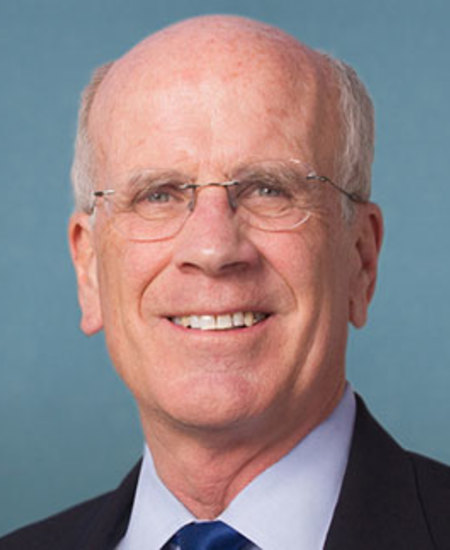
Peter Welch
Peter Welch Senate
D
Strong +
82% 22
Ron Wyden
Ron Wyden Senate
D
Support
77% 22
Alex Padilla
Alex Padilla Senate
D
Support
76% 21
Ashley Moody
Ashley Moody Senate
R
Strong −
18% 22
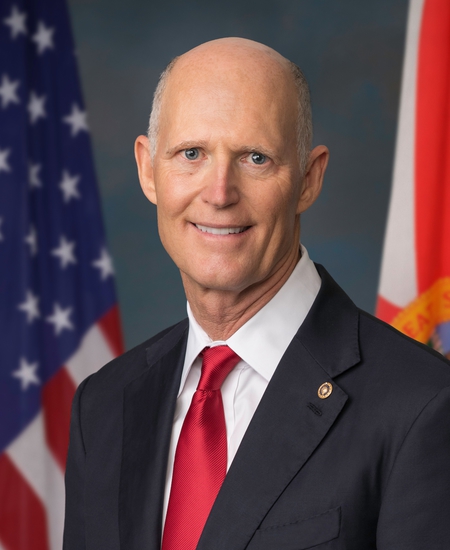
Rick Scott
Rick Scott Senate
R
Strong −
18% 22
Rand Paul
Rand Paul Senate
R
Oppose
23% 22
Brad Knott
Brad Knott House · District 13
R
Oppose
28% 18
Pat Harrigan
Pat Harrigan House · District 10
R
Oppose
28% 18
Showing 2,501–2,510 of 3,150 bills

All healthcare bills

in committee · United States · Senate Sep 17, 2025

S 2829: Preventive Home Visit Act

This bill adds Medicare coverage for "preventive home visits" to assess home safety and health risks for eligible beneficiaries. It requires Medicare to pay 100% of the cost for these visits - conducted by qualified professionals at least once every two years - to identify fall risks, improve mobility, and provide referrals for home modifications or nutrition support. The visits can be in-person, remote, or combined, and must focus on reducing physical risks like falls. The policy applies to Medicare beneficiaries starting January 1, 2027, and defines specific visit requirements in Medicare law.
in committee · United States · Senate Sep 17, 2025

S 2834: Medically Tailored Home-Delivered Meals Program Pilot Act

This bill establishes a 6-year Medicare pilot program to provide medically tailored home-delivered meals to high-risk Medicare beneficiaries after hospital discharge. It requires selected hospitals (40 total, meeting quality ratings and program integrity standards) to screen eligible patients with diet-impacted conditions (like diabetes or heart failure), provide 2 tailored meals daily for 12+ weeks, and offer medical nutrition therapy. The program aims to improve health outcomes and reduce readmissions by covering costs without patient copays, using existing Medicare funding with budget-neutral adjustments to hospital payments. Hospitals must submit data on health outcomes and costs for evaluation by Medicare.
Sub-Topics Hospitals Medicare
in committee · United States · Senate Sep 11, 2025

S 2792: Closing the Meal Gap Act of 2025

The Closing the Meal Gap Act of 2025 revises how Supplemental Nutrition Assistance Program (SNAP) benefits are calculated by replacing the "thrifty food plan" with a new "low-cost food plan" based on actual food costs for a standard 4-person family. It requires annual adjustments to this plan using current food prices and establishes a $140 standard medical deduction for elderly or disabled SNAP households, adjusted yearly for inflation. The bill eliminates the cap on excess shelter expenses and removes time limits on certain SNAP eligibility rules. These changes directly affect SNAP recipients by modifying benefit amounts and administrative rules, aiming to better align assistance with current food costs and household needs.
in committee · United States · Senate Aug 1, 2025

S 2302: Access to Birth Control Act

The Access to Birth Control Act (S 2302) requires pharmacies to provide contraception without delay when available and to help customers obtain it if out of stock - either by referring to another pharmacy or expediting an order. It prohibits pharmacies from intimidating customers, misrepresenting availability, breaching confidentiality, or refusing to return valid prescriptions for contraception. Exceptions allow pharmacists to decline service only if a prescription is missing, the customer cannot pay, or they use professional clinical judgment. Violations may result in civil penalties of up to $1,000 per day or private lawsuits by affected individuals.
in committee · United States · Senate Feb 25, 2025

S 709: Conrad State 30 and Physician Access Reauthorization Act

The Conrad State 30 and Physician Access Reauthorization Act extends the Conrad State 30 program, which allows foreign physicians to work in U.S. areas with doctor shortages for up to three years in exchange for a waiver of the two-year foreign residency requirement. The bill creates clearer pathways for physicians to adjust their immigration status to permanent residency after completing service requirements in medically underserved areas, while adding protections like banning non-compete clauses in employment agreements. It also establishes annual reporting requirements to track how many physicians are placed in underserved communities. The bill primarily affects foreign physicians seeking to work in the U.S. and health facilities in medically underserved communities.
in committee · United States · House Jun 11, 2025

HR 3907: ENROLL Act of 2025

The ENROLL Act of 2025 modifies the Affordable Care Act's navigator program, which helps people enroll in health insurance. It requires states and federal exchanges to award grants based on an entity’s capacity to provide services, not whether they cover non-qualified health plans, and ensures at least one annual grant goes to community-focused nonprofits. The bill expands navigators’ duties to include explaining Medicaid and children’s health insurance programs (CHIP) in clear language, mandates in-person assistance options, and allocates $100 million annually from insurer user fees for federal exchanges starting in 2026. These changes directly affect navigators, health insurance exchanges, and consumers seeking coverage under the Affordable Care Act.
in committee · United States · House Mar 3, 2025

HR 1806: Triple-Negative Breast Cancer Research and Education Act of 2025

This bill directs the National Institutes of Health (NIH) to expand research on triple-negative breast cancer (TNBC), a highly aggressive form disproportionately affecting African-American and Hispanic women. It requires the Centers for Disease Control and Prevention (CDC) to create public education materials about TNBC incidence, treatment options, and racial disparities, and directs health agencies to provide updated TNBC information to healthcare providers. The legislation specifically targets gaps in understanding TNBC prevalence, treatment costs, and prevention methods among minority women. It authorizes funding for these research and education efforts from fiscal years 2026 through 2031.
in committee · United States · Senate Jul 10, 2025

S 2244: Excluding Illegal Aliens from Medicaid Act

This bill (S 2244) changes Medicaid eligibility rules for non-qualified aliens by moving the effective date for excluding them from Medicaid from October 2026 to July 4, 2025. It specifically targets states that provide health benefits or financial assistance (from state funds) to non-qualified aliens who are not lawfully residing children or pregnant women eligible for Medicaid. The bill defines "specified states" as those offering such coverage to these individuals, triggering adjustments to federal Medicaid funding (FMAP) for those states. This directly affects Medicaid programs in states providing health coverage to non-qualified aliens and impacts non-citizen residents who would lose Medicaid eligibility under the new timeline.
Sub-Topics Medicaid
in committee · United States · Senate Jun 4, 2025

S 1951: RESCUE Act of 2025

This bill preserves a dedicated Army Medical Service Corps aeromedical evacuation capability, directly affecting Army medical operations and personnel. It requires the Army to maintain specialized personnel, training, aircraft, and doctrine exclusively for medical evacuation - preventing restructuring into general aviation without congressional notification and a formal risk assessment. The law mandates that any changes must align with medical doctrine, operational needs, and Surgeon General oversight, while ensuring continued support for combat, disaster response, and medical emergencies. It specifically prohibits altering aircraft authorizations or force structure without the Surgeon General’s certification of adequacy. The bill takes effect 180 days after enactment.
in committee · United States · House Sep 18, 2025

HR 5454: Medicare Advantage Prompt Pay Act

HR 5454, the Medicare Advantage Prompt Pay Act, requires Medicare Advantage plans to pay 95% of valid claims (with complete data) within 14 days for electronic claims or 30 days for paper claims, starting January 1, 2027. Plans that miss these deadlines must pay interest at standard government rates and face $25,000 civil penalties per violation. The bill also mandates annual reports showing payment rates for in-network versus out-of-network claims and interest paid. This directly affects Medicare Advantage insurers and healthcare providers (like doctors and hospitals) who bill these plans.
Sub-Topics Medicare
Showing 2,501 to 2,510 of 3,150 bills