Issue · Healthcare

Healthcare

Every healthcare bill, vote, and legislator stance in United States, automatically classified by Maddy, our AI policy reader.

Total bills
3,230
119th Congress
Top supporter
Darline Graham
82% support rate
Top opponent
Rick Scott
19% support rate
Ranked legislators
10
5 support · 5 oppose
Key legislators

Who's moving healthcare in United States

Legislators moving healthcare in United States
Legislator Party Stance Support rate Decisive votes
Darline Graham
Darline Graham Senate
R
Strong +
82% 11
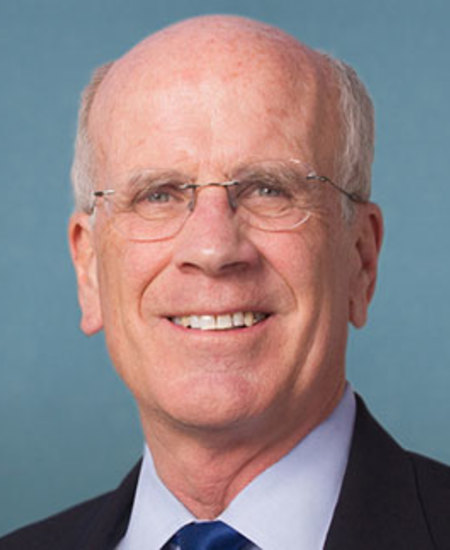
Peter Welch
Peter Welch Senate
D
Strong +
81% 27
Ron Wyden
Ron Wyden Senate
D
Support
78% 27
Alex Padilla
Alex Padilla Senate
D
Support
77% 26
Mazie K. Hirono
Mazie K. Hirono Senate
D
Support
74% 27
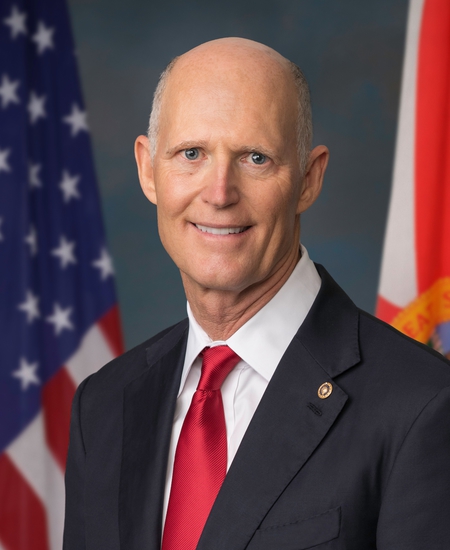
Rick Scott
Rick Scott Senate
R
Strong −
19% 27
Ashley Moody
Ashley Moody Senate
R
Oppose
22% 27
Rand Paul
Rand Paul Senate
R
Oppose
22% 27
Brad Knott
Brad Knott House · District 13
R
Oppose
28% 18
Pat Harrigan
Pat Harrigan House · District 10
R
Oppose
28% 18
Showing 1,691–1,700 of 3,230 bills

All healthcare bills

in committee · United States · House Nov 18, 2025

HR 6110: To amend title XVIII of the Social Security Act to require Medicare Advantage plans to automatically reconsider determinations denying coverage.

This bill (HR 6110) requires Medicare Advantage plans to automatically reconsider coverage denials without needing an enrollee to request it. It directly affects Medicare Advantage beneficiaries whose initial coverage requests are denied. The key change amends existing law to eliminate the requirement for patients to submit a separate request for reconsideration, instead mandating that plans proactively review these denials. This streamlines the process for enrollees facing coverage rejections under their Medicare Advantage plan.
Sub-Topics Medicare
in committee · United States · House Jul 10, 2025

HR 4321: SMART for TBI Act

HR 4321, the SMART for TBI Act, requires the Department of Defense to create a working group focused on using digital health technologies to improve treatment for traumatic brain injuries (TBI) among military personnel. The working group, including military, DoD staff, and external experts, must develop a strategy identifying gaps in current TBI care, analyzing existing digital tools, and recommending specific technology advances and funding priorities. This strategy must be completed by 2026 and presented to Congress. The bill directly affects how the military addresses TBI treatment through digital health approaches, aiming to modernize care using technology.
in committee · United States · House Jun 26, 2025

HR 4204: Medicare Patient Choice Act

HR 4204, the Medicare Patient Choice Act, expands Medicare beneficiaries' ability to directly choose certain healthcare providers without requiring a physician referral. It updates Medicare rules to explicitly include physical therapists, occupational therapists, speech-language pathologists, and qualified audiologists as covered providers, replacing previous references to "physician or practitioner" throughout the law. This change allows beneficiaries to access these specific therapy services directly from qualified providers, removing prior barriers that often required a doctor's referral. The bill directly affects Medicare beneficiaries seeking these therapy services and the qualified professionals providing them. The key mechanism is amending the Social Security Act to expand the definition of covered providers within Medicare's existing framework.
Sub-Topics Medicare
in committee · United States · House Feb 20, 2025

HR 467: Foreign Medical Program Modernization Act of 2025

This bill modernizes the VA's Foreign Medical Program by removing the requirement that veterans must have a service-connected disability to receive overseas medical care. It directly affects veterans seeking medical treatment abroad through the VA, expanding eligibility to those needing care regardless of disability status. Key provisions include updating payment systems to allow electronic reimbursements to providers and assessing contracts with non-VA entities to build a broader care network. These changes aim to simplify access, reduce administrative burdens, and improve the delivery of foreign medical services for eligible veterans.
in committee · United States · House Feb 11, 2025

HR 1195: Protect Medicaid Act

HR 1195, the Protect Medicaid Act, prohibits federal Medicaid funds from covering administrative costs related to health benefits provided to unauthorized immigrants who lack lawful immigration status and are ineligible for Medicaid. This directly affects states that currently provide such benefits, requiring them to separate these administrative costs from general Medicaid program expenses. The bill adds a new provision to the Social Security Act clarifying that federal funds cannot be used for these specific administrative costs, while allowing funds for systems designed to enforce this rule. It also mandates an Inspector General report detailing how states separate costs, ensure compliance, finance these programs (e.g., through provider taxes), and the impact on drug pricing for this population.
in committee · United States · House Aug 12, 2025

HR 4960: BENES 2.0 Act

HR 4960 (BENES 2.0 Act) requires Social Security to include clear Medicare eligibility information in annual statements mailed to individuals reaching ages 60-65. The notice must explain enrollment rules, late penalties, relief options, and special considerations for veterans and Puerto Rico residents, with practical examples. Statements will be mailed 6 months before age 65 and updated every 2 years based on stakeholder feedback. This directly affects all Americans approaching Medicare eligibility through Social Security.
Sub-Topics Medicare
in committee · United States · Senate Mar 25, 2026

SJRES 103: A joint resolution providing for congressional disapproval under chapter 8 of title 5, United States Code, of the rule submitted by the Department of Veterans Affairs relating to "Reproductive Health Services".

SJRES 103 is a congressional disapproval resolution targeting a Department of Veterans Affairs (VA) rule on reproductive health services for veterans. The resolution, if passed, would block the VA rule from taking effect by invoking the Congressional Review Act (Chapter 8 of Title 5, U.S. Code), meaning the rule published in the Federal Register (December 31, 2025) would have no legal force. This directly affects the VA’s ability to implement new guidelines for reproductive health services at its facilities, preserving existing policies instead. The resolution does not create new policy but halts a specific administrative rule.
Sub-Topics Women's Health
in committee · United States · House Feb 12, 2025

HR 1254: Rural Obstetrics Readiness Act

Rural Obstetrics Readiness Act This bill creates and expands federal grant programs within the Health Resources and Services Administration (HRSA) to increase capacity to provide emergency obstetric health services in rural areas or areas without practitioners or facilities specializing in obstetric services.  Specifically, HRSA must establish a program for providing grants to certain hospitals or consortiums that include hospitals in rural areas or areas with maternal health care professional shortages for training, developing a workforce, and purchasing equipment relating to obstetric emergencies. In addition, the bill requires HRSA’s Alliance for Innovation on Maternal Health Capacity program to provide grants for training on emergency obstetric services for practitioners in rural health care facilities without dedicated obstetric units. HRSA must also establish a pilot program to provide grants to government entities for developing or improving telehealth access programs to support urgent maternal health care in rural facilities without a dedicated obstetric unit.
in committee · United States · House Jul 7, 2025

HR 4299: Protecting Patient Access to Cancer and Complex Therapies Act

This bill requires drug manufacturers to pay rebates to Medicare when their "selected drugs" (cancer and complex therapies subject to negotiated maximum fair prices) are used. Manufacturers must calculate rebates based on the difference between current Medicare payment rates (ASP+6) and new negotiated rates (MFP+6), covering the gap for beneficiaries. This lowers patient coinsurance from the current 20% of ASP+6 to 20% of MFP+6 for these specific drugs during the negotiated price period. The rebates are paid to the Medicare trust fund and apply to Medicare Part B beneficiaries using these drugs, directly affecting drug manufacturers and patients covered under Medicare Part B.
in committee · United States · House Mar 27, 2025

HR 1671: Justice for Vaccine Injured Veterans Act of 2025

This bill creates a presumption that certain health conditions resulting from the COVID-19 vaccine are connected to military service for veterans who received the vaccine under mandatory orders between August 24, 2021, and January 10, 2023. It specifically covers diseases like myocarditis, pericarditis, thrombosis with thrombocytopenia syndrome, and Guillain-Barré Syndrome, shifting the burden of proof to the VA for these claims. The VA must report quarterly on claim status, including approvals, denials, and appeals, and make these reports publicly available. This changes the claims process for affected veterans but does not create new benefits or expand eligibility beyond the defined timeframe and conditions.
Showing 1,691 to 1,700 of 3,230 bills