Issue · Healthcare

Healthcare

Every healthcare bill, vote, and legislator stance in United States, automatically classified by Maddy, our AI policy reader.

Total bills
3,150
119th Congress
Top supporter
Darline Graham
82% support rate
Top opponent
Rick Scott
19% support rate
Ranked legislators
10
5 support · 5 oppose
Key legislators

Who's moving healthcare in United States

Legislators moving healthcare in United States
Legislator Party Stance Support rate Decisive votes
Darline Graham
Darline Graham Senate
R
Strong +
82% 11
Peter Welch
Peter Welch Senate
D
Strong +
81% 27
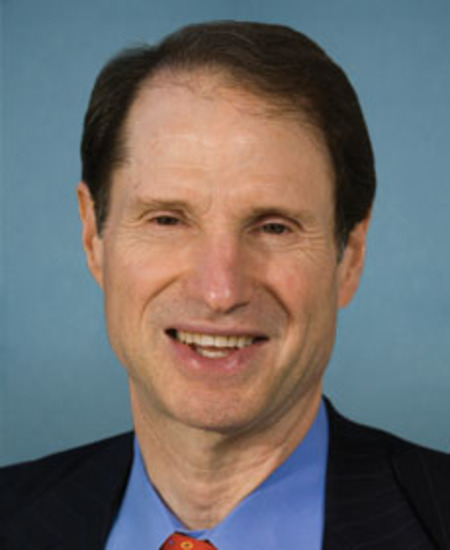
Ron Wyden
Ron Wyden Senate
D
Support
78% 27
Alex Padilla
Alex Padilla Senate
D
Support
77% 26
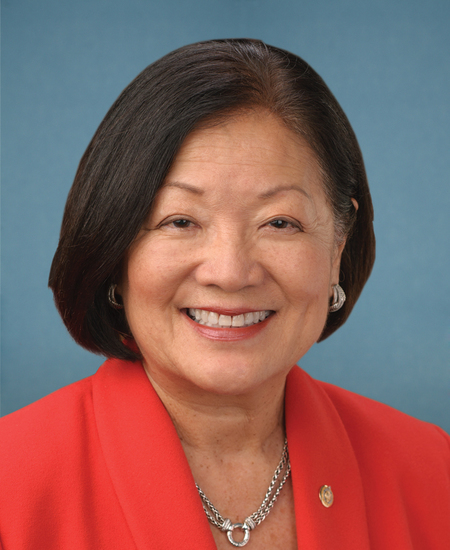
Mazie K. Hirono
Mazie K. Hirono Senate
D
Support
74% 27
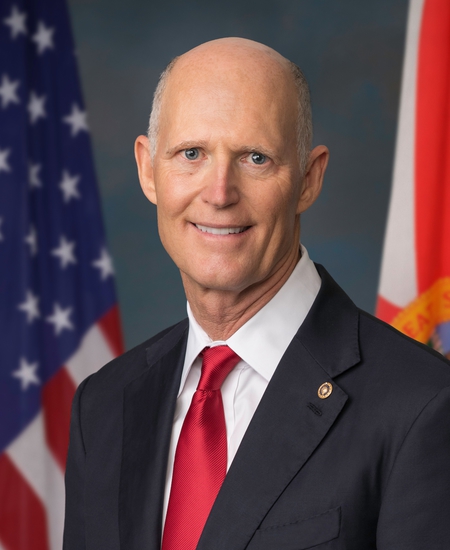
Rick Scott
Rick Scott Senate
R
Strong −
19% 27
Ashley Moody
Ashley Moody Senate
R
Oppose
22% 27
Rand Paul
Rand Paul Senate
R
Oppose
22% 27
Brad Knott
Brad Knott House · District 13
R
Oppose
28% 18
Pat Harrigan
Pat Harrigan House · District 10
R
Oppose
28% 18
Showing 1,321–1,330 of 3,150 bills

All healthcare bills

in committee · United States · House Mar 26, 2025

HR 2387: No Harm Act

HR 2387, the "No Harm Act," prohibits federal funding for certain medical treatments for minors that the bill defines as "sex-trait altering treatments," including puberty blockers, hormone therapy, and gender reassignment surgeries (except for specific medical conditions like disorders of sex development). The bill directly affects minors receiving such care, healthcare providers, medical institutions, and schools, requiring parental consent for any treatment and banning federal funds for facilities or schools that provide these treatments without parental approval. Key provisions include banning federal funds for any promotion or facilitation of these treatments, mandating a 72-hour parental consultation period before treatment, and creating civil lawsuits for violations. The bill defines "sex" as biological sex at birth and "gender" as social aspects, excluding only treatments for medically verified conditions.
in committee · United States · House Mar 3, 2025

HR 1768: Lower Costs for Everyday Americans Act

Lower Costs for Everyday Americans Act This bill reauthorizes and establishes programs and requirements regarding health, commerce, and the environment. The bill reauthorizes and expands programs for health care, including by allowing individuals age 65 and over with a medically improved disability to qualify for Medicaid; extending payment increases for certain providers under Medicare, including physicians and rural hospitals;  extending Medicare coverage of certain telehealth services; requiring pharmacy benefit managers to remit 100% of rebates for prescription drugs to group health plans;  reauthorizing programs supporting health care in underserved communities, including the National Health Service Corps; expanding and reauthorizing programs for public health emergency preparedness and response, including pandemic preparedness;  expanding and reauthorizing programs for prevention and treatment of certain conditions, including substance use disorders, traumatic brain injuries, and sickle cell disease; and expanding the Food and Drug Administration’s authority regarding research on rare pediatric diseases. The bill also establishes requirements relating to commerce, including by  prohibiting nonconsensual online publication of intimate visual depictions of individuals,  requiring manufacturers of internet-connected devices to disclose whether the device has a camera or microphone prior to purchase, banning products containing 10% or more of sodium nitrite by weight, and requiring additional disclosures relating to the prices of concert tickets and hotel rooms. Additionally, the bill establishes and reauthorizes programs relating to the environment, including grants for community recycling systems, drinking water infrastructure, and reducing diesel emissions. It also allows gasoline that is blended with 10% to 15% ethanol to be sold year-round.
in committee · United States · House Feb 11, 2025

HR 1189: National Plan for Epilepsy Act

HR 1189, the National Plan for Epilepsy Act, creates a coordinated federal strategy to address epilepsy through a National Plan for Epilepsy. The plan requires the Secretary of Health and Human Services to establish an annual assessment, maintain a diverse Advisory Council (including people with epilepsy, caregivers, and experts), and coordinate research and care across federal agencies. Key provisions include annual progress reports to Congress, data sharing between agencies, and recommendations to improve diagnosis, treatment access, and reduce epilepsy-related disparities. The plan expires December 31, 2035, and directly affects the estimated 3.4 million people in the U.S. living with epilepsy and their caregivers.
in committee · United States · House Feb 5, 2025

HR 1019: Medicaid Program Improvement Act

The Medicaid Program Improvement Act requires states to regularly verify and update the addresses of Medicaid and CHIP (Children's Health Insurance Program) enrollees using reliable data sources, starting January 1, 2026. States must act on any address changes obtained through these sources, ensuring records remain accurate. Managed care organizations contracting with states must also transmit address information they receive directly from enrollees to the state. This applies to all 50 states and the District of Columbia, aiming to improve data accuracy for program administration.
in committee · United States · Senate Apr 7, 2025

S 1315: A bill to amend the Internal Revenue Code of 1986 to provide a refundable credit for certain home accessibility improvements.

This bill creates a refundable 35% tax credit for homeowners making specific accessibility modifications to their primary residence. It directly affects individuals who are blind, disabled (meeting Social Security or VA benefit criteria), or aged 60+, including their spouses or dependents living in the same home. Qualifying improvements include installing ramps, grab bars, widened doorways, accessible bathrooms, non-slip flooring, and adaptive technologies like remote health monitors. The credit is limited to $10,000 annually ($30,000 lifetime) and phases out for higher-income taxpayers (e.g., $400,000 joint filer threshold).
Sub-Topics Tax Credits Military Families Veteran Benefits Tags People with Disabilities
in committee · United States · House Apr 28, 2025

HR 3051: Victims of Agent Orange Act of 2025

The Victims of Agent Orange Act of 2025 provides U.S. government assistance to Vietnamese residents affected by Agent Orange exposure during the Vietnam War (1961-1975), their children, and Vietnamese Americans with exposure-related health issues. It directs USAID to fund medical care, caregiver support, home repairs, and environmental cleanup of contaminated sites in Vietnam, prioritizing military bases and heavily sprayed areas. The Department of Health and Human Services must also conduct health assessments and establish treatment centers for Vietnamese Americans in the U.S. affected by Agent Orange. The bill requires implementation within 18 months of enactment and mandates quarterly progress reports to Congress.
in committee · United States · House Feb 3, 2026

HR 4469: PRESUME Act

HR 4469, the PRESUME Act, simplifies eligibility for veterans exposed to radiation during military service. It removes the requirement for veterans to provide specific radiation dose evidence to qualify as "radiation-exposed veterans" under VA benefits. This change directly affects veterans who participated in nuclear testing or other radiation-related military activities and previously had to prove exact exposure levels. The bill amends 38 U.S.C. § 1112(c) to state the VA Secretary "may not require evidence of a certain dose of radiation" for this classification, streamlining access to medical benefits.
in committee · United States · House Jan 28, 2025

HR 783: Sustainable Cardiopulmonary Rehabilitation Services in the Home Act

Sustainable Cardiopulmonary Rehabilitation Services in the Home Act This bill permanently allows services relating to cardiac rehabilitation programs, intensive cardiac rehabilitation programs, and pulmonary rehabilitation programs to be furnished via telehealth at a beneficiary's home under Medicare.
Sub-Topics Medicare Telehealth
in committee · United States · House Apr 8, 2025

HR 2741: PEER Support Act

The PEER Support Act creates a new federal job classification for peer support specialists - individuals with lived experience in mental health or substance use recovery who provide support to others - by 2026. It establishes an Office of Recovery within the Substance Abuse and Mental Health Services Administration (SAMHSA) to lead training, certification, and career development for these specialists, including sharing best practices with states. The bill also requires a federal report analyzing state criminal background check laws for peer support specialists and recommending ways to reduce barriers to certification. This legislation directly affects peer support specialists, state certification programs, and federal agencies managing mental health services.
passed · United States · Senate Sep 28, 2026

S 2339: EARLY Act Reauthorization of 2025

This bill reauthorizes the Young Women’s Breast Health Education and Awareness program through 2031, extending its authorization period by five years (from 2026 to 2031). It directly affects the existing program established under the 2009 law, which provides funding for breast health education and awareness initiatives targeting young women. The key provision is a simple date amendment in the Public Health Service Act to update the program’s expiration date. As a procedural reauthorization, it does not create new policies or alter program requirements.
Sub-Topics Public Health
Showing 1,321 to 1,330 of 3,150 bills