Issue · Environment

Environment

Every environment bill, vote, and legislator stance in United States, automatically classified by Maddy, our AI policy reader.

Total bills
1,978
119th Congress
Top supporter
Aisha Wahab
100% support rate
Top opponent
Marsha Blackburn
11% support rate
Ranked legislators
10
5 support · 5 oppose
Key legislators

Who's moving environment in United States

Legislators moving environment in United States
Legislator Party Stance Support rate Decisive votes
Aisha Wahab
Aisha Wahab House · District 14
D
Strong +
100% 7
Everton Blair Jr.
Everton Blair Jr. House · District 13
D
Strong +
89% 9
Martin Heinrich
Martin Heinrich Senate
D
Strong +
84% 37
Adam B. Schiff
Adam B. Schiff Senate
D
Support
79% 53
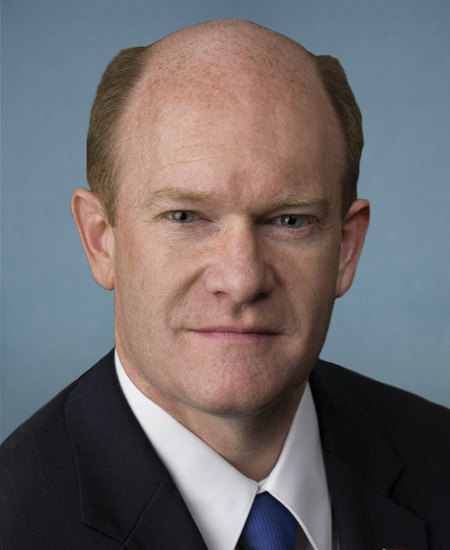
Christopher A. Coons
Christopher A. Coons Senate
D
Support
79% 52
Marsha Blackburn
Marsha Blackburn Senate
R
Strong −
11% 36
Ted Budd
Ted Budd Senate
R
Strong −
20% 40
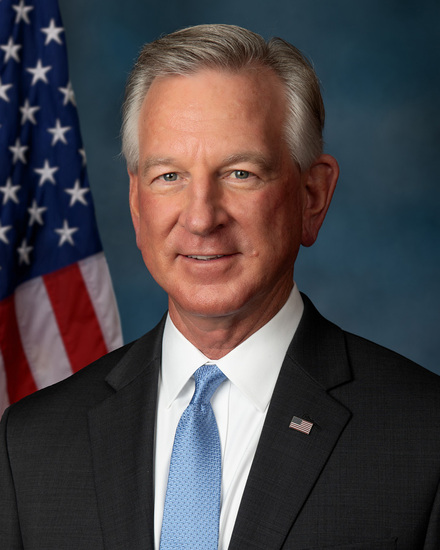
Tommy Tuberville
Tommy Tuberville Senate
R
Oppose
21% 53
Bill Cassidy
Bill Cassidy Senate
R
Oppose
22% 54
Jerry Moran
Jerry Moran Senate
R
Oppose
23% 53
Showing 261–270 of 1,978 bills

All environment bills

in committee · United States · House Jul 21, 2026

HR 8876: Aquatic Invasive Species Control and Prevention Act of 2026

The Aquatic Invasive Species Control and Prevention Act of 2026 strengthens federal efforts to manage and prevent the spread of non-native aquatic organisms by updating existing laws and creating new funding opportunities. The bill establishes a competitive grant program to research and develop environmentally sound technologies for controlling these species, while also requiring a comprehensive study of federal regulations that might slow down rapid response actions when an invasion is detected. It mandates the creation of a national plan for inspecting and decontaminating watercraft at boat launches to stop the transfer of invasive species, and it authorizes funding to support regional panels and monitoring programs across various waterways. Additionally, the legislation updates the National Invasive Species Council's role to better coordinate federal actions and encourages the adoption of advanced ballast water management systems on ships.
Sub-Topics Water Quality
in committee · United States · House May 26, 2026

HR 9035: Ending Fossil Fuel Bailouts Act of 2026

This bill, titled the Ending Fossil Fuel Bailouts Act of 2026, modifies federal bankruptcy laws to specifically target oil, gas, and coal companies. It requires these companies to prioritize paying worker wages and environmental cleanup costs over other debts, including those owed to shareholders. The legislation also prevents fossil fuel firms from abandoning their assets during bankruptcy and extends the time period for investigating fraudulent financial transfers to ten years. Additionally, it prohibits the transfer of certain federal energy leases if the company holding them files for bankruptcy. These changes aim to ensure that environmental liabilities and employee compensation are addressed before other financial claims are settled.
Sub-Topics Coal Oil & Gas
in committee · United States · House Jul 14, 2026

HR 9084: Department of Energy Nuclear Transparency Act

The Department of Energy Nuclear Transparency Act requires the Department to publicly announce specific actions regarding certain high-risk nuclear facilities within 24 hours of taking them. These announcements must be posted on the Department's website and include summaries of changes to safety standards, full safety analysis reports (with commercially sensitive details redacted), and agreements to authorize new facilities. Additionally, the law mandates an annual report to Congress detailing the Department's activities related to authorizing these nuclear facilities. This legislation directly affects the Department of Energy's management of nuclear sites and increases public access to information about safety measures and regulatory approvals.
Sub-Topics Nuclear Pipeline Infrastructure Tags Government Transparency
in committee · United States · House May 12, 2026

HR 8773: Containing Effects of Mineral Extraction Act of 2026

This bill requires the Secretary of the Interior to enforce stricter environmental and safety rules before approving new large-scale mineral extraction projects near cities or sensitive areas. Companies seeking to extract over one million tons of materials annually must submit detailed plans covering truck routes, water usage, noise control, and the feasibility of using rail transport instead of trucks. The legislation also mandates that local governments have a formal process to request project modifications and ensures that all approved projects annually report their resource consumption and operational data. If a company fails to follow these new requirements, the Secretary has the authority to suspend operations or cancel the project's permit.
in committee · United States · House May 7, 2026

HR 8706: Better Energy Storage and Safety Act

The Better Energy Storage and Safety Act expands federal efforts to improve the safety and reliability of energy storage systems used in homes and on the electrical grid. It directs government agencies to develop standardized testing methods, including stress tests that push systems to failure, to better predict how these technologies degrade and to mitigate risks like fires or explosions. The legislation also increases funding for demonstration projects and grants, requiring a focus on safer battery chemistries and advanced diagnostic tools. Additionally, it updates the program's goals to include the use of artificial intelligence and digital modeling to enhance the safety of installed energy storage units.
in committee · United States · Senate May 20, 2026

S 4603: Golden Mussel Eradication and Control Act of 2026

The Golden Mussel Eradication and Control Act of 2026 establishes a demonstration program to prevent, monitor, and control the invasive golden mussel in the Sacramento-San Joaquin Delta and other affected U.S. waters. This initiative involves collaboration between federal agencies, state and local governments, port authorities, and academic institutions to research the mussel's biology, develop eradication methods, and create early warning systems for new infestations. The bill also creates a competitive grant program to fund technology development for removing mussels from infrastructure like water intakes and boat hulls, while authorizing $15 million annually from 2026 to 2030 to support these efforts. Additionally, the legislation requires the Task Force to develop control guidelines within a year of enactment and to share technical information with regional partners to coordinate response strategies.
passed · United States · Senate Jun 24, 2026

SRES 741: A resolution designating May 2026 as "National Wildfire Preparedness Month".

This resolution designates May 2026 as National Wildfire Preparedness Month to raise awareness about wildfire risks and promote safety measures. It encourages federal, state, local, and tribal governments, as well as community organizations, to increase public knowledge about fire prevention and mitigation strategies. The bill highlights specific actions such as home hardening, land management, evacuation planning, and reducing human-caused ignition sources to help communities better prepare for increasingly severe wildfire seasons.
in committee · United States · House Jun 23, 2026

HR 9022: Energy and Water Development and Related Agencies Appropriations Act, 2027

Energy and Water Development and Related Agencies Appropriations Act, 2027 This bill provides FY2027 appropriations for U.S. Army Corps of Engineers civil works projects, the Department of the Interior's Bureau of Reclamation, the Department of Energy (DOE), and several independent agencies. The bill provides appropriations for U.S. Army Corps of Engineers civil works projects, including for Investigations, Construction, Mississippi River and Tributaries, Operation and Maintenance, the Regulatory Program, Flood Control and Coastal Emergencies, Expenses, the Office of the Assistant Secretary of the Army for Civil Works, and the Water Infrastructure Finance and Innovation Program. The bill provides appropriations to the Department of the Interior for the Central Utah Project and the Bureau of Reclamation. The bill provides appropriations to DOE for energy programs, including Critical Minerals and Energy Innovation; Cybersecurity, Energy Security, and Emergency Response; Electricity; Nuclear Energy; Hydrocarbons and Geothermal Energy; Naval Petroleum and Oil Shale Reserves; the Strategic Petroleum Reserve; the Northeast Home Heating Oil Reserve; the Energy Information Administration; Non-Defense Environmental Cleanup; the Uranium Enrichment Decontamination and Decommissioning Fund; Science; Nuclear Waste Disposal; the Advanced Research Projects Agency—Energy; the Title 17 Innovative Technology Loan Guarantee Program; the Advanced Technology Vehicles Manufacturing Loan Program; the Tribal Energy Loan Guarantee Program; Indian Energy Policy and Programs; Departmental Administration; and the Office of the Inspector General. The bill also provides appropriations to DOE for Atomic Energy Defense Activities of the National Nuclear Security Administration, Environmental and Other Defense Activities, and the Power Marketing Administrations. The bill provides appropriations to several independent agencies, including the Federal Energy Regulatory Commission and the Nuclear Regulatory Commission. The bill also sets forth requirements and restrictions for using funds provided by this and other appropriations acts.
in committee · United States · House May 15, 2026

HR 8847: Deporting Illegal Poachers Act

This bill, titled the Deporting Illegal Poachers Act, would make non-citizens who break hunting or fishing laws subject to deportation. It directly affects foreign nationals who have been convicted of, admitted to, or whose actions constitute violations of state or federal rules regarding licenses, seasons, bag limits, or protected species. Under the new provisions, these individuals would be considered inadmissible to the United States and deportable if found guilty of such offenses, regardless of whether the crime is classified as a misdemeanor or felony. The law applies to violations occurring in any jurisdiction, including Tribal and local areas, without requiring the offense to be labeled as a serious crime under federal standards.
in committee · United States · Senate Jul 21, 2026

S 4595: Mullica River Watershed Wild and Scenic River Study Act of 2026

This bill directs the U.S. Department of the Interior to study the Mullica River watershed in New Jersey to determine if it should be officially designated as a Wild and Scenic River. The study will focus on specific segments of the Mullica River and its tributaries, including the Wading River and Batsto River, to assess their suitability for protection. If the study concludes that these waters meet the necessary criteria, the area could receive federal protections to preserve its natural character and recreational values. The final results of this evaluation must be reported to Congress within three years of funding becoming available.
Sub-Topics Water Quality
Showing 261 to 270 of 1,978 bills
Previous 1 26 27 28 198 Next