Issue · Environment

Environment (Conservation)

Every environment bill, vote, and legislator stance in United States, automatically classified by Maddy, our AI policy reader.

Total bills
304
119th Congress
Top supporter
Adam B. Schiff
100% support rate
Top opponent
Ashley Moody
0% support rate
Ranked legislators
10
5 support · 5 oppose
Key legislators

Who's moving conservation in United States

Legislators moving conservation in United States
Legislator Party Stance Support rate Votes
Adam B. Schiff
Adam B. Schiff Senate
D
Strong +
100% 9
Alex Padilla
Alex Padilla Senate
D
Strong +
100% 9
Amy Klobuchar
Amy Klobuchar Senate
D
Strong +
100% 9
Andy Kim
Andy Kim Senate
D
Strong +
100% 9
Angus S. King, Jr.
Angus S. King, Jr. Senate
I
Strong +
100% 9
Ashley Moody
Ashley Moody Senate
R
Strong −
0% 9
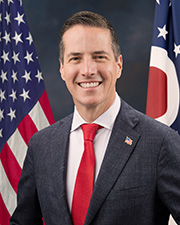
Bernie Moreno
Bernie Moreno Senate
R
Strong −
0% 9
Bill Cassidy
Bill Cassidy Senate
R
Strong −
0% 9
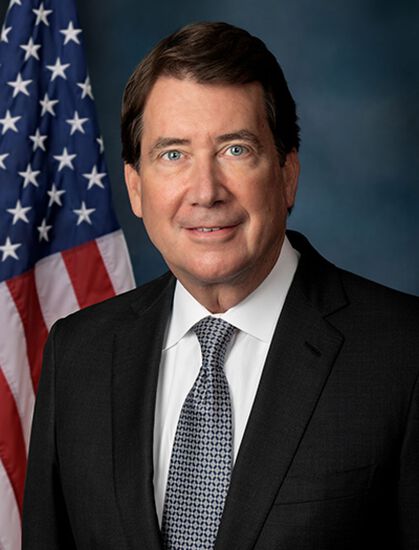
Bill Hagerty
Bill Hagerty Senate
R
Strong −
0% 9
Chuck Grassley
Chuck Grassley Senate
R
Strong −
0% 9
Showing 181–190 of 304 bills

All environment bills

in committee · United States · House Jan 8, 2026

HR 2405: The White Oak Resilience Act

HR 2405, the White Oak Resilience Act, establishes a voluntary coalition to coordinate federal, state, tribal, and private efforts for restoring white oak forests across the U.S. It creates pilot projects on public lands (including national forests and Department of the Interior sites), a non-regulatory grant program for landowners, and a strategy to address tree nursery shortages. The bill directly affects private landowners, tribes, state agencies, and federal land managers by providing technical assistance, funding for restoration, and research on white oak resilience. The program includes a 7-year sunset clause and emphasizes science-based restoration without mandating new regulations.
in committee · United States · Senate May 6, 2025

S 1616: PRECISE Act of 2025

This bill, the PRECISE Act of 2025, increases financial incentives for farmers and ranchers to adopt precision agriculture technologies through existing USDA conservation programs. It defines "precision agriculture" as managing crop or livestock inputs (like fertilizer or water) with high spatial and temporal detail to improve efficiency, and "precision agriculture technology" as tools including GPS systems, soil sensors, and data software. Key provisions allow up to 90% cost coverage for adopting these technologies under the Environmental Quality Incentives Program (EQIP) and add precision agriculture to eligibility for supplemental payments in the Conservation Stewardship Program. The bill directly affects agricultural producers participating in USDA conservation programs by expanding their access to funding for technology that aims to reduce input waste and support environmental quality.
Sub-Topics Conservation Tags Agriculture
in committee · United States · Senate Oct 27, 2025

S 1681: Shenandoah Mountain Act

The Shenandoah Mountain Act establishes a 92,562-acre National Scenic Area in Virginia's George Washington and Jefferson National Forests to protect natural features like water quality, wildlife habitats, and old-growth forests. It designates five new wilderness areas (totaling ~33,857 acres) and prohibits new roads, timber harvesting, energy development, and certain land uses within the scenic area, while allowing existing recreational activities and motorized travel on current roads. The Forest Service must develop a trail plan within two years to improve nonmotorized trails and manage the area to balance conservation with public access. Private land access within the boundaries remains unaffected, and wilderness areas will be managed under the existing Wilderness Act.
in committee · United States · House Feb 11, 2026

HR 7459: Coastal Trust Fund Act

HR 7459, the Coastal Trust Fund Act, establishes a trust fund to finance coastal storm protection projects. It directs $1 billion annually from offshore energy lease revenues into the fund to cover the federal share of authorized projects like hurricane damage reduction, shoreline protection, and beach nourishment managed by the Army Corps of Engineers. Funds must be used only for specific projects approved by Congress, with annual reports detailing expenditures and remaining balances to Congress. The bill ensures these funds are separate from other conservation programs and requires the Treasury to manage investments within the fund.
in committee · United States · Senate Dec 16, 2025

S 3498: EQIP Improvement Act of 2025

This bill reforms the Environmental Quality Incentives Program (EQIP), which provides financial assistance to farmers and ranchers for conservation practices. It establishes new payment limits: 75% of costs for most practices, 40% for specific infrastructure like dams or irrigation systems, and 100% for income forgone. The bill also reduces the annual payment cap from $450,000 to $150,000 for certain practices and requires the Secretary to submit annual reports to Congress detailing program spending by practice type, state, and farm size. These changes directly affect agricultural producers participating in EQIP by altering their financial assistance eligibility and increasing transparency in funding distribution.
Sub-Topics Conservation Tags Agriculture
in committee · United States · Senate Mar 11, 2025

S 971: Chesapeake Bay Conservation Acceleration Act of 2025

The Chesapeake Bay Conservation Acceleration Act of 2025 establishes a new initiative to help agricultural producers in the Chesapeake Bay watershed (encompassing parts of six states and the District of Columbia) implement conservation practices that improve water quality and soil health. The bill provides funding for erosion control, nutrient reduction, and habitat restoration, including a new pilot program that allows landowners to install riparian buffers with no cost to them and with technical assistance provided by third-party providers. A new task force will develop better methods for measuring the environmental benefits of conservation activities in the watershed. The legislation also modifies existing conservation programs to prioritize Chesapeake Bay watershed conservation efforts and includes workforce development provisions for agricultural education.
in committee · United States · House Feb 20, 2026

HR 7629: Pittman-Robertson Wildlife Restoration Act and Dingell-Johnson Sport Fish Restoration Act District of Columbia Equality Act of 2026

This bill amends two federal conservation funding programs to include the District of Columbia as a "State" for eligibility purposes. It updates the Pittman-Robertson Wildlife Restoration Act and Dingell-Johnson Sport Fish Restoration Act by adding "the District of Columbia" to the definition of "State" in both acts' key sections. This change would allow DC to receive annual federal funds for wildlife and sport fish conservation programs that were previously restricted to states. The bill directly affects DC's ability to access these specific conservation funding streams. The amendment is purely definitional and does not alter existing funding formulas or amounts.
Sub-Topics Conservation Wildlife
in committee · United States · House Mar 20, 2026

HR 7142: ACE Agriculture Act

The ACE Agriculture Act reauthorizes and expands the Agricultural Research, Extension, and Teaching Policy Act's AGARDA program, directly affecting USDA agricultural research initiatives and the scientists managing them. It increases annual funding from $50 million to $100 million for fiscal years 2027-2032 and broadens research priorities to include water conservation, greenhouse gas reduction, pest resilience, and export competitiveness. The bill removes "pilot" references throughout, clarifies reporting structures (requiring the AGARDA Director to report to the Chief Scientist), and allows flexible use of existing USDA personnel authorities. This creates a more permanent, well-funded framework for advancing agricultural technology research within the Department of Agriculture.
Sub-Topics Climate Change Conservation Tags Agriculture
in committee · United States · House Apr 29, 2025

HR 3077: Agriculture Resilience Act of 2025

# Summary of the Agriculture Resilience Act of 2025 This comprehensive legislative proposal aims to transform U.S. agricultural systems to be more resilient, sustainable, and climate-smart while addressing food waste and improving food safety labeling. ## Key Provisions ### Conservation & Climate Resilience - **Conservation Reserve Program** (Section 504): Expands enrollment targets through 2030 and establishes a new "Grassland 30" contract option for long-term grassland conservation. - **Private Grazing Land Conservation** (Section 503): Focuses on soil health, climate resilience, and transitioning from confinement systems to managed grazing systems. - **Alternative Manure Management Program** (Section 505): Supports dairy and livestock producers in adopting practices that reduce methane emissions and improve carbon sequestration. ### Renewable Energy - **Rural Energy for America Program** (Section 601): Expands to support renewable energy development and greenhouse gas emissions reductions. - **Agrivoltaic Systems** (Section 602): Mandates research on integrated solar energy and agricultural production systems. - **AgSTAR Program** (Section 603): Maintains and expands the anaerobic digestion program to reduce methane emissions from livestock waste. ### Food Loss & Waste Reduction - **Standardized Food Date Labeling** (Section 701-705): Establishes uniform "BEST If Used By" (quality date) and "USE By" (discard date) phrases to reduce confusion and food waste. - **Composting as Conservation Practice** (Section 711): Officially recognizes composting as a conservation practice under USDA programs. - **Federal Food Donation Act Amendments** (Section 712): Requires federal contractors to donate excess food and report on food waste. - **School Food Waste Reduction** (Section 714): Creates grant program for schools to measure, prevent, and reduce food waste. - **Food Waste Research Program** (Section 716): Establishes regional research centers to study food waste reduction strategies. ### Funding - Multiple funding allocations for conservation programs ($50 million/year for grazing land conservation, $1.5 billion for alternative manure management program). - $20 million/year for meat processing system resilience grants (Section 502). - $100 million/year for food waste-to-energy projects (Section 713). This legislation represents a holistic approach to creating a more sustainable food system that addresses climate change, reduces food waste, supports farmers and ranchers, and improves consumer understanding of food labeling.
in committee · United States · House Dec 17, 2025

HR 6798: Calumet National Heritage Area Act

The Calumet National Heritage Area Act designates a specific region in Indiana and Illinois (including parts of three Indiana counties and portions of two Illinois counties) as a National Heritage Area to preserve its cultural, historical, and natural resources. This designation directly affects local communities, organizations like the Calumet Heritage Partnership (which will coordinate efforts), and federal agencies managing the program. The bill requires the local entity to create a management plan within three years and authorizes federal assistance for up to 15 years to support conservation, education, and tourism initiatives. It focuses on protecting the area’s industrial heritage, ecological sites like Indiana Dunes National Park, and immigrant cultural history without creating new federal funding or regulatory requirements.
Showing 181 to 190 of 304 bills
Previous 1 18 19 20 31 Next