Issue · Environment

Environment (Wildlife)

Every environment bill, vote, and legislator stance in United States, automatically classified by Maddy, our AI policy reader.

Total bills
135
119th Congress
Top supporter
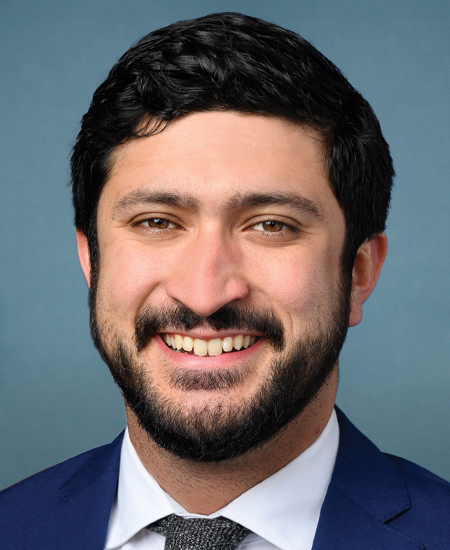
Greg Casar
83% support rate
Top opponent
Susan M. Collins
0% support rate
Ranked legislators
10
5 support · 5 oppose
Key legislators

Who's moving wildlife in United States

Legislators moving wildlife in United States
Legislator Party Stance Support rate Votes
Greg Casar
Greg Casar House · District 35
D
Strong +
83% 12
Judy Chu
Judy Chu House · District 28
D
Strong +
81% 16
Bill Foster
Bill Foster House · District 11
D
Strong +
80% 15
Chellie Pingree
Chellie Pingree House · District 1
D
Strong +
80% 15
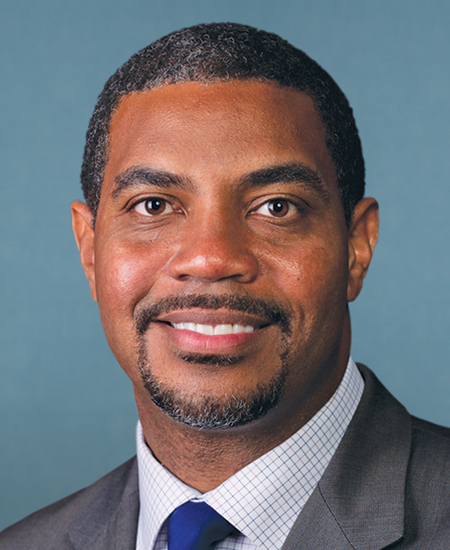
Steven Horsford
Steven Horsford House · District 4
D
Strong +
80% 15
Susan M. Collins
Susan M. Collins Senate
R
Strong −
0% 5
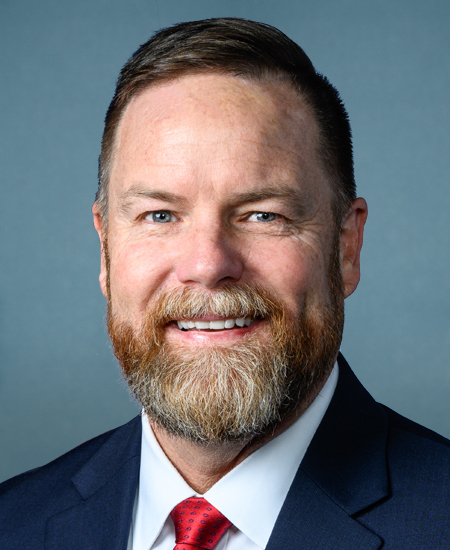
Aaron Bean
Aaron Bean House · District 4
R
Strong −
19% 16
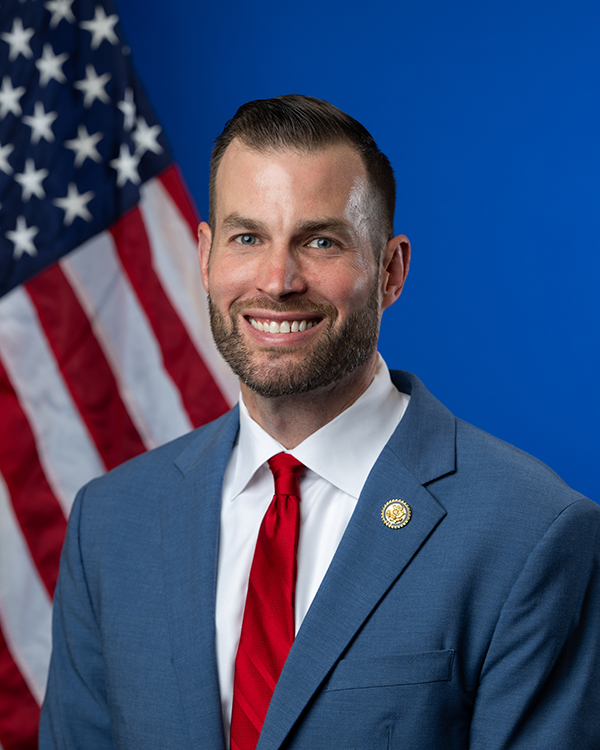
Clay Fuller
Clay Fuller House · District 14
R
Strong −
20% 5
John Fetterman
John Fetterman Senate
D
Strong −
20% 5
Andrew Ogles
Andrew Ogles House · District 5
R
Oppose
21% 14
Showing 111–120 of 135 bills

All environment bills

passed · United States · House Dec 10, 2025

HR 1676: Make SWAPs Efficient Act of 2025

HR 1676, the "Make SWAPs Efficient Act of 2025," requires the federal government to approve or deny state wildlife conservation plans within 180 days of receiving them. This directly affects states that submit comprehensive wildlife conservation plans under the Pittman-Robertson Wildlife Restoration Act. If the Secretary fails to act within that timeframe, the state's plan is automatically approved as of the 180th day. The bill streamlines the approval process to prevent federal delays from blocking state conservation funding.
Sub-Topics Conservation Wildlife
in committee · United States · House Mar 21, 2025

HRES 233: Supporting the designation of April 2025 as "National Native Plant Month".

HRES 233 is a non-binding resolution supporting the designation of April 2025 as "National Native Plant Month" in the United States. It recognizes native plants - species naturally adapted to specific U.S. regions - as essential for healthy ecosystems, biodiversity, and environmental resilience, highlighting their role in supporting wildlife and sustainable habitats. The resolution does not create new laws or funding but aims to raise public awareness about the ecological and economic benefits of native plants. It directly affects public awareness and educational efforts, encouraging communities to promote native plant conservation. The resolution was introduced by Representatives Case, Neguse, Joyce, Soto, Moylan, and Tokuda and referred to the Committee on Natural Resources.
Sub-Topics Conservation Wildlife
in committee · United States · House Jul 22, 2025

HR 4591: Habitat Enhancement Now Act

HR 4591, the Habitat Enhancement Now Act, creates two federal grant programs to boost waterfowl populations. It provides $3.5 million annually (2026-2030) for grants to states, tribes, nonprofits, or individuals to install nesting structures (like hen houses) in the Prairie Pothole Region to improve duck nest success, and to establish nesting cover, brood ponds, and incentivize private landowners in California to enhance breeding habitat for mallards and gadwalls. The bill directly affects landowners who participate in the California program and conservation entities implementing both programs. Key mechanisms include competitive grants for specific habitat actions proven to increase nest success, based on scientific findings about declining duck populations. The funding is explicitly allocated for these targeted habitat management activities.
in committee · United States · House Jul 24, 2025

HR 4754: Department of the Interior, Environment, and Related Agencies Appropriations Act, 2026

Department of the Interior, Environment, and Related Agencies Appropriations Act, 2026 This bill provides FY2026 appropriations for the Department of the Interior, the Environmental Protection Agency (EPA), and several related agencies. The bill provides appropriations to Interior for the Bureau of Land Management, the U.S. Fish and Wildlife Service, the National Park Service, the U.S. Geological Survey, the Bureau of Ocean Energy Management, the Bureau of Safety and Environmental Enforcement, the Office of Surface Mining Reclamation and Enforcement, the Bureau of Indian Affairs, the Bureau of Indian Education, the Bureau of Trust Funds Administration, Departmental Offices, and Department-Wide Programs. The bill also provides appropriations to the EPA and the Forest Service. Within the Department of Health and Human Services, the bill provides appropriations for the Indian Health Service, the National Institute of Environmental Health Sciences, and the Agency for Toxic Substances and Disease Registry. The bill provides appropriations to several related agencies, including the Council on Environmental Quality and Office of Environmental Quality, the Chemical Safety and Hazard Investigation Board, the Institute of American Indian and Alaska Native Culture and Arts Development, the Smithsonian Institution, the National Gallery of Art, the John F. Kennedy Center for the Performing Arts, the Woodrow Wilson International Center for Scholars, the National Endowment for the Arts, the National Endowment for the Humanities, the Commission of Fine Arts, the Advisory Council on Historic Preservation. the National Capital Planning Commission, the U.S. Holocaust Memorial Museum, and the U.S. Semiquincentennial Commission. Additionally, the bill sets forth requirements and restrictions for using funds provided by this and other appropriations acts.
Sub-Topics Parks & Recreation Public Lands Wildlife Tags Tribal Nations
in committee · United States · Senate Jun 18, 2025

S 2128: MONARCH Act of 2025

S 2128, the MONARCH Act of 2025, establishes a $12.5 million annual fund to support conservation efforts for the western monarch butterfly, which has declined by over 99% in 30 years and faces imminent extinction. The bill creates a grant program providing funding for projects led by local governments, tribal entities, or nonprofits - focusing on restoring milkweed, nectar plants, and habitat across California, Arizona, Nevada, Washington, Oregon, Idaho, and Utah. Grants require project proposals demonstrating clear potential to aid monarch recovery, with mandatory reporting to the public and state legislatures on progress. The law also mandates annual reports to Congress on project outcomes and the implementation of a conservation plan developed by wildlife agencies.
Sub-Topics Conservation Wildlife
in committee · United States · House Jan 3, 2025

HR 135: Manatee Protection Act of 2025

The Manatee Protection Act of 2025 would require the U.S. Fish and Wildlife Service to officially list the West Indian manatee as an endangered species under the Endangered Species Act. This designation would subject the manatee to all federal protections and regulations, including restrictions on activities harming the animals or their critical habitat. The bill directly affects the manatee population and activities in their environment, such as boating, coastal development, and waterway management, which would now require federal permits to avoid harming the species. It mandates a formal listing under existing law rather than creating new protections, ensuring the manatee is legally recognized as endangered for conservation enforcement.
in committee · United States · Senate Oct 28, 2025

SJRES 92: A joint resolution providing for congressional disapproval under chapter 8 of title 5, United States Code, of the rule submitted by the Federal Highway Administration relating to "Rescinding Regulations Regarding Management Systems Pertaining to the Fish and Wildlife Service and the Refuge Roads Program"".

Senate Joint Resolution 92 seeks congressional disapproval of a Federal Highway Administration rule that would have removed regulations governing management systems for the Fish and Wildlife Service and the Refuge Roads Program (which oversees roads in national wildlife refuges). The rule, published in the Federal Register on September 19, 2025, aimed to rescind existing guidelines for managing refuge roads and related operations. If passed, this resolution would block the rule from taking effect, preserving the current regulatory framework. The measure uses a statutory disapproval process under title 5 of the U.S. Code, requiring congressional action to halt agency rules.
in committee · United States · Senate Sep 15, 2025

S 2804: Strengthen Wood Products Supply Chain Act of 2025

This bill sets strict deadlines for the U.S. Fish and Wildlife Service (under the Lacey Act) to handle imported plants (including wood products) suspected of violating wildlife import rules. It requires the government to release plants or issue a detailed detention notice within 5 days, provide clear reasons for delays, and finalize decisions within 30 days (or automatically release the plants if missed). Importers must pay fees and provide security to move detained plants for storage, and the government must share testing results and methods with importers. The bill aims to streamline the process for importers while maintaining Lacey Act enforcement, with no changes to the underlying wildlife protection rules.
Sub-Topics Forestry Wildlife
in committee · United States · House Nov 21, 2025

HR 6268: LEAD Act of 2025

HR 6268, the LEAD Act of 2025, requires the use of non-lead ammunition on all lands and waters managed by the U.S. Fish and Wildlife Service (USFWS), effective one year after enactment. It directly affects hunters and recreational shooters using USFWS lands, with exceptions for law enforcement, military personnel, and government officials performing official duties. The bill mandates the USFWS to establish a list of certified non-lead ammunition (defined as containing ≤1% lead by weight) and imposes civil penalties of up to $500 for first violations and $1,000-$5,000 for repeat offenses. This policy aims to protect wildlife, human health, and food safety by reducing lead exposure from spent ammunition, which the bill cites as a documented risk to ecosystems and consumers.
Sub-Topics Wildlife
in committee · United States · House Jul 23, 2025

HR 4636: SOIL Act

The SOIL Act increases payments for farmers participating in USDA conservation programs who implement practices that simultaneously improve soil health and wildlife habitat. It raises reimbursement rates to 90% of costs for specific activities like planting cover crops, restoring wetlands, creating riparian buffers, and establishing wildlife habitat plantings - listed in the bill as 26 distinct practices. The bill modifies program rules to prioritize applications and contract offers that address both soil and wildlife resource concerns. These changes directly affect farmers enrolled in the Environmental Quality Incentives Program (EQIP) and Conservation Stewardship Program (CSP) who adopt dual-benefit conservation practices. The policy shifts focus toward integrated land management by financially incentivizing practices that deliver multiple ecological outcomes.
Showing 111 to 120 of 135 bills
Previous 1 11 12 13 14 Next