Issue · Environment

Environment (Water Quality)

Every environment bill, vote, and legislator stance in United States, automatically classified by Maddy, our AI policy reader.

Total bills
183
119th Congress
Top supporter
Adam B. Schiff
100% support rate
Top opponent
Alan Armstrong
0% support rate
Ranked legislators
10
5 support · 5 oppose
Key legislators

Who's moving water quality in United States

Legislators moving water quality in United States
Legislator Party Stance Support rate Votes
Adam B. Schiff
Adam B. Schiff Senate
D
Strong +
100% 3
Alex Padilla
Alex Padilla Senate
D
Strong +
100% 3
Amy Klobuchar
Amy Klobuchar Senate
D
Strong +
100% 3
Andy Kim
Andy Kim Senate
D
Strong +
100% 3
Angela D. Alsobrooks
Angela D. Alsobrooks Senate
D
Strong +
100% 3
AA
Alan Armstrong Senate
R
Strong −
0% 3
Ashley Moody
Ashley Moody Senate
R
Strong −
0% 3
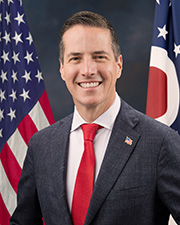
Bernie Moreno
Bernie Moreno Senate
R
Strong −
0% 3
Bill Cassidy
Bill Cassidy Senate
R
Strong −
0% 3
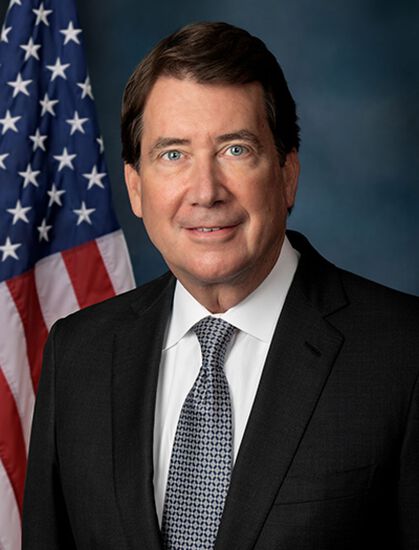
Bill Hagerty
Bill Hagerty Senate
R
Strong −
0% 3
Showing 91–100 of 183 bills

All environment bills

passed · United States · House Mar 25, 2026

HR 6422: American Water Stewardship Act

This bill extends funding periods for several key water restoration programs through 2031, including the Great Lakes Restoration Initiative, Long Island Sound program, and Columbia River Basin restoration. It modifies the San Francisco Bay program to require 25% non-Federal cost-sharing for projects and updates coastal water quality monitoring rules to include new testing technologies. The bill also restricts federal funds for these programs from going to non-U.S. entities or those partnering with "foreign countries of concern." These changes directly affect state, local, and nonprofit entities managing federally funded water restoration projects across specific geographic regions.
in committee · United States · House Jun 13, 2025

HR 3899: Clarifying Federal General Permits Act

HR 3899, the Clarifying Federal General Permits Act, amends the Clean Water Act to clarify how the EPA issues and renews general permits for water pollution discharges. It requires the EPA to publish a Federal Register notice at least two years before a general permit expires if it won't be renewed. If the EPA fails to provide this notice, the expired permit's terms automatically continue applying to covered discharges until a new permit is issued or two years after the decision not to renew. This directly affects industries and entities needing permits for routine water discharges by ensuring regulatory continuity during permit transitions.
Sub-Topics Water Quality
in committee · United States · House Jul 29, 2025

HR 4800: Fisheries Modernization Act of 2025

HR 4800, the Fisheries Modernization Act of 2025, expands eligibility for fishery disaster relief by adding "infrastructure-related cause" to the definition of qualifying events under the Magnuson-Stevens Act. This specifically covers disruptions caused by Federal or State infrastructure failures (like flood control systems, levees, or spillways) that impact commercial or subsistence fisheries, habitat, or water quality. The bill explicitly includes the red swamp crawfish and white river crawfish fisheries in eligibility requirements, requiring information on hydrological conditions, water quality, or environmental disruptions affecting them. It does not change existing relief for marine or anadromous fisheries but clarifies that infrastructure-related events now qualify for assistance.
in committee · United States · House Nov 29, 2025

HR 6090: FRESHER Act of 2025

The FRESHER Act of 2025 requires the Secretary of the Interior to study stormwater runoff impacts from oil, gas, and mining operations on groundwater and aquifers. It mandates a specific analysis of measurable contamination, groundwater resources, and aquifer susceptibility to contamination in affected areas. The study must be completed within one year of the bill's enactment, with results reported to Congress. This bill directly affects oil, gas, and mining operations by establishing new federal study requirements for their stormwater runoff.
Sub-Topics Water Quality
in committee · United States · House Oct 25, 2025

HR 5834: Critical Water Supplies for Resilient Communities Act

This bill amends the Federal Water Pollution Control Act to create permanent federal grants for alternative water source projects, directly affecting communities facing water scarcity or drought risks. It redefines "critical water supply needs" to include publicly engaged plans for comprehensive water supply or drought resiliency, replacing the previous "pilot program" structure. The legislation requires the Administrator to annually report to Congress on funded projects, detailing how each addresses identified water supply needs. These changes shift the program from a temporary pilot to a sustained grant mechanism with specific eligibility criteria and transparency requirements.
in committee · United States · House Aug 20, 2026

HR 6893: Chesapeake Bay Watershed Advancement for Training, Education, Restoration, and Science (WATERS) Act

HR 6893, the Chesapeake Bay Watershed Advancement for Training, Education, Restoration, and Science (WATERS) Act, reauthorizes and updates NOAA's Chesapeake Bay Office to better support Bay restoration. It establishes new programs including a watershed education initiative for students and teachers, a coastal habitat management program focused on species like oysters and blue crabs, and requirements for coordinated scientific monitoring of water quality and living resources. The bill mandates the Office Director to consult with the Chesapeake Executive Council, ensure peer-reviewed scientific merit for funded projects, and submit biennial reports to Congress on progress. This directly affects NOAA, Bay watershed states, educators, researchers, and conservation groups working on Bay restoration under the Chesapeake Bay Program.
in committee · United States · House Nov 19, 2025

HR 6075: Water Infrastructure Modernization Act of 2025

The Water Infrastructure Modernization Act of 2025 amends federal water law to define and support "intelligent water infrastructure technology," including real-time monitoring systems, AI-driven wastewater optimization tools, leak detection sensors, and advanced metering for conservation. It directly affects municipal water systems and utilities by expanding eligible uses for federal grants - allowing funds for implementing these technologies (like predictive aquifer recharge systems) while prohibiting grants for planning or maintenance. The bill increases annual grant funding from $25 million to $50 million (starting in 2028) and requires annual reports to Congress on funded projects and their resiliency improvements. This creates a clear pathway for communities, especially disadvantaged ones, to access federal support for modernizing aging water infrastructure through data-driven solutions.
in committee · United States · House Nov 22, 2025

HR 6229: Water Infrastructure Finance and Innovation Act Amendments of 2025

This bill amends the Water Infrastructure Finance and Innovation Act to make water infrastructure financing more accessible to small communities and rural water projects. It lowers the maximum eligible project cost from $5 million to $1 million, provides technical assistance for small communities (population ≤ 25,000) to develop project proposals, and clarifies definitions to include projects for federally recognized Indian Tribes. The bill introduces collaborative project delivery methods like design-build and construction management at-risk, and authorizes $68 million annually for the EPA and $15 million annually for the Army Corps of Engineers through fiscal year 2029. These changes directly affect small communities and rural water projects seeking federal assistance for water infrastructure improvements.
Sub-Topics Drinking Water Water Quality Tags Rural Communities Tribal Nations
in committee · United States · House Apr 17, 2025

HR 2940: Advancing Water Reuse Act

The Advancing Water Reuse Act creates a 30% tax credit for businesses investing in qualifying water recycling systems. It directly affects industrial, manufacturing, data center, and food processing facilities that replace freshwater use with recycled water from municipal sources, as well as projects building municipal water recycling infrastructure to serve these sectors. The credit covers 30% of the cost for eligible equipment, such as new onsite recycling systems or municipal infrastructure upgrades. This policy is available for projects completed by December 31, 2032, with specific rules allowing businesses to claim the credit even if equipment is later transferred to water utilities.
in committee · United States · House Oct 29, 2025

HR 5869: Tribal Water Infrastructure Grants Expansion Act

This bill allocates $30 million annually (from existing funds) plus $500 million yearly (2026-2031) specifically for tribal water infrastructure projects. It provides direct grants to federally recognized tribes for clean water treatment systems, maintenance, and related training without requiring tribes to cover project costs. Funds can support construction, operation, and management of water systems on tribal lands, aligning with existing federal water pollution control programs. The legislation targets tribes as the direct beneficiaries of these expanded funding streams.
Sub-Topics Drinking Water Water Quality Tags Tribal Nations
Showing 91 to 100 of 183 bills
Previous 1 9 10 11 19 Next