Issue · Energy

Energy

Every energy bill, vote, and legislator stance in United States, automatically classified by Maddy, our AI policy reader.

Total bills
883
119th Congress
Top supporter
Martin Heinrich
75% support rate
Top opponent
Marsha Blackburn
26% support rate
Ranked legislators
10
5 support · 5 oppose
Key legislators

Who's moving energy in United States

Legislators moving energy in United States
Legislator Party Stance Support rate Votes
Martin Heinrich
Martin Heinrich Senate
D
Support
75% 194
John W. Hickenlooper
John W. Hickenlooper Senate
D
Support
74% 212
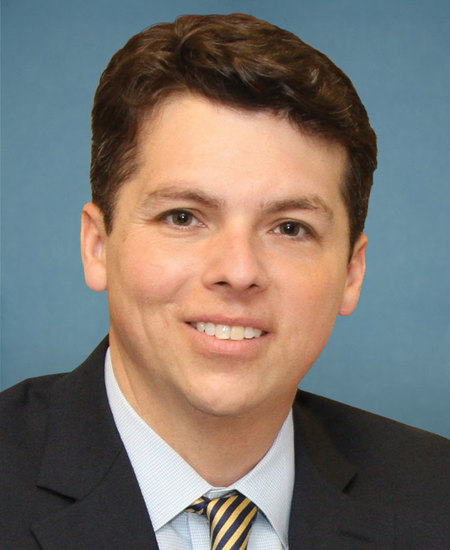
Brendan F. Boyle
Brendan F. Boyle House · District 2
D
Support
73% 253
Frederica S. Wilson
Frederica S. Wilson House · District 24
D
Support
73% 188
Jacky Rosen
Jacky Rosen Senate
D
Support
72% 213
Marsha Blackburn
Marsha Blackburn Senate
R
Oppose
26% 186
Ted Budd
Ted Budd Senate
R
Oppose
27% 198
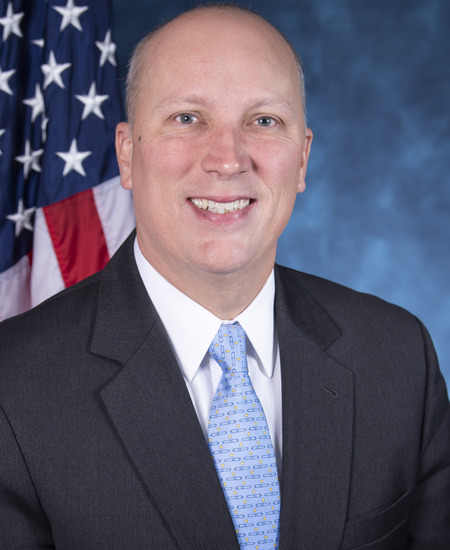
Chip Roy
Chip Roy House · District 21
R
Oppose
27% 251
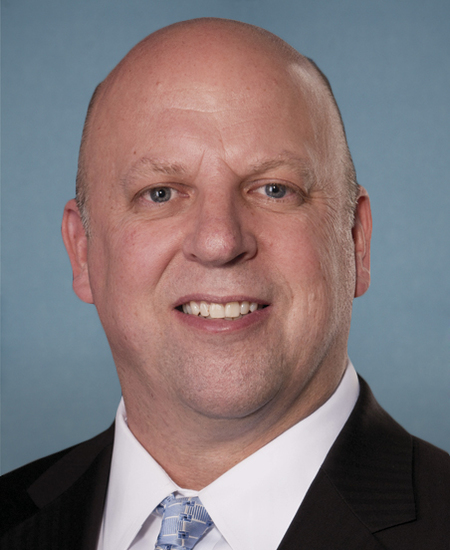
Scott DesJarlais
Scott DesJarlais House · District 4
R
Oppose
29% 256
Mike Johnson
Mike Johnson House · District 4
R
Oppose
29% 194
Showing 41–50 of 883 bills

All energy bills

in committee · United States · Senate Jul 30, 2026

S 5199: GRID Savings Act of 2026

The GRID Savings Act of 2026 directs the Federal Energy Regulatory Commission to create new rules for connecting large industrial electricity users to the national power grid. This legislation specifically targets new or expanded nonresidential loads with a peak demand of at least 150 megawatts, aiming to clarify how costs for grid upgrades are assigned. Under the proposed framework, the agency must establish procedures to ensure that facilities built solely for a specific large customer are paid for entirely by that customer, while shared grid improvements are allocated fairly among all users. The bill also allows these large customers to voluntarily pay for regional transmission projects in exchange for guaranteed access rights and includes an option for them to construct their own necessary grid connections. Additionally, the law excludes the Electric Reliability Council of Texas from these requirements and does not change how existing grid plans are managed.
in committee · United States · Senate Jul 30, 2026

S 5176: National Guard for National Service Act

This bill creates a pilot program that brings together the National Guard and the Corporation for National and Community Service to address workforce needs and national security goals. The program would allow National Guard members to work alongside national service participants on projects such as protecting critical infrastructure like energy grids and water systems, improving cybersecurity for schools and local governments, and enhancing disaster preparedness. It also aims to build a career pipeline that connects part-time Guard and Reserve members with structured employment opportunities to help address economic insecurity. Ultimately, the legislation seeks to expand community resilience and ensure workforce stability through these coordinated activities.
in committee · United States · House Jul 21, 2026

HR 9617: CHARM Act

The CHARM Act directs the Environmental Protection Agency to create a National Critical Mineral Recovery Strategy aimed at coordinating federal efforts to extract essential minerals from discarded materials and mining waste. This strategy requires the agency to identify existing programs, overcome legal and technological barriers, and ensure that recovery methods protect human health and the environment. The bill mandates that the EPA report its findings and actions to Congress every two years, including recommendations for future legislation to support these recovery efforts. Ultimately, the law seeks to strengthen domestic supply chains by systematically evaluating opportunities to reuse critical minerals found in waste streams.
in committee · United States · House Jul 23, 2026

HR 9924: Local Input Act

The Local Input Act requires the Secretary of the Interior to involve the public, state and local governments, and federally recognized tribes before offering public land for oil or gas leasing. This process mandates disclosing leasing proposals and their potential impacts on land resources and other uses, while also providing a formal opportunity for community comments and tribal consultation. Based on this feedback, the Secretary has the authority to decide whether or not to proceed with leasing a specific parcel. The bill directly affects federal land management decisions and aims to increase transparency and local participation in energy development on public lands.
Sub-Topics Oil & Gas
in committee · United States · Senate Jul 27, 2026

S 5134: Green New Deal for Health Act

The Green New Deal for Health Act establishes a comprehensive federal framework to address the intersection of climate change and public health by creating new offices, expanding funding, and mandating specific actions across the health care sector. It directly affects hospitals, health care providers, medical manufacturers, health professions schools, and communities identified as environmentally or medically underserved. Key provisions include establishing an Office of Climate Change and Health Equity to develop a national strategic action plan, requiring hospitals to provide detailed notifications and mitigation plans before discontinuing services or closing, and offering grants to modernize medical facilities for climate resilience. The bill also mandates that the health care sector disclose climate risks associated with medical supplies, expands Medicare coverage for home resiliency services like heat pumps for vulnerable patients, and allocates billions in funding to train health workers on climate-related health risks. Additionally, the legislation creates a research initiative to study climate impacts on health and establishes requirements for green, zero-emission medical manufacturing and supply chains.
in committee · United States · Senate Jul 21, 2026

S 5054: Data Center Tax Accountability and Disclosure Act of 2026

The Data Center Tax Accountability and Disclosure Act of 2026 modifies tax rules and establishes reporting requirements for large data centers. It removes a tax incentive known as bonus depreciation for artificial intelligence data centers unless they meet specific green building standards, such as LEED Platinum or Gold certification. Additionally, the bill requires operators of data centers consuming at least 25 megawatts of power to submit detailed annual reports on their water and electricity usage, emissions, and backup power systems to state or federal agencies. These reports must be made public, and the law prohibits companies from using confidentiality agreements to hide this information. Operators who fail to comply with these reporting requirements face daily civil penalties of up to $100,000 for intentional violations.
in committee · United States · Senate Jun 24, 2026

S 4935: Next Generation Shipping Act

The Next Generation Shipping Act establishes a $10 billion federal program to fund the research, development, and deployment of zero-emission vessels and clean alternative fuel technologies for the maritime industry. Administered by the Department of Transportation, the program provides grants, low-interest loans, and loan guarantees to eligible entities such as ship owners, manufacturers, and port authorities, while explicitly prohibiting funding for automated vessel systems. The legislation also creates an advisory committee composed of representatives from labor, academia, environmental groups, and industry to guide the program and ensure it addresses technology gaps and environmental justice concerns. Additionally, the act mandates that projects receiving funding utilize prevailing wage standards and encourages the use of community benefits agreements to support local workforces and communities.
Sub-Topics Ports
in committee · United States · House Jul 23, 2026

HJRES 205: Providing for congressional disapproval under chapter 8 of title 5, United States Code, of the rule submitted by the Environmental Protection Agency relating to "California State Motor Vehicle Pollution Control Standards; Notice of Decision Granting a Waiver of Clean Air Act Preemption for California's Advanced Clean Car Program and a Within the Scope Confirmation for California's Zero Emission Vehicle Amendments for 2017 and Earlier Model Years".

This joint resolution seeks to overturn a specific Environmental Protection Agency rule that allowed California to set its own stricter vehicle emission standards. If passed, the bill would cancel the waiver that permits California to enforce the Advanced Clean Car Program and related zero emission vehicle rules for cars made in 2017 and earlier. The measure directly affects vehicle manufacturers and California residents by aiming to restore the federal government's authority to set uniform national emission standards instead of state-specific ones.
in committee · United States · Senate Jul 29, 2026

S 5039: License to Drill Act

The License to Drill Act amends the Mineral Leasing Act to extend the expiration date of a specific fee provision from 2026 to 2037. It requires the Bureau of Land Management to transfer all oil and gas permit processing fees collected between fiscal years 2027 and 2037 into a dedicated fund for improving permit processing. This change directly affects the BLM by altering how revenue from drilling permits is managed and retained over a ten-year period.
Sub-Topics Oil & Gas
in committee · United States · Senate Jul 22, 2026

S 5074: Enhancing Electric Grid Resilience Act

The Enhancing Electric Grid Resilience Act modifies the Federal Power Act to establish new rules for how costs are assigned to major new or upgraded interstate power transmission lines. This legislation directly affects electric utilities and the Federal Energy Regulatory Commission by requiring them to file tariffs that allocate expenses based on where the benefits of the project are felt, such as improved reliability and economic value. Specifically, the bill applies to new lines with at least 1,000 megawatts of capacity or upgrades adding 500 megawatts, ensuring that customers in the regions receiving these benefits share the costs proportionally. The law maintains the Commission's existing authority to handle cost allocations for transmission projects that do not meet these specific national significance criteria.
Showing 41 to 50 of 883 bills
Previous 1 4 5 6 89 Next