Issue · Education

Education

Every education bill, vote, and legislator stance in United States, automatically classified by Maddy, our AI policy reader.

Total bills
1,215
119th Congress
Top supporter
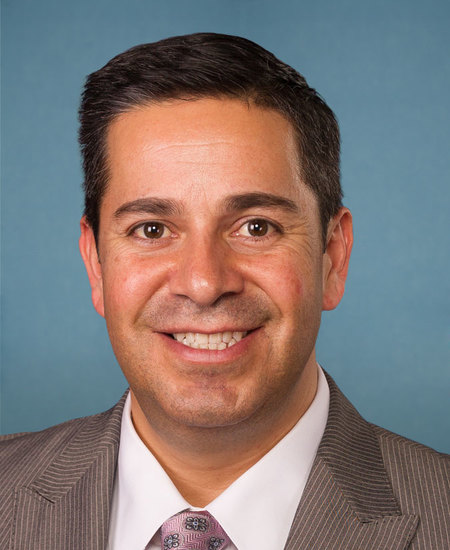
Ben Ray Luján
90% support rate
Top opponent
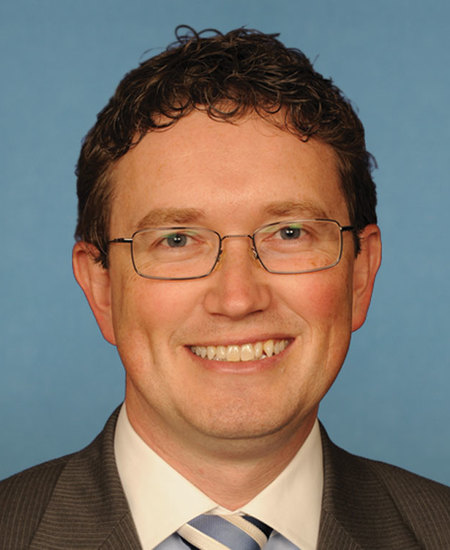
Thomas Massie
12% support rate
Ranked legislators
10
5 support · 5 oppose
Key legislators

Who's moving education in United States

Legislators moving education in United States
Legislator Party Stance Support rate Decisive votes
Ben Ray Luján
Ben Ray Luján Senate
D
Strong +
90% 10
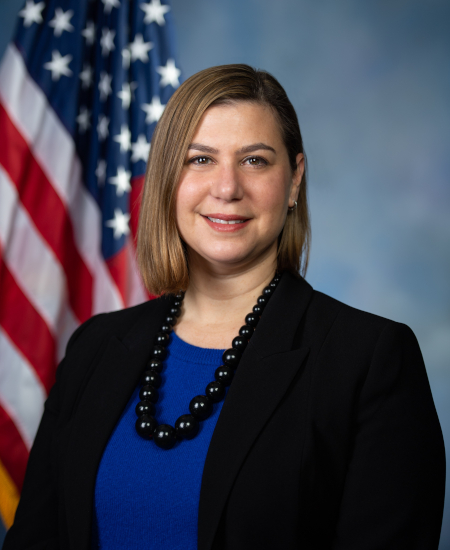
Elissa Slotkin
Elissa Slotkin Senate
D
Strong +
90% 10
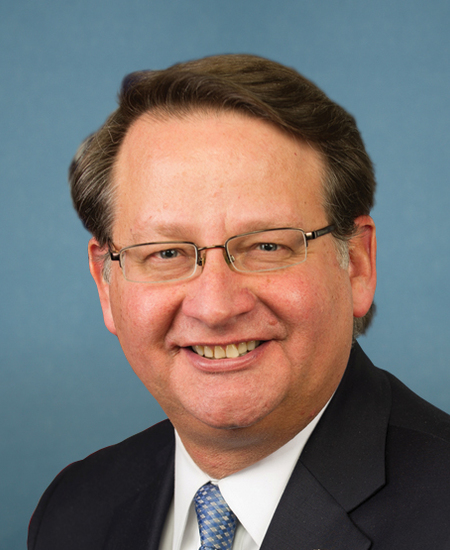
Gary C. Peters
Gary C. Peters Senate
D
Strong +
90% 10
John W. Hickenlooper
John W. Hickenlooper Senate
D
Strong +
90% 10
Maria Cantwell
Maria Cantwell Senate
D
Strong +
90% 10
Thomas Massie
Thomas Massie House · District 4
R
Strong −
12% 8
Tom McClintock
Tom McClintock House · District 5
R
Strong −
12% 8
Chip Roy
Chip Roy House · District 21
R
Strong −
14% 7
Andy Harris
Andy Harris House · District 1
R
Strong −
20% 10
Keith Self
Keith Self House · District 3
R
Strong −
20% 10
Showing 521–530 of 1,215 bills

All education bills

in committee · United States · Senate May 13, 2025

S 1745: Dismantling Ideological Policies for Semiconductors and Science Act

This bill would repeal numerous diversity, equity, and inclusion (DEI) requirements in federal STEM programs established under the CHIPS and Science Act. It targets provisions requiring outreach to underrepresented communities, diversity considerations in research programs, data collection on faculty demographics, and DEI-focused funding programs. The bill also repeals the NSF Chief Diversity Officer position and modifies programs to focus on STEM achievements for historically Black colleges and universities (HBCUs) and Tribal Colleges or Universities (TCUs) without race-based activities. The bill would affect federal agencies like the National Science Foundation, Department of Energy, and National Institute of Standards and Technology that administer STEM programs.
Sub-Topics Early Childhood
in committee · United States · House Apr 8, 2025

HR 2736: Public Service Freedom to Negotiate Act of 2025

This bill establishes federal minimum standards for collective bargaining rights for public employees and supervisors. The Federal Labor Relations Authority would determine if state laws provide these rights, and if not, would establish them for affected employees. The bill guarantees public employees the right to form unions, bargain collectively, and engage in concerted activities, while requiring public employers to recognize unions and put agreements in writing. It also prohibits strikes or lockouts that would disrupt emergency services. This would apply to public employees in states that don't meet the federal standards for collective bargaining rights.
in committee · United States · House Jan 13, 2025

HR 336: HEADWAY Act

Head start Education And Development Workforce Advancement and Yield Act or the HEADWAY Act This bill allows some teachers in Early Head Start programs to teach while in the process of earning their Child Development Associate (CDA) credential and completing training. Currently, the Department of Health and Human Services (HHS) must ensure that all teachers providing direct services to children and families in Early Head Start centers (1) have a minimum of a CDA credential and have been trained in early childhood development, and (2) have been trained in early childhood development with a focus on infant and toddler development. The bill revises this requirement by requiring at least one teacher per classroom (instead of all teachers) to have a CDA credential and training. In particular, the bill requires HHS to ensure that (1) each additional teacher providing direct services to children and families is in the process of earning a CDA credential and completing training, and (2) the Early Head Start agency provides a mentor to oversee the progress and guide the work of a teacher who is in the process of earning a CDA credential and completing training.
in committee · United States · Senate Jun 17, 2025

S 2093: Bicycles for Rural African Transport Act

This bill establishes a USAID program to provide affordable bicycles and related support to rural communities across sub-Saharan Africa. It directly affects rural residents - particularly in areas with limited transportation - by aiming to improve access to education, healthcare, and livelihood opportunities through bicycle-based mobility. Key provisions include authorizing $3 million in 2026, rising to $6 million annually from 2028 onward, for grants to nonprofits with proven experience in rural mobility projects. The program also requires USAID to report annually on bicycle distribution, project impacts, and lessons learned to Congress.
Sub-Topics Bicycle Infrastructure Tags Rural Communities
passed · United States · Senate Mar 3, 2026

S 1070: National STEM Week Act

National STEM Week Act This bill requires the National Science and Technology Council's Committee on STEM to designate a week each calendar year as National STEM Week. (STEM refers to science, technology, engineering, and mathematics.) During this established week, the committee must encourage educational institutions (i.e., elementary schools, secondary schools, and institutions of higher education) to participate in the week and also encourage families of students attending these educational institutions to participate in STEM activities. Additionally, the committee must encourage STEM industries to (1) engage with students enrolled in educational institutions by providing mentorship programs, site visits, and guest lectures; and (2) support STEM education initiatives at these educational institutions through funding, resources, and expertise. The committee must annually report to Congress on the activities conducted during the established week.
in committee · United States · House Jun 12, 2025

HR 3985: Helping Student Parents Succeed Act

HR 3985, the Helping Student Parents Succeed Act, requires colleges and universities participating in federal student aid programs to create and publicly share clear policies supporting expectant and parenting students. The bill mandates institutions to provide detailed information on lactation accommodations, processes for requesting pregnancy-related or parental accommodations, financial aid details (including dependent care allowances and dependency status changes), and access to support services like childcare, housing, healthcare, and counseling. This directly affects student parents at participating higher education institutions by standardizing and making accessible the resources they need. The law ensures schools disclose all available support without favoring specific services and outlines procedures for addressing complaints under Title IX and disability laws.
in committee · United States · House Feb 27, 2025

HR 1758: Dental Loan Repayment Assistance Act of 2025

This bill changes tax rules so dental school faculty receiving loan repayment assistance through specific federal programs no longer have to pay income tax on those payments. It directly affects dental faculty at institutions participating in the Dental Faculty Development Program under the Public Health Service Act. The key provision amends tax law to exclude these loan repayments from taxable income, reducing their financial burden. The bill also requires a report to Congress on how many faculty remain in teaching roles after receiving this assistance.
in committee · United States · House Jun 3, 2025

HR 3681: Leveraging Educational Opportunity Networks Act

The Leveraging Educational Opportunity Networks Act creates a federal grant program to fund workforce training initiatives targeting workers without bachelor’s degrees, particularly those from low-income backgrounds, rural communities, historically disadvantaged groups, and formerly incarcerated individuals. Eligible organizations - such as non-profits, national training groups, and accredited institutions - would receive competitive grants to develop 12-week career programs that partner with employers in high-demand sectors (like healthcare, IT, and manufacturing), ensuring participants earn recognized credentials while receiving living wages and wraparound supports like stipends and job readiness coaching. Programs must prioritize enrollees reading at a 6th-grade level or below, guarantee at least 50% of participants come from underserved communities, and report annually on outcomes like earnings growth, employment rates, and credential attainment. The initiative allocates $30 million annually (2026-2029) to address labor shortages and support economic mobility through targeted, employer-aligned training.
in committee · United States · House Jun 12, 2025

HR 3939: RISE Act

The RISE Act (HR 3939) streamlines documentation for college students with disabilities by requiring institutions to accept multiple forms of proof, including past Individualized Education Programs (IEPs), Section 504 plans, or licensed professional evaluations, instead of demanding current documentation. It mandates that colleges establish transparent, accessible processes for determining accommodation eligibility and share these policies with students, parents, and faculty. The bill also requires institutions to report specific data on students with disabilities (like enrollment numbers and accommodations used) to federal databases, while authorizing $10 million for a national support center. These changes directly affect colleges receiving federal aid and students seeking disability accommodations in higher education.
Sub-Topics Higher Education Special Education Tags People with Disabilities
in committee · United States · Senate Mar 12, 2025

S 978: HELPER Act of 2025

The HELPER Act of 2025 creates a new FHA mortgage insurance program specifically for first responders and teachers, allowing them to purchase homes with no down payment. It defines "first responders" as full-time law enforcement officers, firefighters, paramedics, EMTs, and K-12 teachers employed by government or accredited schools. The program requires applicants to be first-time homebuyers with 4 years of recent employment in their field, complete housing counseling, and intend to remain in their role for at least one year after closing. Mortgages under this program must be used for a primary residence, cover 100% of the home's appraised value, and exclude monthly insurance premiums.
Showing 521 to 530 of 1,215 bills
Previous 1 … 52 53 54 … 122 Next