Issue · Education

Education (Student Financial Aid)

Every education bill, vote, and legislator stance in United States, automatically classified by Maddy, our AI policy reader.

Total bills
275
119th Congress
Top supporter
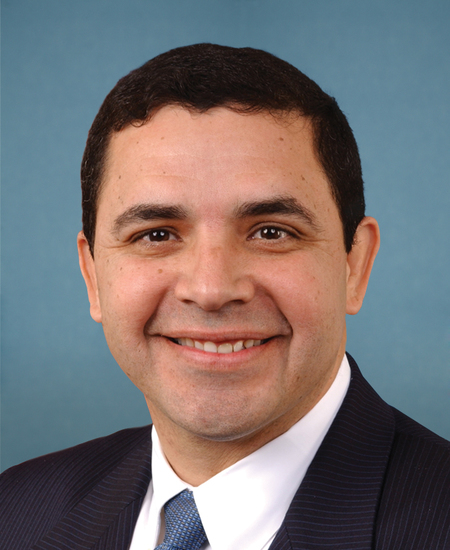
Henry Cuellar
100% support rate
Top opponent
Aaron Bean
33% support rate
Ranked legislators
10
5 support · 5 oppose
Key legislators

Who's moving student financial aid in United States

Legislators moving student financial aid in United States
Legislator Party Stance Support rate Votes
Henry Cuellar
Henry Cuellar House · District 28
D
Strong +
100% 3
Abraham J. Hamadeh
Abraham J. Hamadeh House · District 8
R
Support
67% 3
Adam Gray
Adam Gray House · District 13
D
Support
67% 3
Adelita S. Grijalva
Adelita S. Grijalva House · District 7
D
Support
67% 3
Adrian Smith
Adrian Smith House · District 3
R
Support
67% 3
Aaron Bean
Aaron Bean House · District 4
R
Oppose
33% 3
Addison P. McDowell
Addison P. McDowell House · District 6
R
Oppose
33% 3
Andrew Ogles
Andrew Ogles House · District 5
R
Oppose
33% 3
Andrew S. Clyde
Andrew S. Clyde House · District 9
R
Oppose
33% 3
Andy Biggs
Andy Biggs House · District 5
R
Oppose
33% 3
Showing 231–240 of 275 bills

All education bills

in committee · United States · House Jan 31, 2025

HR 899: To terminate the Department of Education.

HR 899 would end the U.S. Department of Education by December 31, 2026, terminating its federal agency status. This bill directly affects all federal education programs and operations currently managed by the Department, such as student aid and school funding. The key mechanism is a fixed termination date, requiring the transfer of the Department's responsibilities to other federal agencies without specifying new administrative structures. The bill focuses solely on ending the agency's existence, not altering education policy or funding mechanisms.
in committee · United States · House May 20, 2025

HR 3519: Universal School Choice Act

The Universal School Choice Act (HR 3519) creates tax credits for individuals and corporations that contribute to scholarship granting organizations providing education scholarships. The bill establishes a $10 billion annual cap on these credits and defines "qualified" education expenses to include tuition, materials, tutoring, and other costs at public or private schools, including religious institutions. Scholarship granting organizations must meet requirements like income verification for low-income students and annual audits. The legislation prohibits government control over these organizations and ensures religious schools can participate without discrimination. This bill would directly affect taxpayers making education contributions, scholarship organizations, and students attending participating schools.
in committee · United States · Senate Dec 9, 2025

S 3406: PATHS to Tutor Act of 2025

The PATHS to Tutor Act of 2025 establishes a federal grant program to fund high-quality tutoring in high-need schools, directly affecting students in schools with high teacher turnover or many novice teachers. It requires local consortia (combining schools, universities, and community partners) to apply for competitive grants, mandating tutoring that uses a 1:4 tutor-to-student ratio, aligns with school curriculum, includes tutor training, and avoids replacing teachers. Grant funds must cover tutor stipends, materials, transportation, and meals for students (with 85% allocated directly to student support), while prohibiting the use of funds to supplant existing teaching staff. Priority is given to consortia using tutors from educator preparation programs or minority-serving institutions.
in committee · United States · Senate Sep 3, 2025

S 2700: DECIDE Act

S 2700, the DECIDE Act, requires the U.S. Department of Education to expand the College Scorecard with specific, annual data to improve transparency for student loan borrowers. It mandates program-level details like median 10-year earnings for graduates, median debt amounts (including Stafford, Graduate PLUS, and Parent PLUS loans), default rates, and repayment rates for each certificate, degree, and professional program. Institution-level data will include cohort default rates, repayment rates, and specific PLUS loan default/repayment metrics. This directly affects prospective and current students making education decisions by providing concrete financial outcomes data for comparison. The law aims to give borrowers clear, standardized information about long-term costs and outcomes tied to specific academic programs.
in committee · United States · House Mar 28, 2025

HR 1271: To provide additional funding for scholarships for students at 1890 institutions, and for other purposes.

HR 1271 increases funding for scholarships at 1890 institutions - historically Black colleges and universities established under the Second Morrill Act - by adding mandatory annual support. It amends existing law to explicitly include bachelor's and graduate programs in scholarship eligibility and requires $15 million annually from the Commodity Credit Corporation starting in fiscal year 2025, to remain available until spent. This funding directly supports students at these institutions by expanding access to financial aid for higher education. The bill updates previous funding language to ensure ongoing support beyond 2023.
in committee · United States · Senate Jan 29, 2025

S 311: ACE Act

The ACE Act expands 529 education savings accounts to cover elementary and secondary school expenses, including homeschooling, tutoring, educational therapies, and materials, for families enrolled in public, private, or religious schools. It increases the annual distribution limit from $10,000 to $20,000 for K-12 expenses and adds a $20,000 annual gift tax exclusion for contributions to these accounts. The bill also requires states with tax-exempt bonds for education to have school choice programs (like vouchers or scholarships) that meet specific eligibility and funding criteria. These provisions directly affect families using 529 plans for K-12 education and states administering education funding. The changes apply to distributions and gifts after 2026, with bond restrictions taking effect upon enactment.
in committee · United States · House Feb 12, 2026

HR 7536: GRADUATE Act

The GRADUATE Act (HR 7536) amends tax law to expand the deduction for qualified education loan payments. It allows individuals to deduct up to $10,000 annually (plus $500 per dependent) for interest paid on such loans, increasing the previous limit. The deduction phases out for taxpayers with modified adjusted gross income above $125,000 ($250,000 for joint filers), with the new thresholds applying to taxable years after 2025. This directly affects individual taxpayers with education debt who itemize deductions, reducing their taxable income but not forgiving loan balances. The bill modifies existing tax code sections without creating new government programs or altering loan repayment terms.
in committee · United States · Senate Dec 16, 2025

S 3507: Put American Students First Act

This bill enforces a federal law prohibiting states from offering in-state tuition rates to undocumented immigrants at public colleges. It requires colleges to verify students' immigration status using the DHS SAVE system annually and charge undocumented students the higher out-of-state rate instead. States that continue providing in-state tuition to undocumented students could lose federal education funding. The bill directly affects undocumented immigrant students in public colleges across 22 states and D.C., as well as the states and institutions currently offering these subsidies.
in committee · United States · Senate Sep 4, 2025

S 2707: FEED Act of 2025

The FEED Act of 2025 amends the Food and Nutrition Act to exclude certain income earned by students under 21 participating in career and technical education (CTE) programs from household income calculations for food assistance programs like SNAP. It specifically exempts income from apprenticeships, internships, or work-based learning programs directly tied to their CTE enrollment, provided the student lives with a parent or under parental control. Households must verify the student’s enrollment in a qualifying CTE program and their age/relationship through documentation. This change directly affects low-income students in CTE programs who earn work-based income, making it easier for them to qualify for food assistance without losing benefits due to that income.
in committee · United States · House May 8, 2025

HR 3273: Child Care Workforce Development Act

HR 3273, the Child Care Workforce Development Act, provides financial support to early childhood educators and students. It establishes a loan repayment program where educators serving 5 years with qualified childcare providers (like centers receiving Child Care Block Grant funds) can have up to $6,000 annually of their student loans repaid. Additionally, it creates grants of up to $4,000 per academic year for students enrolled in early childhood education programs, requiring them to work in licensed childcare settings for at least one year after graduation (with renewal options). The bill authorizes $25 million annually for loan repayment (2026-2031) and $10 million annually for grants (2026-2030), targeting workforce development in childcare.
Showing 231 to 240 of 275 bills
Previous 1 23 24 25 28 Next