Issue · Criminal Justice

Criminal Justice

Every criminal justice bill, vote, and legislator stance in United States, automatically classified by Maddy, our AI policy reader.

Total bills
1,286
119th Congress
Top supporter
Alan Armstrong
86% support rate
Top opponent
Amy Klobuchar
13% support rate
Ranked legislators
10
5 support · 5 oppose
Key legislators

Who's moving criminal justice in United States

Legislators moving criminal justice in United States
Legislator Party Stance Support rate Decisive votes
AA
Alan Armstrong Senate
R
Strong +
86% 28
Mitch McConnell
Mitch McConnell Senate
R
Strong +
84% 31
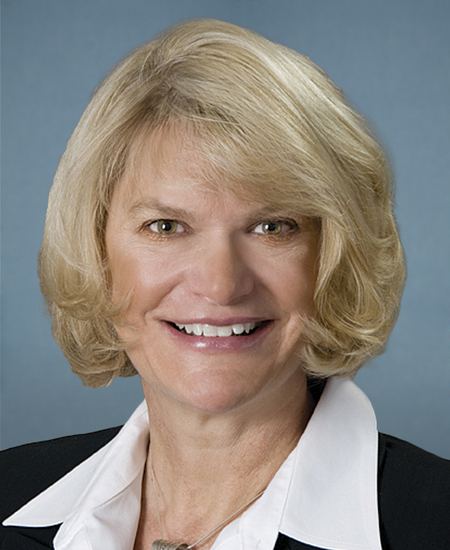
Cynthia M. Lummis
Cynthia M. Lummis Senate
R
Strong +
80% 30
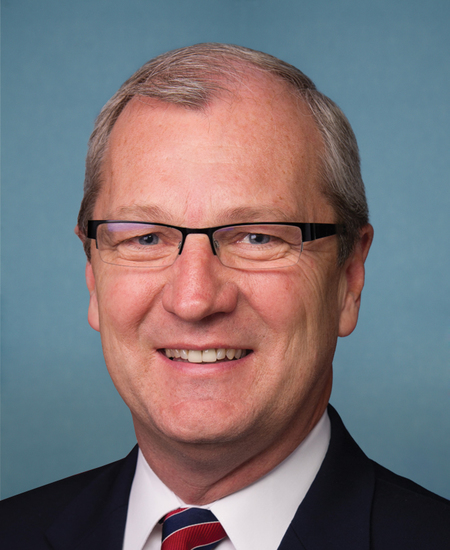
Kevin Cramer
Kevin Cramer Senate
R
Strong +
80% 30
Bernie Moreno
Bernie Moreno Senate
R
Support
77% 31
Amy Klobuchar
Amy Klobuchar Senate
D
Strong −
13% 31
Catherine Cortez Masto
Catherine Cortez Masto Senate
D
Strong −
13% 31
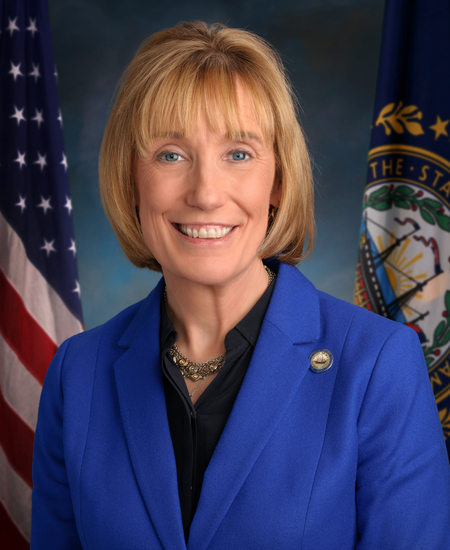
Margaret Wood Hassan
Margaret Wood Hassan Senate
D
Strong −
13% 31
Andy Kim
Andy Kim Senate
D
Strong −
16% 31
Angus S. King, Jr.
Angus S. King, Jr. Senate
I
Strong −
16% 31
Showing 741–750 of 1,286 bills

All criminal justice bills

in committee · United States · Senate Dec 2, 2025

S 3307: Inspector General Access Act of 2025

This bill reorganizes procedural rules for Inspector General (IG) investigations within the Department of Justice (DOJ). It removes specific language that previously restricted IG access to certain allegations involving DOJ personnel, streamlining the investigation process. The key change eliminates an exception clause in existing law, allowing IGs to investigate all DOJ personnel allegations without that prior limitation. This affects how DOJ investigations are conducted but does not create new policies or change substantive rights. (Procedural bill; summary focuses on specific legal reorganization.)
in committee · United States · House Jul 23, 2025

HR 4695: Facial Recognition Act of 2025

The Facial Recognition Act of 2025 regulates law enforcement use of facial recognition technology by requiring court orders for most searches of reference photo databases, with limited exceptions for emergencies or specific situations like identifying victims or those in AMBER alerts. The bill mandates annual accuracy and bias testing of facial recognition systems by the National Institute of Standards and Technology, requires removal of photos from arrest databases for certain individuals (like minors or those not charged), and establishes detailed reporting requirements for all facial recognition use. It prohibits using facial recognition for immigration enforcement or to track people's constitutional rights, and creates civil remedies for violations. The bill applies to federal, state, and local law enforcement agencies, with potential funding reductions for states that fail to comply with its requirements.
in committee · United States · House Sep 2, 2025

HR 5092: District of Columbia Police Home Rule Act

This bill repeals the provision allowing the President to assume emergency control of the District of Columbia's police force. It directly affects the District of Columbia government by transferring full authority over police emergency management from the federal government to local DC officials. The key mechanism is removing Section 740 of the District of Columbia Home Rule Act, which previously permitted the President to intervene in police operations during emergencies. This change formalizes DC's local control over its police department during crises.
Sub-Topics Policing
in committee · United States · Senate Dec 4, 2025

SRES 530: A resolution condemning the pardon of ex-Honduran President Juan Orlando Hernandez.

This Senate resolution (SRES 530) condemns former President Trump's 2025 pardon of Juan Orlando Hernández, Honduras' former president convicted of drug trafficking conspiracy. It commends U.S. prosecutors and jurors who secured Hernández's 45-year prison sentence for his role in a major cocaine trafficking operation involving over 400 tons of drugs and bribes, including $1 million from a drug lord. The resolution states the pardon undermines U.S. anti-drug trafficking efforts and the rule of law, though it has no legal effect. As a symbolic statement, it does not change laws or policies.
Sub-Topics Corrections
in committee · United States · House Aug 8, 2025

HR 4946: Epstein Crime Victims Act

HR 4946, the Epstein Crime Victims Act, expands rights for crime victims by requiring prosecutors to notify them about plea bargains, deferred prosecutions, or agreements not to prosecute. It directly affects victims in cases where prosecutors enter such agreements. The bill amends federal law to add "nonprosecution agreement" to notification requirements and creates a new right for victims to sue the government in court if they aren’t notified promptly. This provides victims with a concrete legal remedy when their notification rights are violated. The law applies broadly to all federal criminal cases involving these agreements, not just cases related to Jeffrey Epstein.
in committee · United States · House May 23, 2025

HR 3600: LOOTER Act of 2025

HR 3600, the LOOTER Act of 2025, adds federal penalties for theft committed during declared natural disaster emergencies. It makes it a federal offense to commit petty larceny (small theft) or grand larceny (large theft) in any county where a disaster emergency has been declared under the Stafford Act. Offenders face up to 1 year in prison for petty larceny or up to 5 years for grand larceny, using state definitions of these crimes. The law directly affects individuals who steal from vulnerable communities during active disaster response efforts. It applies only during federally declared emergencies, not regular circumstances.
Sub-Topics Corrections
in committee · United States · Senate Mar 31, 2025

S 1208: Privacy Act Modernization Act of 2025

This bill modernizes the 1974 Privacy Act by updating definitions of key terms like "personally identifiable information" and "system of records" to better reflect current data practices. It strengthens protections by requiring agencies to use only the minimum necessary personal data for disclosures, disclose legal authorities for data uses, and prohibit adverse actions based on automated matching. The bill adds civil remedies including minimum $1,000 damages for violations and increases criminal penalties for misuse (e.g., up to $250,000 fines or 10 years imprisonment for commercial misuse). These changes directly affect federal agencies handling personal data and apply to all data collection, use, and disclosure activities governed by the Privacy Act.
Sub-Topics Consumer Data Protection Data Privacy Tags Privacy
in committee · United States · House Aug 29, 2025

HR 5066: Safe Students Act

This bill repeals the Gun-Free School Zones Act of 1990 and makes technical amendments to Title 18 of the U.S. Code, specifically removing references to school zones in firearm offense provisions. It revises sections governing firearm restrictions (Section 922), definitions (Section 921), and penalties (Section 924) by renumbering and deleting specific paragraphs related to the repealed law. The bill directly affects federal firearm law enforcement and legal interpretations concerning school zones, but does not create new restrictions or protections. As a procedural repeal, it removes outdated language without altering current firearm regulations.
in committee · United States · House Jan 9, 2025

HRES 26: Deeming certain conduct of members of Antifa as domestic terrorism and designating Antifa as a domestic terrorist organization.

This House resolution (HRES 26) declares that conduct by Antifa members at affiliated demonstrations is domestic terrorism under existing law (18 U.S.C. §2331) and designates Antifa as a domestic terrorist organization. It calls on the Department of Justice to prosecute Antifa-related terrorism and use available resources to combat such activity. The resolution does not create new law but formally characterizes Antifa’s actions as terrorism for congressional purposes. It directly affects Antifa members and affiliates by framing their conduct under federal terrorism definitions.
in committee · United States · Senate Nov 20, 2025

S 3256: Disarm Hate Act

The Disarm Hate Act (S 3256) adds new restrictions to federal firearm law, prohibiting individuals convicted of a misdemeanor hate crime or who received an enhanced sentence for such a crime from buying, possessing, or transporting firearms. It directly affects people convicted under state, federal, or tribal law for misdemeanor offenses motivated by bias against race, religion, gender, sexual orientation, gender identity, or disability, where the crime involved physical force, a weapon threat, or credible threat to safety. The bill amends existing federal laws (18 U.S.C. §§ 922(d) and 922(g)) to explicitly include these individuals in prohibited categories, while excluding cases where convictions were expunged, pardoned, or where civil rights were restored without firearm restrictions. This is a concrete policy change to expand firearm prohibitions based on specific hate-motivated misdemeanor convictions.
Showing 741 to 750 of 1,286 bills
Previous 1 … 74 75 76 … 129 Next