Issue · Criminal Justice

Criminal Justice

Every criminal justice bill, vote, and legislator stance in United States, automatically classified by Maddy, our AI policy reader.

Total bills
1,286
119th Congress
Top supporter
Alan Armstrong
86% support rate
Top opponent
Amy Klobuchar
13% support rate
Ranked legislators
10
5 support · 5 oppose
Key legislators

Who's moving criminal justice in United States

Legislators moving criminal justice in United States
Legislator Party Stance Support rate Decisive votes
AA
Alan Armstrong Senate
R
Strong +
86% 28
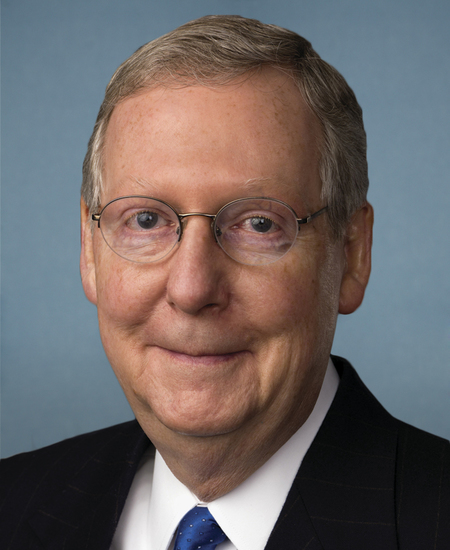
Mitch McConnell
Mitch McConnell Senate
R
Strong +
84% 31
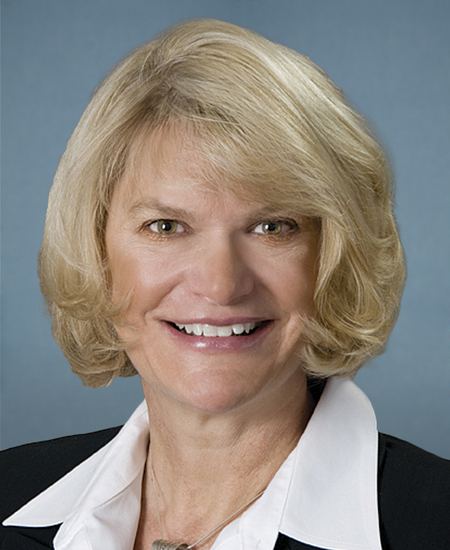
Cynthia M. Lummis
Cynthia M. Lummis Senate
R
Strong +
80% 30
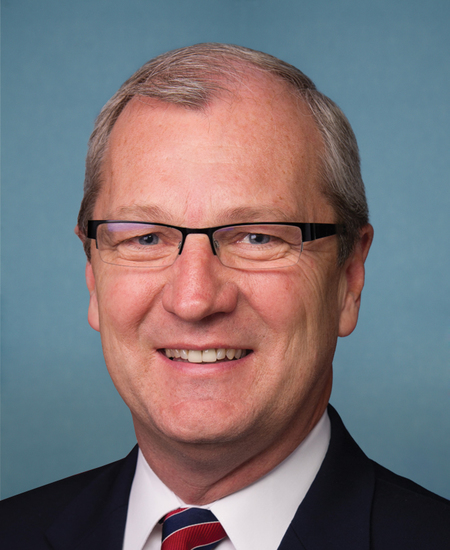
Kevin Cramer
Kevin Cramer Senate
R
Strong +
80% 30
Bernie Moreno
Bernie Moreno Senate
R
Support
77% 31
Amy Klobuchar
Amy Klobuchar Senate
D
Strong −
13% 31
Catherine Cortez Masto
Catherine Cortez Masto Senate
D
Strong −
13% 31
Margaret Wood Hassan
Margaret Wood Hassan Senate
D
Strong −
13% 31
Andy Kim
Andy Kim Senate
D
Strong −
16% 31
Angus S. King, Jr.
Angus S. King, Jr. Senate
I
Strong −
16% 31
Showing 401–410 of 1,286 bills

All criminal justice bills

in committee · United States · House Feb 26, 2026

HR 7709: Full-Body Restraint Prohibition Act

This bill prohibits the Department of Homeland Security from using federal funds to buy or use full-body restraints, which are devices that immobilize individuals. It directly affects DHS personnel and operations by banning the acquisition and utilization of four-point and five-point restraints. The law includes penalties for violations, such as removal from federal service for officers who break the rules or deceive leadership about them. DHS must also submit quarterly reports to Congress detailing compliance status and any instances where restraints were used, including specific information about the individuals restrained and the circumstances involved. Existing contracts for these restraints made before the bill's enactment are exempt from the ban.
in committee · United States · Senate Mar 17, 2026

S 4121: Vote Without Fear Act

This bill, known as the Vote Without Fear Act, would make it a federal crime to knowingly possess a firearm inside or within 100 yards of a Federal election site, such as a polling place or ballot counting location. The law applies to anyone who is aware or has reason to believe they are near such a site, with exceptions for law enforcement, security personnel on duty, vehicles where firearms remain inside, and lawful possession on private property. Violations of the basic possession rule could result in fines or up to one year in prison, while possessing a firearm with intent to use it in a crime carries a potential sentence of up to five years. The bill also increases penalties for any homicides or conspiracies involving firearms at these election sites.
in committee · United States · House Feb 25, 2026

HR 7719: SOS Act of 2026

This bill, titled the Securing Our Streets Act of 2026, directs the Attorney General to distribute federal grants to states that implement specific criminal justice policies aimed at reducing repeat offenses. To qualify for funding, states must adopt laws requiring repeat offenders to serve at least 85 percent of their sentences, mandate pretrial detention for violent offenders posing a clear threat to public safety, and impose life imprisonment for individuals convicted of three distinct violent crimes. The grants, totaling up to $10 billion over five years, can only be used to build secure correctional facilities, expand incarceration capacity for violent offenders, and train correctional staff.
in committee · United States · Senate Feb 26, 2026

S 3945: Tribal Police Department Parity Act

This bill, known as the Tribal Police Department Parity Act, would extend existing federal firearms access laws to Tribal law enforcement agencies, ensuring they have the same authority as Federal, State, and local agencies. The legislation amends Title 18 of the United States Code to explicitly include Indian Tribes and their departments in provisions related to machinegun transfers and the transportation, shipment, receipt, possession, and importation of firearms and ammunition. It also modifies the Internal Revenue Code to apply tax exemptions for firearms transfers to Tribal entities on the same basis as State governments. These changes would allow Tribal police departments to legally access and use firearms under the same federal regulations that currently apply to other law enforcement agencies.
Sub-Topics Drug Policy Firearms Law Enforcement Tags Tribal Nations
in committee · United States · House May 14, 2026

HR 7764: National Threat Evaluation and Reporting Program Reassignment and Funding Reform Act of 2026

This bill transfers the National Threat Evaluation and Reporting Program from the Department of Homeland Security's Office of Intelligence and Analysis to the Office for State and Local Law Enforcement. The change aims to better align the program's funding and management with its primary mission of supporting state, local, Tribal, and territorial law enforcement partners in identifying and preventing targeted violence. Under the bill, the transfer must be completed within 180 days, and the program will no longer use National Intelligence Program funds after the move. The Department of Homeland Security must also submit regular reports on the transfer progress and funding adjustments to Congress.
Sub-Topics Law Enforcement
in committee · United States · House Mar 2, 2026

HR 7752: Kelsey Smith Act

This bill, known as the Kelsey Smith Act, would require telecommunications service providers to share location data with law enforcement or public safety answering points during emergency situations. It directly affects phone and internet service providers, law enforcement officers, and individuals whose location information might be disclosed. The key provision allows officers to request location data without delay if the device was used to contact emergency services in the past 48 hours or if there is reasonable suspicion of an emergency involving risk of death or serious physical harm. The bill also establishes requirements for obtaining consent from subscribers or their next of kin, with a defined priority order for determining next of kin when consent is needed. Additionally, law enforcement agencies must maintain records of these requests, and the bill does not exempt providers from complying with applicable state laws regarding location information disclosure.
Sub-Topics Law Enforcement Telecommunications Tags Public Safety
in committee · United States · Senate Mar 9, 2026

S 4029: A bill to reinforce the Foreign Corrupt Practices Act of 1977 by establishing a limitations period of 10 years for antibribery offenses, and for other purposes.

This bill would extend the time limit for prosecuting foreign bribery offenses under the Foreign Corrupt Practices Act from the current standard to 10 years. It directly affects individuals and companies accused of bribing foreign officials by giving prosecutors more time to build cases. The law would apply to all such offenses committed after the bill's enactment, except those occurring within five years before the law takes effect. The provision includes a sunset clause, meaning it would expire eight years after being enacted.
in committee · United States · House Mar 16, 2026

HR 7939: Say No to Warrantless Searches Act

This bill, titled the Say No to Warrantless Searches Act, would require federal immigration enforcement officers to obtain a judicial warrant before searching private property. It directly affects law enforcement officers conducting immigration enforcement activities and individuals whose property might be searched. The law allows exceptions for situations where consent is given or when there are urgent circumstances requiring immediate action. Additionally, the bill clarifies that these new protections apply only to enforcement actions taken after the law is enacted, not to past searches.
in committee · United States · House Apr 2, 2025

HR 2604: Protecting Data at the Border Act

The Protecting Data at the Border Act requires U.S. border agents to obtain a warrant based on probable cause before accessing the digital contents of electronic devices belonging to U.S. persons at the border. It prohibits denying entry or delaying entry based on a refusal to provide access credentials, digital content, or online account information, and limits border agents to four hours to determine if a U.S. person will voluntarily provide access. The bill mandates written consent with clear notice of rights for voluntary data access, requires destruction of improperly accessed data, and includes emergency exceptions for immediate threats to life, national security, or public safety. It also requires the Department of Homeland Security to report annually on how often border agents access digital data and under what circumstances.
Sub-Topics Border Security
in committee · United States · House Mar 12, 2026

HR 7916: CODIS Access Modernization Act

This bill, known as the CODIS Access Modernization Act, would allow accredited private forensic DNA laboratories to directly upload DNA profiles to the National DNA Index System, which is currently restricted to government-run labs. The legislation requires private labs to meet the same quality standards as public facilities, including ISO/IEC 17025 accreditation and regular FBI audits, while prohibiting them from searching or retrieving DNA data from the system. The Department of Justice and FBI would establish specific regulations within six months of enactment to define eligibility criteria and security safeguards for this new access. The primary goal is to reduce DNA testing backlogs and speed up criminal investigations by expanding the number of facilities that can contribute directly to the national DNA database.
Showing 401 to 410 of 1,286 bills
Previous 1 … 40 41 42 … 129 Next