Issue · Criminal Justice

Criminal Justice

Every criminal justice bill, vote, and legislator stance in United States, automatically classified by Maddy, our AI policy reader.

Total bills
1,260
119th Congress
Top supporter
Alan Armstrong
86% support rate
Top opponent
Amy Klobuchar
13% support rate
Ranked legislators
10
5 support · 5 oppose
Key legislators

Who's moving criminal justice in United States

Legislators moving criminal justice in United States
Legislator Party Stance Support rate Decisive votes
AA
Alan Armstrong Senate
R
Strong +
86% 28
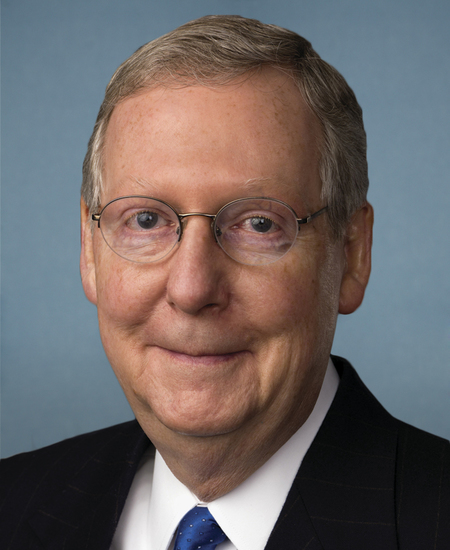
Mitch McConnell
Mitch McConnell Senate
R
Strong +
84% 31
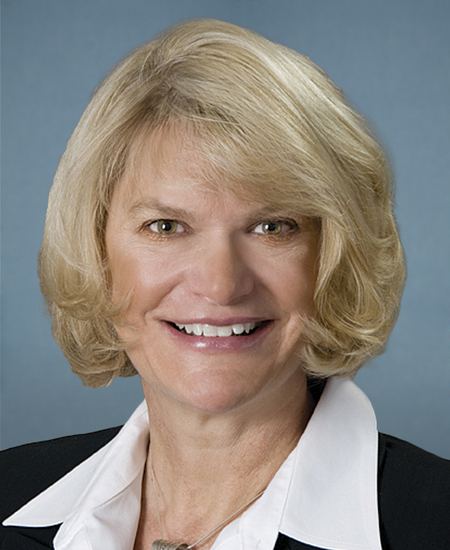
Cynthia M. Lummis
Cynthia M. Lummis Senate
R
Strong +
80% 30
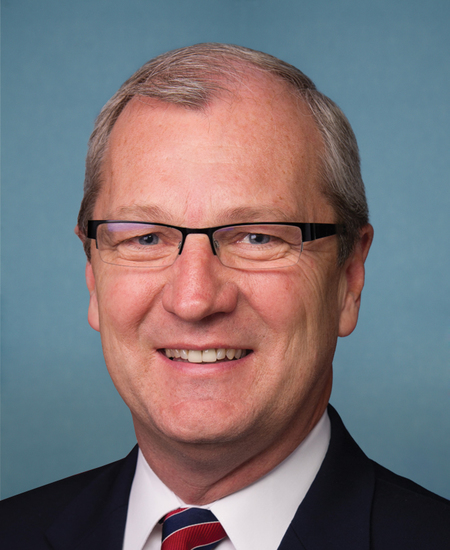
Kevin Cramer
Kevin Cramer Senate
R
Strong +
80% 30
Bernie Moreno
Bernie Moreno Senate
R
Support
77% 31
Amy Klobuchar
Amy Klobuchar Senate
D
Strong −
13% 31
Catherine Cortez Masto
Catherine Cortez Masto Senate
D
Strong −
13% 31
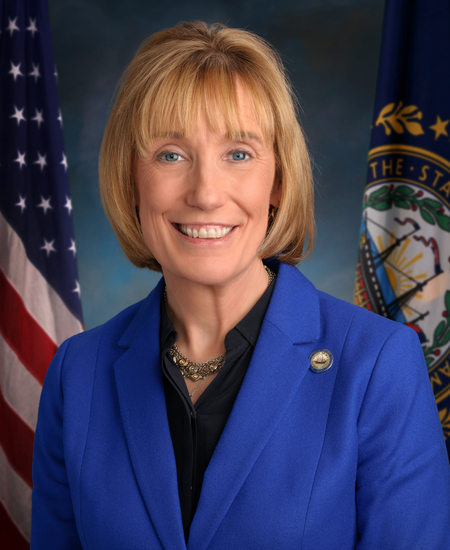
Margaret Wood Hassan
Margaret Wood Hassan Senate
D
Strong −
13% 31
Andy Kim
Andy Kim Senate
D
Strong −
16% 31
Angus S. King, Jr.
Angus S. King, Jr. Senate
I
Strong −
16% 31
Showing 1,041–1,050 of 1,260 bills

All criminal justice bills

in committee · United States · House Jun 6, 2025

HR 3810: SKIM Act

The SKIM Act (HR 3810) increases penalties for fraud involving counterfeit access devices like credit cards. It requires the U.S. Sentencing Commission to raise fraud offense levels by 4 points (minimum level 14) and count all unauthorized charges from 10+ counterfeit devices toward total losses. The bill also mandates a 90-day report to Congress from the Attorney General and DHS, detailing law enforcement coordination, fraud technologies, assistance requests, and recommendations for combating such fraud. This directly affects federal courts (through sentencing changes), law enforcement agencies, and businesses vulnerable to access device fraud.
signed · United States · Senate Sep 16, 2026

S 307: Prison Staff Safety Enhancement Act

This bill requires the Bureau of Prisons to fully implement all recommendations from a 2023 Inspector General report on inmate-on-staff sexual harassment and assault within 90 days of enactment. It mandates the Bureau to provide updated data on such incidents from 2022-2025, which the Inspector General must analyze to assess prevention efforts and punishment practices. The Attorney General must then create national standards for preventing, reducing, and punishing these incidents within one year of receiving the analysis. The bill directly affects federal prison staff, including correctional officers, by establishing concrete requirements to improve their safety and address systemic data gaps.
passed · United States · House Sep 17, 2025

HR 5140: To lower the age at which a minor may be tried as an adult for certain criminal offenses in the District of Columbia to 14 years of age.

This bill lowers the age at which minors in Washington, D.C. can be tried as adults for certain crimes from 16 to 14 years old. It amends two key sections of D.C. law: changing the age for exclusion from juvenile court jurisdiction (from 16 to 14) and lowering the age for transfer to criminal court (from 15-18 to 14 across multiple scenarios). The policy directly affects minors aged 14 or older who commit specified serious offenses in D.C., removing them from the juvenile justice system. The changes apply to offenses committed on or after the bill's effective date.
in committee · United States · House Jan 16, 2025

HR 503: Qualified Immunity Act of 2025

This bill codifies qualified immunity standards for law enforcement officers under federal law. It specifies that individual officers cannot be held liable in civil suits if they demonstrate either that the constitutional right at issue was not clearly established at the time of the incident, or that a prior court ruling already confirmed the conduct was lawful. Local government agencies also cannot be held liable if the officer is found not liable under these standards and was acting within their job duties. The law applies to all federal, state, tribal, and local officers with arrest powers, including police officers. The changes would take effect 180 days after enactment.
Sub-Topics Courts Law Enforcement Policing Tags Civil Liberties
in committee · United States · House May 15, 2025

HRES 414: Recognizing that the United States has a moral and legal obligation to provide reparations for the crime of enslavement of Africans and its lasting harm on the lives of millions of Black people in the United States.

HRES 414 is a symbolic resolution recognizing the U.S. government's moral and legal obligation to provide reparations for the harms of slavery and its lasting impacts on Black Americans. It acknowledges the historical and ongoing effects of chattel slavery, systemic racism, and discriminatory policies on Black communities, including economic disparities, environmental racism, and the criminal justice system. The resolution encourages support for H.R. 40, which would establish a commission to study reparations proposals, and calls for formal acknowledgment of slavery's legacy through congressional apologies. This resolution does not create new legal obligations or provide reparations itself, but serves as a statement of recognition and a call to action for further policy development.
passed · United States · Senate Jun 15, 2026

S 3041: Tribal Warrant Fairness Act

The Tribal Warrant Fairness Act amends two federal laws to explicitly include Indian Tribes in existing law enforcement and security protocols. It requires the U.S. Marshals Service to consider "Tribal fugitive matters" upon request by an Indian Tribe and updates the Presidential Threat Protection Act to include "Indian Tribes" and "Tribal law" alongside local and state entities. These changes ensure Tribal governments are treated equally with local and state authorities in federal processes. The bill directly affects Indian Tribes, the U.S. Marshals Service, and agencies under the Presidential Threat Protection Act by modifying how they handle Tribal matters. This is a technical update to existing statutes without creating new programs or funding.
Sub-Topics Law Enforcement Tags Tribal Nations
in committee · United States · Senate Sep 2, 2025

S 2686: DC CRIMES Act

This bill limits "youth offender" status in DC to individuals 18 or younger, replacing the previous 24-year age limit. It requires the Attorney General to create a public website publishing monthly, detailed juvenile crime statistics - including arrest numbers broken down by age, race, sex, crime type (like vandalism or violent offenses), first-time vs. repeat offenses, and sentencing outcomes - while prohibiting personally identifiable information. The bill also prohibits the DC Council from changing mandatory minimum sentences or sentencing guidelines during its effective period. These changes directly affect DC youth in the justice system and provide transparency on juvenile crime data.
in committee · United States · House Apr 22, 2025

HR 2979: BUILD Act of 2025

The BUILD Act of 2025 creates two federal grant programs to help small communities improve public safety infrastructure. It provides up to $4 million per project for law enforcement agencies serving communities under 50,000 residents to upgrade facilities focused on emergency services, officer training, recruitment, or community safety. Similarly, it offers grants for fire departments (career, combination, or volunteer) in the same size communities to enhance facilities for firefighting, emergency medical services, personnel training, or community safety. The bill authorizes $250 million annually from 2026 through 2028 for each program and requires annual reports on grant usage and infrastructure needs.
Sub-Topics Law Enforcement Tags Public Safety
in committee · United States · Senate Jan 15, 2026

S 3652: Welfare Fraud Deterrence and Recovery Act of 2026

S 3652 increases criminal penalties for welfare fraud to up to 15 years in prison, with steeper sentences for noncitizens and cases exceeding $100,000 in fraudulent benefits. It creates a Welfare Fraud Recovery Task Force to investigate fraud in federal welfare programs (like SNAP and child care grants), pursue civil penalties (including triple damages and fines up to $20,000), and recover funds for program reimbursement. Noncitizens convicted of welfare fraud face deportation, expedited removal, and potential loss of citizenship through denaturalization. Recovered funds would be deposited into a new Treasury fund managed by the Department of Health and Human Services to offset program losses and support fraud prevention.
in committee · United States · Senate Jul 22, 2025

S 2376: A bill to amend title 18, United States Code, to include rioting in the definition of racketeering activity.

This bill amends federal law to include rioting as a form of "racketeering activity" under the Racketeer Influenced and Corrupt Organizations (RICO) Act. It does so by adding a reference to section 2101 (which defines rioting as a federal crime) into the existing list of racketeering activities. This change would allow federal prosecutors to pursue RICO charges against individuals or groups who engage in rioting as part of a larger pattern of organized criminal conduct. The bill directly affects those whose rioting activities are linked to organized criminal enterprises, potentially subjecting them to enhanced penalties under RICO.
Showing 1,041 to 1,050 of 1,260 bills