Issue · Budget & Taxes

Budget & Taxes (Government Spending)

Every budget & taxes bill, vote, and legislator stance in United States, automatically classified by Maddy, our AI policy reader.

Total bills
36
119th Congress
Top supporter
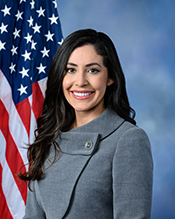
Anna Paulina Luna
100% support rate
Top opponent
Henry Cuellar
0% support rate
Ranked legislators
10
5 support · 5 oppose
Key legislators

Who's moving government spending in United States

Legislators moving government spending in United States
Legislator Party Stance Support rate Votes
Anna Paulina Luna
Anna Paulina Luna House · District 13
R
Strong +
100% 5
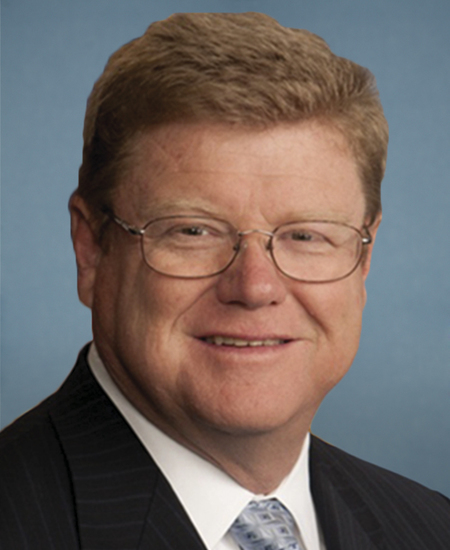
Mark E. Amodei
Mark E. Amodei House · District 2
R
Strong +
100% 5
Mike Carey
Mike Carey House · District 15
R
Strong +
100% 5
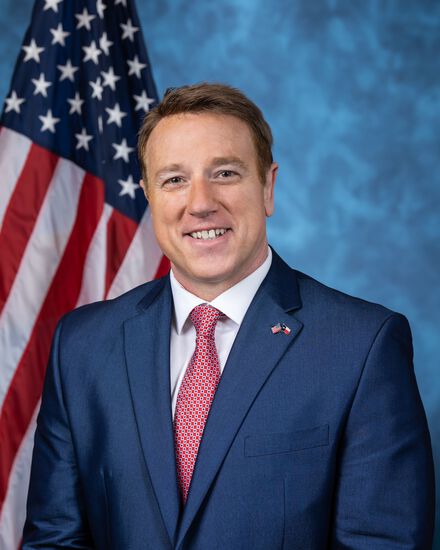
Pat Fallon
Pat Fallon House · District 4
R
Strong +
100% 5
Troy Balderson
Troy Balderson House · District 12
R
Strong +
100% 5
Henry Cuellar
Henry Cuellar House · District 28
D
Strong −
0% 6
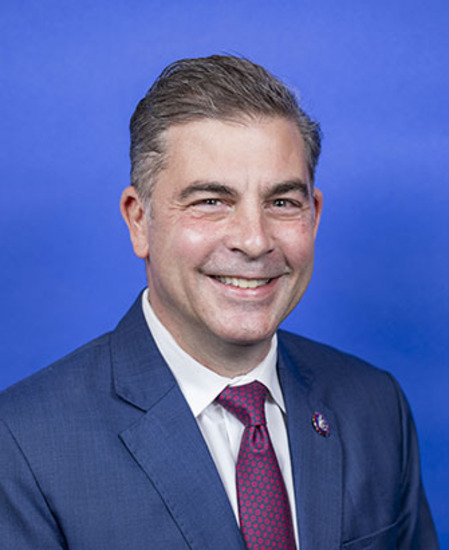
Jake Auchincloss
Jake Auchincloss House · District 4
D
Strong −
0% 5
Kim Schrier
Kim Schrier House · District 8
D
Strong −
0% 5
Raja Krishnamoorthi
Raja Krishnamoorthi House · District 8
D
Strong −
0% 5
Robin L. Kelly
Robin L. Kelly House · District 2
D
Strong −
0% 5
Showing 31–36 of 36 bills

All budget & taxes bills

in committee · United States · Senate Feb 10, 2025

S 499: Government Shutdown Prevention Act of 2025

This bill automatically prevents government shutdowns by funding federal programs at 94% of the previous fiscal year's level if Congress fails to pass a regular budget on time. For 90 days, funding starts at 94% and decreases by 1% every 90 days until a new budget is enacted, with special rules maintaining full funding for mandatory programs like food assistance. It applies to most government operations but excludes programs with specific legal requirements or those already funded by other laws. The bill ensures continuous service for agencies without requiring new congressional action during funding gaps.
in committee · United States · Senate Jan 30, 2025

S 343: Keep Our PACT Act

This bill mandates increased federal funding for two key education programs. It requires annual appropriations for Title I of the Elementary and Secondary Education Act (which supports schools serving disadvantaged students) and the Individuals with Disabilities Education Act (IDEA, which funds special education) starting in 2026. The bill sets specific, rising annual funding levels - based on a 2025 baseline and national per-student spending - to gradually reach 40% of the national average per-pupil expenditure for IDEA by 2035. These funds directly affect school districts receiving Title I support and those providing special education services under IDEA. The funding is made mandatory, not discretionary, ensuring consistent annual support for these programs.
in committee · United States · House Jan 31, 2025

HR 829: Fighting Budget Waste Act

The Fighting Budget Waste Act requires the President and the Office of Management and Budget (OMB) to consider the most recent Government Accountability Office (GAO) report on reducing government waste when preparing the annual federal budget. Specifically, it mandates review of the GAO's findings about cutting fragmentation, duplication, and overlap in federal programs - such as the report titled *Additional Opportunities to Reduce Fragmentation, Overlap, and Duplication and Achieve Billions of Dollars in Financial Benefits* - to identify potential savings. The OMB must also submit a separate report to Congress detailing how it incorporated the GAO's recommendations into the budget submission. This law aims to make the budget process more transparent by formally integrating the GAO's waste-reduction analysis into federal fiscal planning.
in committee · United States · House Jun 11, 2025

HR 3912: Stop the Baseline Bloat Act of 2025

HR 3912, the Stop the Baseline Bloat Act of 2025, changes how the federal budget baseline is calculated by excluding emergency funding and supplemental appropriations. This affects the annual budget process by removing these funds from the baseline figure used to measure spending limits under the Budget Control Act. The key provision amends the Balanced Budget and Emergency Deficit Control Act to specify that emergency requirements and supplemental funding are not counted in the baseline calculation. As a result, future budget targets will reflect only regular appropriations, not additional emergency or supplemental spending.
passed both · United States · House May 20, 2025

HCONRES 14: Establishing the congressional budget for the United States Government for fiscal year 2025 and setting forth the appropriate budgetary levels for fiscal years 2026 through 2034.

This concurrent resolution establishes the federal budget framework for fiscal years 2025 through 2034, setting specific targets for revenues, spending, and deficits across the decade. It projects federal revenues to increase from $3.4 trillion in 2025 to $5.4 trillion in 2034, with deficits ranging from $2.08 trillion to $2.12 trillion over the period. The resolution includes specific deficit reduction requirements for 11 congressional committees, such as a $880 billion target for the Energy and Commerce Committee to reduce deficits over the 10-year period. It also contains policy statements supporting economic growth through reduced spending, deregulation, and tax cuts. This resolution serves as the budgetary blueprint that Congress will use to guide spending decisions for the next decade.
in committee · United States · House Feb 10, 2025

HCONRES 10: Emergency Border Control Resolution

This bill, titled "Emergency Border Control Resolution," is actually a budget resolution establishing fiscal year 2025-2034 budget levels for the U.S. government. It sets detailed revenue, spending, and deficit targets across various government functions, including defense, health, and social programs. The resolution includes reconciliation instructions for committees to adjust laws within their jurisdictions to meet deficit targets. The title appears to be a political label rather than an accurate description of the bill's content, as it contains no actual border control provisions.
Showing 31 to 36 of 36 bills
Previous 1 2 3 4