Issue · Budget & Taxes

Budget & Taxes

Every budget & taxes bill, vote, and legislator stance in United States, automatically classified by Maddy, our AI policy reader.

Total bills
2,352
119th Congress
Top supporter
Clay Fuller
87% support rate
Top opponent
Eleanor Holmes Norton
0% support rate
Ranked legislators
10
5 support · 5 oppose
Key legislators

Who's moving budget & taxes in United States

Legislators moving budget & taxes in United States
Legislator Party Stance Support rate Decisive votes
Clay Fuller
Clay Fuller House · District 14
R
Strong +
87% 46
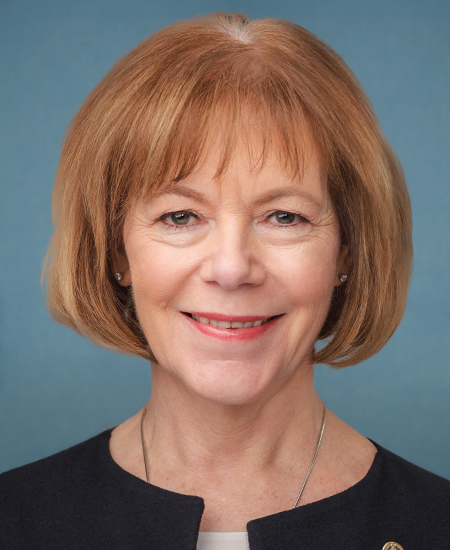
Tina Smith
Tina Smith Senate
D
Strong +
83% 77
Andrew Ogles
Andrew Ogles House · District 5
R
Strong +
83% 65
Aaron Bean
Aaron Bean House · District 4
R
Strong +
83% 69
Ben Cline
Ben Cline House · District 6
R
Strong +
83% 69
Eleanor Holmes Norton
Eleanor Holmes Norton House · District At-Large
D
Strong −
0% 26
Pablo José Hernández
Pablo José Hernández House · District At-Large
D
Strong −
7% 28
Analilia Mejia
Analilia Mejia House · District 11
D
Strong −
13% 45
George Latimer
George Latimer House · District 16
D
Strong −
13% 67
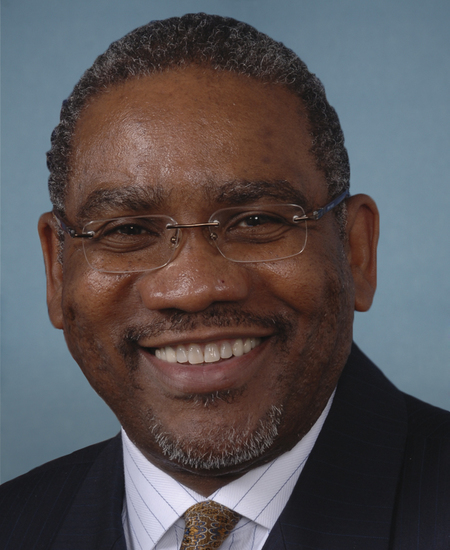
Gregory W. Meeks
Gregory W. Meeks House · District 5
D
Strong −
14% 66
Showing 1,991–2,000 of 2,352 bills

All budget & taxes bills

in committee · United States · Senate Jan 22, 2025

S 187: ALIGN Act

S 187, the ALIGN Act, permanently allows businesses to immediately deduct the full cost of qualified property (like machinery or equipment) instead of depreciating it over time. This directly affects businesses that purchase qualifying property after September 27, 2017, by eliminating the previous requirement to spread deductions across multiple years. The key provision changes the tax code to set the "applicable percentage" for such property at 100% permanently. This simplifies tax treatment for eligible investments without altering other tax rules. The bill does not change tax rates or affect individual taxpayers.
in committee · United States · House Apr 14, 2025

HR 2918: Family Business Legacy Act of 2025

HR 2918, the "Family Business Legacy Act of 2025," would create a new estate tax deduction for bequests to specific nonprofit organizations. It allows estates to deduct the full value of transfers to organizations exempt under IRS sections 501(c)(4), (5), or (6), reducing the taxable value of an estate. This applies to estates of people who die after December 31, 2025, and directly affects individuals leaving assets to qualifying nonprofits like community foundations or social welfare groups. The bill does not change tax rates or directly support family-owned businesses, as the title suggests, but rather modifies how certain charitable bequests are treated for estate tax purposes.
in committee · United States · Senate Sep 18, 2025

S 2875: CHOICE Act

The CHOICE Act creates a new type of employer-funded health benefit called a "CHOICE arrangement," allowing small employers to reimburse employees for individual health insurance costs. It directly affects small businesses (not large employers under ACA rules) and their employees who choose individual marketplace coverage or specific government health programs. Key provisions include employer tax credits ($100/month for the first year, $50/month for the second year per employee), strict rules to prevent discrimination in plan access, and requirements for employees to maintain qualifying health coverage. The law takes effect for plan years beginning after December 31, 2025, providing a new option for small employers to offer health benefits without traditional group plans.
Sub-Topics Insurance Tags Small Business
in committee · United States · Senate May 1, 2025

S 1581: Universal Savings Account Act of 2025

The Universal Savings Account Act of 2025 creates a new tax-advantaged savings account type (Universal Savings Account or USA) for individual taxpayers. These accounts would be exempt from income tax on growth and earnings, with annual contribution limits starting at $10,000 (capped at $25,000) and adjusted annually for inflation. The bill directly affects individual savers who open USAs through qualifying financial institutions (like banks), subject to rules requiring cash-only contributions, non-forfeitable balances, and restrictions on life insurance investments. It amends the Internal Revenue Code to establish this new account structure, effective for taxable years after December 31, 2024.
Sub-Topics Income Tax Sales Tax
in committee · United States · House Apr 7, 2025

HR 2660: To amend the Internal Revenue Code of 1986 to exempt qualified student loan bonds from the volume cap and the alternative minimum tax.

HR 2660 exempts certain student loan bonds issued by state or local governments from two tax restrictions: the federal volume cap (which limits bond issuance) and the alternative minimum tax (AMT). This means states and localities can issue more of these bonds to fund student loans without hitting the volume cap limit or facing AMT calculations. The bill defines "qualified student loan bonds" as those meeting specific criteria under existing tax code, ensuring the exemption applies only to bonds directly supporting student lending. This change aims to make it easier for governments to finance student loan programs by reducing tax barriers for the bonds they issue.
in committee · United States · House Jan 23, 2025

HR 652: Small Business Investor Tax Parity Act of 2025

This bill expands the tax deduction for qualified business income to include interest dividends from certain business development companies (BDCs), aligning them with the existing treatment for real estate investment trust (REIT) dividends. It specifically adds "qualified BDC interest dividends" to the list of eligible income under Section 199A of the tax code, allowing investors in qualifying BDCs to deduct 20% of these dividends. The change applies to taxable years beginning after December 31, 2026, and directly affects investors in BDCs that meet specific criteria as regulated investment companies. This policy modifies tax eligibility without altering the deduction rate or creating new tax obligations.
in committee · United States · Senate Nov 7, 2025

S 3165: True Shutdown Fairness Act

The True Shutdown Fairness Act requires U.S. government agencies to pay standard wages, benefits, and allowances to covered employees (including contract workers, military members on active duty, and furloughed staff) during a government shutdown beginning October 1, 2025. It mandates agencies to adjust contract prices for contractors who incurred costs compensating furloughed workers or restoring paid leave during the shutdown. The bill also prohibits agencies from implementing layoffs or placing employees in administrative leave for more than 10 work days during the shutdown period. These provisions apply retroactively to shutdowns starting September 30, 2025, and fund the payments through existing Treasury appropriations.
in committee · United States · House Feb 13, 2026

HR 7570: Reinvest in Public Schools Act of 2026

This bill modifies tax rules for public school bonds to make certain financing more accessible. It allows school districts to issue bonds for building, repairing, or acquiring school facilities (with 100% of funds used for these purposes) and treat them as tax-exempt, reverting to the pre-December 2017 tax treatment. The key provision reopens a prior tax rule that had expired, enabling districts to use advance refunding bonds for school construction without triggering tax penalties. It directly affects public school districts seeking to finance physical school infrastructure through bond financing. The change applies to bonds issued after the bill's enactment date.
in committee · United States · House Jan 27, 2026

HR 7245: LIMBER Timber Act of 2026

The LIMBER Timber Act of 2026 creates three new federal tax credits to support the mass timber industry. It provides a 30% investment credit for businesses building mass timber manufacturing plants, a 50% credit for workforce training and hiring expenses in mass timber-related businesses (requiring at least 70% certified sustainable mass timber), and a $5 per square foot credit for constructing buildings with at least 50% of load-bearing components made of mass timber and 70% certified sustainable mass timber. These credits apply to manufacturers, construction contractors, and design firms working with mass timber - defined as engineered wood products like cross-laminated timber - and expire after December 31, 2030. The bill requires all credits to meet specific sustainability sourcing standards to qualify.
in committee · United States · House Apr 9, 2025

HR 2670: FIGHTER Act of 2025

This bill exempts regular active-duty military compensation from federal income tax for service members, effective for 2025 tax years. It directly affects active-duty members of the Armed Forces, excluding their regular pay from taxable income under new IRS rules. A key exception prevents this tax exclusion from applying to individuals who served as Members of Congress within the 10 years prior to receiving their military pay. The bill also requires the Treasury to adjust tax withholding procedures to reflect this exclusion. (Note: The "DOGE Service" provision appears satirical and unrelated to the core tax policy.)
Sub-Topics Income Tax
Showing 1,991 to 2,000 of 2,352 bills