Issue · Budget & Taxes

Budget & Taxes

Every budget & taxes bill, vote, and legislator stance in United States, automatically classified by Maddy, our AI policy reader.

Total bills
2,411
119th Congress
Top supporter
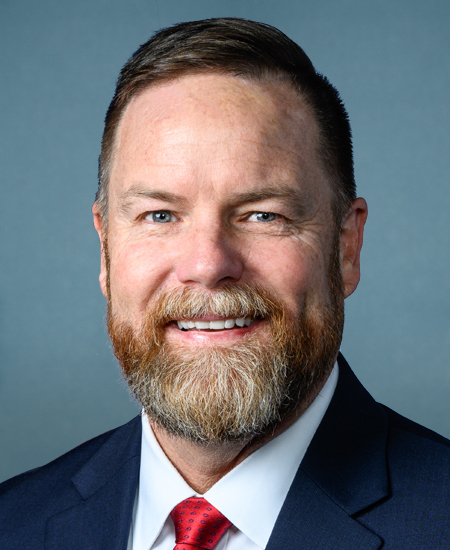
Clay Fuller
87% support rate
Top opponent
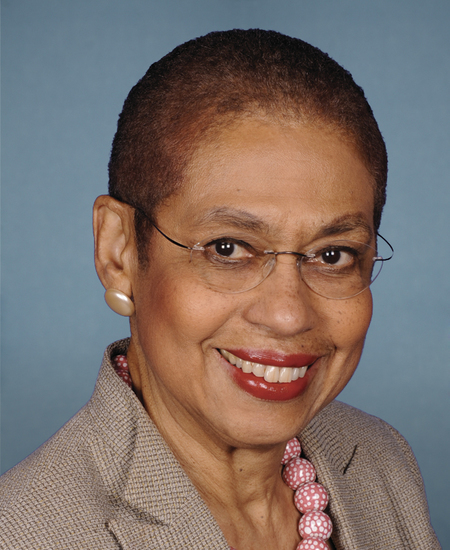
Eleanor Holmes Norton
0% support rate
Ranked legislators
10
5 support · 5 oppose
Key legislators

Who's moving budget & taxes in United States

Legislators moving budget & taxes in United States
Legislator Party Stance Support rate Decisive votes
Clay Fuller
Clay Fuller House · District 14
R
Strong +
87% 46
Tina Smith
Tina Smith Senate
D
Strong +
83% 77
Andrew Ogles
Andrew Ogles House · District 5
R
Strong +
83% 65
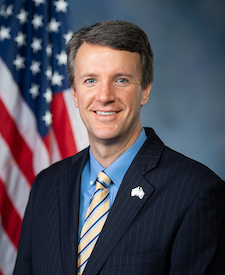
Aaron Bean
Aaron Bean House · District 4
R
Strong +
83% 69
Ben Cline
Ben Cline House · District 6
R
Strong +
83% 69
Eleanor Holmes Norton
Eleanor Holmes Norton House · District At-Large
D
Strong −
0% 26
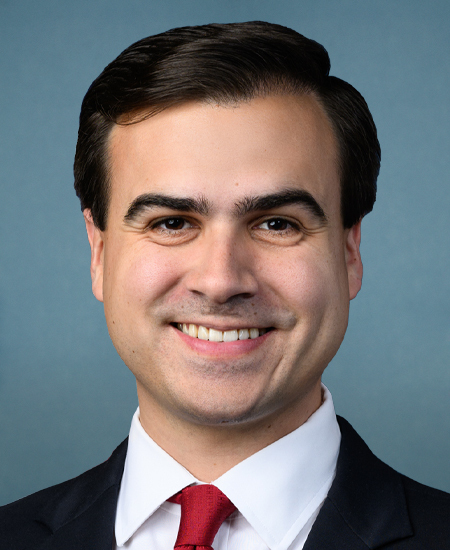
Pablo José Hernández
Pablo José Hernández House · District At-Large
D
Strong −
7% 28
Analilia Mejia
Analilia Mejia House · District 11
D
Strong −
13% 45
George Latimer
George Latimer House · District 16
D
Strong −
13% 67
Gregory W. Meeks
Gregory W. Meeks House · District 5
D
Strong −
14% 66
Showing 1,071–1,080 of 2,411 bills

All budget & taxes bills

in committee · United States · House Mar 18, 2025

HR 2186: To amend the Internal Revenue Code of 1986 to restore the limitation on downward attribution of stock ownership in applying constructive ownership rules.

HR 2186 amends the tax code to clarify ownership rules for certain foreign-owned companies. It prevents U.S. shareholders from being treated as owning stock held by non-U.S. persons in foreign corporations (ending "downward attribution"). This directly affects "foreign controlled U.S. shareholders" - U.S. persons who would qualify as shareholders under modified ownership rules - requiring them to include specific foreign earnings in their gross income under new Section 951B. The changes apply to tax years ending after December 31, 2024.
in committee · United States · House Feb 25, 2025

HR 1583: PAR Act

The PAR Act removes restrictions that previously prevented private golf courses and country clubs from using certain tax-advantaged funds for recreational purposes. It amends a specific tax code section by deleting the phrases "private or commercial golf course, country club" wherever they appear. This change directly allows those facilities to access funds they were previously barred from using under existing tax rules. The law applies to new tax obligations after enactment, with limited transitional rules for existing programs.
in committee · United States · House Feb 11, 2025

HR 1188: Police CAMERA Act of 2025

HR 1188 establishes a federal grant program to help state and local law enforcement agencies purchase body-worn cameras and implement camera programs. To qualify for funding, agencies must adopt public policies on camera use, secure data storage, privacy protections, and strict limits on facial recognition technology (requiring judicial authorization for its use). The bill mandates collecting and reporting demographic data on use-of-force incidents (by race, gender, etc.) and prohibits sharing footage without legal justification. It allocates $30 million annually for fiscal years 2026-2028, with requirements for public policy access, data security, and annual reporting to the federal government.
in committee · United States · House Mar 11, 2025

HR 2062: To amend the Internal Revenue Code of 1986 to treat membership in a health care sharing ministry as a medical expense, and for other purposes.

HR 2062 would allow taxpayers to deduct membership fees and medical expenses paid through health care sharing ministries (HCSMs) as medical expenses on their federal tax returns, similar to other health costs. It specifically adds HCSM membership to the list of deductible medical expenses under Internal Revenue Code Section 213(d)(1) and clarifies that HCSMs are not treated as health insurance under Section 7702C. This change directly affects individuals enrolled in HCSMs, which are faith-based or community-based cost-sharing groups operating outside traditional insurance. The bill would take effect for tax years beginning after December 31, 2025.
Sub-Topics Insurance
in committee · United States · House Mar 18, 2025

HR 2198: To amend the Internal Revenue Code of 1986 to restore the taxable REIT subsidiary asset test.

This bill changes a tax rule for Real Estate Investment Trusts (REITs) that use taxable subsidiaries. It increases the percentage limit for assets held in these subsidiaries from 20% to 25% of a REIT's total assets, directly affecting REIT companies that operate through such subsidiaries. The key provision amends the Internal Revenue Code to restore this higher asset threshold, which had been reduced earlier. The change applies to taxable years starting after December 31, 2025.
in committee · United States · House Mar 28, 2025

HR 1994: Public Land Renewable Energy Development Act of 2025

The Public Land Renewable Energy Development Act of 2025 establishes rules for solar and wind energy projects on federal public lands and National Forest System lands. It requires project owners to pay current rents and fees (with a limited exception for projects that applied for permits by December 2016) and directs 25% of revenue from these projects to the state, 25% to the county (based on land area), 25% to speed up renewable energy permit processing, and 25% to a new conservation fund. The fund finances habitat restoration, wildlife corridor protection, wetland conservation, and improved public access to federal lands affected by renewable energy development. This bill directly affects renewable energy developers, states, counties, and federal agencies managing public lands.
in committee · United States · House Mar 10, 2025

HR 2014: Reduction of Excess Business Holding Accrual Act

HR 2014 modifies the tax code to change how certain stock purchases from employee stock ownership plans (ESOPs) are counted toward a business's tax obligations. It treats stock bought from an ESOP (where employees participate) by the business itself as "outstanding voting stock" for tax calculations, but only if this doesn't push holdings above 49%. This specifically applies to stock purchased on or after January 1, 2020, from ESOP distributions, and excludes purchases during the first 10 years of an ESOP's existence. The bill directly affects businesses using ESOPs that repurchase employee-owned shares, altering how these transactions impact their tax liability under Section 4943.
Sub-Topics Sales Tax
in committee · United States · House Feb 11, 2025

HR 1221: Social Security and Medicare Lock-Box Act

This bill creates two separate "lock-box" accounts: one for Social Security surplus funds and one for Medicare Part A surplus funds. Starting after fiscal year 2025, any surplus in these trust funds (defined as tax revenues minus benefits paid) must be transferred to these dedicated accounts instead of being invested in U.S. Treasury securities. The funds in these accounts cannot be invested by the trust fund managers. The bill also establishes a bipartisan commission to study potential alternative investment options for these trust funds, with a report due by October 2025. This directly affects how Social Security and Medicare Part A trust fund surpluses are handled and protected.
in committee · United States · House Mar 6, 2025

HR 1932: Pay Our Troops Act of 2025

This bill ensures military personnel, civilian Defense workers, and supporting contractors continue receiving pay during government funding gaps in fiscal year 2025. It provides temporary funding from existing Treasury reserves to cover salaries for active-duty troops, reservists, Defense civilians, and contractors supporting military operations until Congress passes a full budget or by January 1, 2026. The measure directly affects all active-duty service members, reserve components, and their civilian/contractor support staff across the military. It does not create new policies but guarantees uninterrupted pay during budget implementation delays.
in committee · United States · House Mar 4, 2025

HR 1821: HELD Act

The HELD Act would deny federal funding to states and local governments that fail to comply with federal immigration detainers. It specifically targets jurisdictions with policies preventing law enforcement from (1) promptly sharing an immigrant's release date with the Department of Homeland Security or (2) holding an immigrant for up to 48 hours to facilitate transfer to federal custody. Federal funds for any project or activity in such jurisdictions would be withheld starting in the fiscal year after the bill's enactment. This policy directly affects state and local governments that restrict cooperation with immigration enforcement requests.
Showing 1,071 to 1,080 of 2,411 bills