

Maddy summaryThis Senate resolution formally supports the goals of National Hospital Week, which is observed annually from May 10 to May 16, 2026. The measure recognizes the vital contributions of hospitals and healthcare workers, including physicians, nurses, and support staff, who provide essential services to millions of Americans. It highlights the diverse roles of various hospital types, such as critical access facilities in rural areas, teaching hospitals, psychiatric centers, and VA medical centers. The resolution encourages the public to observe the week with appropriate ceremonies and activities to demonstrate appreciation for the healthcare system.
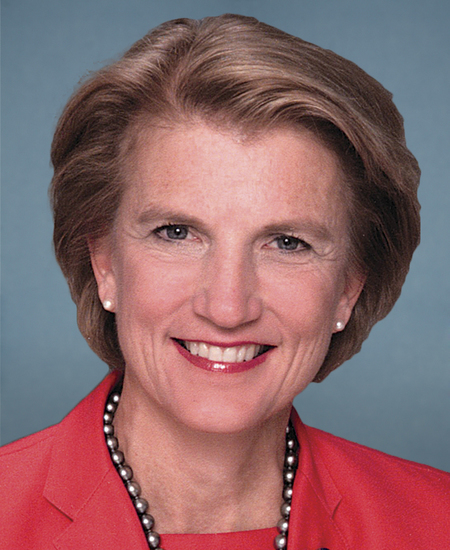
Sen. Shelley Moore Capito
Sponsored bills
Maddy summaryThis Senate resolution designates the week of May 10 through May 16, 2026, as "National Police Week" to honor law enforcement officers across the United States. The measure formally recognizes the service and sacrifices of federal, state, local, and tribal police officers, including those who have died in the line of duty during 2025 and early 2026. By invoking existing federal authority, the bill encourages the public and government agencies to observe this week by acknowledging the essential mission of police work and supporting officer safety. The resolution also expresses condolences to the families of officers who have made the ultimate sacrifice and reaffirms support for communities served by law enforcement.
Maddy summaryThis Senate resolution designates May 16, 2026, as "Kids to Parks Day" to encourage families to visit national, state, and local parks. The bill aims to promote outdoor recreation, environmental stewardship, and healthy lifestyles for young people across rural, suburban, and urban communities. By officially recognizing this date, the Senate encourages Americans to take part in safe, active family trips to public lands.
Maddy summaryThe IGNITE HBCU Excellence Act establishes a competitive grant program administered by the Department of Education to provide long-term funding for infrastructure improvements at Historically Black Colleges and Universities. These grants are intended to support projects such as modernizing campus facilities, upgrading technology and broadband systems, enhancing safety measures, and acquiring research equipment, with a specific focus on addressing deferred maintenance and health risks. Priority for funding is given to institutions that demonstrate the greatest need due to facility conditions or financial limitations, as well as those serving high percentages of low-income students. The legislation also includes requirements for recipients to submit detailed plans, engage in community partnerships, and use a portion of funds for administrative costs, while prohibiting the use of money for routine maintenance or athletic facilities.
Maddy summaryThis Senate resolution expresses support for designating April 2026 as National Child Abuse Prevention Month to raise awareness about preventing child maltreatment. The bill does not create new laws or funding but instead formally acknowledges the importance of stopping child abuse and neglect through education and community efforts. It highlights statistics on the prevalence of abuse and the long-term health consequences of adverse childhood experiences to underscore the need for prevention. Ultimately, the measure serves as a symbolic statement recognizing the collective responsibility to protect children and support survivors.
Maddy summaryThis Senate resolution asks the President to make the release of five specific individuals detained in China a priority during future meetings with Chinese President Xi Jinping. The bill focuses on Pastor Jin Mingri, Pastor Gao Quanfu and his wife Pang Yu, Jimmy Lai, Dr. Gulshan Abbas, and Ekpar Asat, who are described as being held without fair trials or access to medical care. It urges the President to seek proof that these detainees are alive and have access to legal counsel, family contact, and necessary medical treatment. The measure reflects a bipartisan commitment to defending political and religious freedoms and addresses these cases as part of broader U.S. diplomatic relations with China.
Maddy summaryThis bill establishes a federal advisory committee to study challenges in transmitting geolocation and dispatchable location information with 988 Suicide and Crisis Lifeline calls. The committee, formed by the FCC and HHS within 180 days, will include representatives from telecom providers, crisis centers, mental health organizations, and local governments (with specific representation for rural communities and low-population states). It will examine privacy, technical standards, and funding needs before making recommendations for legislation. The committee must submit a report to Congress within one year. This is a procedural study bill, not a direct policy change, and it requires no new funding.
Maddy summaryThis Senate resolution formally acknowledges the contributions of teachers to the United States and thanks them for their dedication. It encourages students, parents, and public officials to recognize National Teacher Appreciation Week.
Maddy summaryThis resolution honors the life and legacy of Dirk Kempthorne, a former U.S. Senator, Governor of Idaho, and Secretary of the Interior. It formally acknowledges his public service across various roles, including his work on environmental conservation, veterans' support, and economic development in Idaho. The Senate expresses its sorrow over his death and directs that a copy of the resolution be sent to his family. Additionally, the Senate stands in adjournment as a final mark of respect to his memory.
Maddy summaryS 98, the Rural Broadband Protection Act of 2025, requires the Federal Communications Commission (FCC) to establish a vetting process for applicants seeking new high-cost universal service fund funding to deploy rural broadband networks. It mandates that applicants prove they have the technical, financial, and operational capabilities, along with a sound business plan, to build and operate the proposed network as defined by the FCC. The bill also sets minimum penalties of $9,000 per violation for applicants who fail to meet pre-authorization requirements, with penalties not falling below 30% of the awarded funding. This directly affects entities applying for federal broadband deployment grants in rural areas.