

Maddy summarySRES 513 is a non-binding Senate resolution designating November 22, 2025, as National Adoption Day and all of November 2025 as National Adoption Month. It aims to promote public awareness of adoption, particularly for children in foster care awaiting permanent families, and encourages Americans to support adoption efforts. The resolution directly affects the public, adoption agencies, and foster care systems by formally recognizing these dates for nationwide awareness campaigns. It does not create new laws or policies but seeks to highlight existing adoption opportunities and the need for stable homes for children.
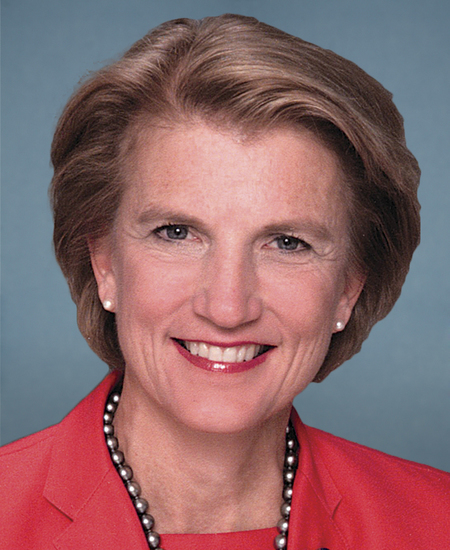
Sen. Shelley Moore Capito
Sponsored bills
Maddy summaryS 3267, the ASAP Act, would require Medicare to cover early detection screening tests for Alzheimer's disease and related dementias starting January 1, 2028. The bill defines these tests as FDA-cleared or approved blood, genomic, or imaging-based screenings for pre-symptomatic or early-stage detection. It directly affects Medicare beneficiaries aged 65+ who may be at risk for Alzheimer's, ensuring coverage for these specific tests once approved. The key provision adds these screenings to Medicare's payment system under Section 1833(h)(1)(A) of the Social Security Act.
Maddy summaryThe SIMSA Act of 2025 creates a new Schedule A for controlled substances under federal drug law. It defines Schedule A substances as those imported into the U.S. with chemical structures substantially similar to existing Schedule I-V substances and having similar effects on the central nervous system. The bill establishes procedures for the Attorney General to temporarily schedule substances for up to 5 years (with possible 180-day extensions), requiring consultation with the Secretary of Health and Human Services before permanent scheduling. It increases penalties for violations involving Schedule A substances, including prison terms up to 30 years for repeat offenses and higher fines, and requires specific labeling with IUPAC nomenclature for these substances.
Maddy summaryThe REUSE Act of 2025 requires the Environmental Protection Agency (EPA) to produce a report within two years of enactment. The report will evaluate the feasibility, best practices, and economic impacts of reuse and refill systems for products like food, beverages, cleaning supplies, and shipping containers across various sectors. It will specifically assess job creation opportunities, cost benefits for businesses and waste management, equitable access in different communities, and existing barriers to implementing such systems. The bill does not mandate new regulations but directs the EPA to study how reuse systems could be expanded, affecting businesses and communities that might adopt these models.
Strategies To Eliminate Waste and Accelerate Recycling Development Act of 2025 or the STEWARD Act of 2025 This bill establishes requirements to expand recycling and composting efforts, including by creating (1) a pilot grant program, and (2) data collection and reporting requirements. The bill directs the Environmental Protection Agency (EPA) to establish a pilot program that awards grants for improving recycling accessibility in communities, particularly in underserved communities. States, local governments, Indian tribes, and public-private partnerships may apply for those grants. The bill also directs the EPA to collect data related to composting and recycling infrastructure from states, local governments, and Indian tribes. Within three years and every four years thereafter, the EPA must prepare an inventory of certain recycling facilities in the United States. The EPA must also develop a metric for determining the proportion of recyclable materials in commercial and municipal waste streams that are being diverted from a circular market. The bill allows the EPA to develop (1) a standardized estimated rate of recyclable materials that have been brought to recycling or composting facilities, and (2) an estimated national recycling rate. The EPA may use the rates and information collected to provide states, local government, and Indian tribes data and technical assistance, such as assistance to reduce their overall waste and to increase their recycling and composting rates. The bill establishes a variety of reporting requirements for the EPA and directs the Government Accountability Office to publish a report on certain federal agency activities related to recycling.
Maddy summaryThis joint resolution requests the Secretary of the Interior to authorize special, one-time public displays on the National Mall and Washington Monument from December 31, 2025, through January 5, 2026. The displays would include five nights of projected content (such as historical footage and commemorative materials) on the Washington Monument, alongside other artifacts and digital exhibits, to mark the start of the 250th anniversary celebrations of U.S. founding. The resolution cites past events like the 1976 bicentennial and 2019 Apollo 50th anniversary commemorations as precedents for similar public displays. As a non-binding request, it does not create new law but asks the agency to permit these specific arrangements as part of the Semiquincentennial Commission's planned events.
Maddy summarySRES 507 designates November 20, 2025, as "National Rural Health Day," continuing an annual observance established in 2011. The resolution recognizes rural health care providers and the communities they serve, acknowledging challenges like hospital closures and access barriers in rural areas. It does not create new policies or funding but formally designates a date for public recognition. This procedural resolution was introduced by multiple senators and passed unanimously.
Maddy summarySRES 508 is a Senate resolution designating November 8, 2025, as "National STEM Day" to celebrate the role of science, technology, engineering, and mathematics in U.S. education and the workforce. It does not create new laws or policies but formally recognizes STEM's importance through a ceremonial designation. The resolution urges the public to observe this day with educational programs and activities, referencing statistics about STEM employment growth and workforce diversity gaps. This is a symbolic gesture with no direct impact on individuals or funding.
Maddy summaryThis bill transfers $160 million from the Travel Promotion Fund to Brand USA (the Corporation for Travel Promotion) to support international tourism marketing. The funds come from unobligated balances of fees collected under the Immigration and Nationality Act before October 1, 2025. The transfer is exempt from standard spending limits under the Travel Promotion Act of 2009 and requires Brand USA to follow existing matching fund rules. The bill directly affects Brand USA's funding for promoting U.S. travel internationally.
Maddy summaryS 3209, the NOPAIN for Veterans Act, requires the Department of Veterans Affairs (VA) to include non-opioid pain medications in its national formulary for veterans. The bill defines "non-opioid pain management drugs" as FDA-approved treatments for acute pain that don't use opioid receptors. The VA must add these drugs within one year of FDA approval or eligibility for payment under federal health programs, whichever comes first. This policy change directly affects veterans receiving VA pain management care by expanding access to non-opioid options, while prohibiting use of the Cost of War Toxic Exposures Fund to implement this provision.